



























Key Highlights
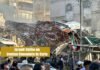
- Casualty Toll: At least 254 people were killed, including 91 in Beirut, and over 1,100 were injured during a single afternoon of intense strikes.
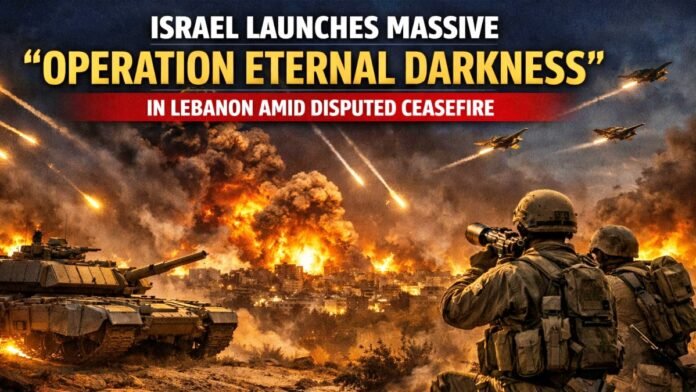
- Operation Eternal Darkness: The Israeli military hit more than 100 targets in a 10-minute window, striking Hezbollah command centers and residential areas.
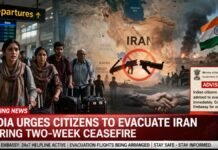
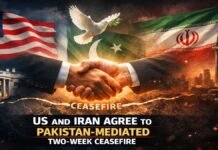
- Ceasefire Dispute: While Pakistan-mediated terms reportedly included Lebanon, both Israel and US Vice President J.D. Vance assert the 14-day truce applies only to US-Iran hostilities.
- Humanitarian Crisis: Hospitals in Beirut, including the American University of Beirut Medical Center, are overwhelmed and appealing for urgent blood donations.
- Strategic Fallout: Iran’s Revolutionary Guard has warned of “severe retaliation” and renewed disruptions to the Strait of Hormuz if attacks on Lebanon continue.
The Middle East has plunged back into total volatility following the launch of “Operation Eternal Darkness,” an unprecedented military campaign by Israel against targets across Lebanon. The strikes commenced on Wednesday afternoon, April 8, 2026, catching the capital of Beirut and southern cities off guard just hours after the international community celebrated a 14-day ceasefire mediated by Pakistan. The resulting devastation has left hundreds dead and the regional peace process in tatters.
Israeli Prime Minister Benjamin Netanyahu defended the escalation, stating that Lebanon was never a party to the 14-day agreement reached between the United States and Iran. This stance was echoed by Washington, where Vice President J.D. Vance clarified that Iran was under a “misconception” regarding the inclusion of Lebanese territory in the immediate truce.
Coordinated Strikes and Hezbollah’s Response
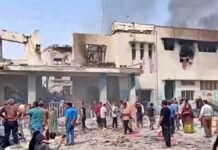
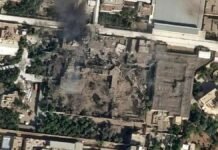
In a display of immense aerial power, the Israeli military reported striking over 100 strategic locations within a span of just 10 minutes. These targets reportedly included Hezbollah intelligence centers, missile infrastructure, and command bases in Beirut, Sidon, and the Bekaa Valley. However, local witnesses and human rights observers noted that the munitions rained down on busy commercial and residential districts during rush hour, leading to widespread civilian casualties.
Hezbollah legislator Ibrahim al-Moussawi argued that the organization had already begun observing the ceasefire, claiming the text of the Pakistan-led proposal explicitly included a cessation of hostilities in Lebanon. He warned that if Israel does not adhere to the agreement, the entire region, including Iran, will respond with force.
Dire Humanitarian Situation on the Ground
The scale of the destruction has left Lebanon’s infrastructure reeling. UN High Commissioner for Human Rights Volker Türk described the sequence of events as “appalling,” noting the incomprehensible nature of such a massive offensive immediately following a peace announcement. Hospitals in Beirut have been “flooded” with patients, many of whom are being transported on motorcycles due to a severe shortage of functional ambulances.
In the coastal city of Tyre, reports indicate that Hiram Hospital suffered extensive damage from nearby strikes. At the same time, emergency crews in the Bekaa Valley were reportedly targeted during a funeral service. The Lebanese Civil Defense continues to use heavy machinery and cranes to recover bodies from the rubble of collapsed apartment blocks.
Global Energy Security and the Strait of Hormuz
The conflict’s escalation has immediate implications for the global economy. The two-week ceasefire was intended to reopen the Strait of Hormuz, a vital maritime corridor for 20% of the world’s oil supply that has been effectively closed since the broader war began in February 2026.
While Iran had initially signaled its willingness to restore shipping traffic as part of the deal, the Islamic Revolutionary Guard Corps (IRGC) has now placed its forces back on “trigger-ready” status. With over 2,000 ships currently stranded in the Persian Gulf, the failure to secure a comprehensive regional truce threatens to keep energy prices at record highs and further destabilize global supply chains. As diplomatic talks are scheduled to continue in Islamabad this weekend, the prospect of a lasting settlement remains darkened by the smoke still rising over Beirut.