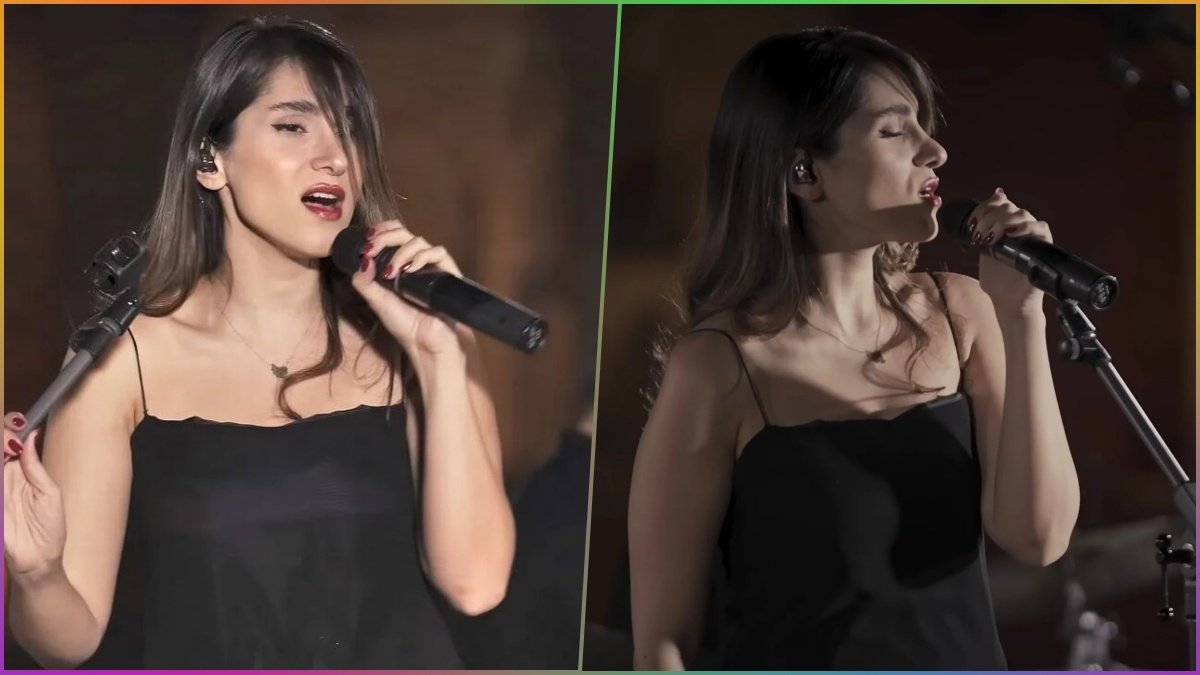
Iranian singer Parastoo Ahmadi and four companions were lashed 74 times for performing a concert without a hijab, violating public decency laws in Iran.
Key Points
- Punishment Details: The singer and four team members received 74 lashes each.
- Legal Violation: Authorities accused the artist of publishing obscene content and violating public decency.
- Activity Ban: A two-year ban was imposed on all involved from artistic activities and travel.
- Incident Origin: The case stems from a December 2024 YouTube concert performed without a hijab.
- Human Rights: Amnesty International opposed the sentence and urged authorities not to implement the lashing.
Court Sentence and Punishment
QOM: An Iranian singer, Parastoo Ahmadi, and four of her companions were lashed with 74 strokes each on Monday. The punishment was handed down by the criminal court of Qom city, which had originally sentenced the group in June 2026. The court cited the publication of obscene content and the violation of public decency as the primary reasons for the harsh penalty.
In addition to the physical punishment, the court has imposed a strict two-year ban on all individuals involved. This ban prohibits them from engaging in any artistic activities or leaving the country. The legal proceedings are linked to a viral video from December 2024, where Ahmadi performed a live concert on YouTube without wearing a hijab.
The Viral Concert Incident
The controversy began when Ahmadi, then 29, performed a live concert on YouTube featuring the popular patriotic song ‘Az Khoone Jawane Vatan’ (From the blood of the youth of the motherland). During the 27-minute video, she appeared in a sleeveless dress alongside four male musicians. Although the caption described the event as a fictional concert, the video quickly went viral, garnering over 1 million views.
While many viewers viewed the performance as a symbol of women’s freedom of expression, Iranian authorities viewed it as a direct violation of national laws. In Iran, it is mandatory for women to wear a hijab in public spaces. Furthermore, social restrictions dictate that women cannot sing alone in public and must adhere to specific dress codes, including plain clothing.
Background of Activism and Protests
Parastoo Ahmadi first gained significant attention in 2022 during the anti-hijab protests. She was accused of singing in support of the movement, which led to security agencies questioning her and conducting searches of her residence. Her actions have been part of a long-standing tension regarding women’s rights in Iran since the 1979 Islamic Revolution.
The issue gained global prominence in 2022 following the death of 22-year-old Mahsa Amini, who was detained in Tehran for not wearing her hijab correctly. While the Iranian government attributed her death to pre-existing health issues, a United Nations investigation team concluded that she died from beatings by authorities. This sparked massive nationwide protests, which the government subsequently suppressed with significant force.
International Reaction
The sentencing of Ahmadi has drawn international scrutiny from human rights organizations. Amnesty International expressed opposition to the upholding of the sentence even after an appeal was filed. The organization specifically demanded that Iranian authorities refrain from implementing the lashing sentence, citing concerns over human rights violations.
The case continues to highlight the ongoing struggle between state-enforced religious dress codes and individual freedoms of expression. As the government maintains its stance on public decency, international observers remain focused on the treatment of artists and activists who challenge these regulations.