
































Key Points:
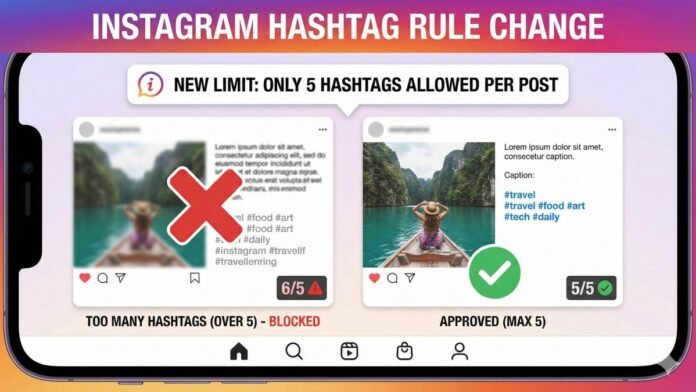
- Instagram implements “Rule of 5”, limiting users to maximum 5 hashtags per post or Reel
- Instagram head Adam Mosseri announced the change about a month after removing “Follow Hashtag” feature
- Decision aims to combat hashtag stuffing, reduce spam, and improve content quality
- Using generic hashtags like #reels or #explore can weaken post performance instead of increasing reach
- Mosseri advises creators to focus on content quality rather than chasing algorithms
In a significant shift that will reshape content strategy for millions of creators, Instagram has rolled out a major change to its content-sharing rules, placing strict limitations on hashtag usage. The platform has officially implemented what it calls the “Rule of 5”, marking the end of an era where users could load their posts with lengthy hashtag lists in pursuit of maximum visibility.
Understanding Instagram’s New “Rule of 5”
Meta-owned Instagram has introduced a definitive cap on hashtag usage across all content formats. Under this new regulation, any user or creator can now only include a maximum of 5 hashtags per post or Reel. This means the common practice of posting long, exhaustive lists of hashtags below content will no longer be permitted or effective. The platform has made it clear that failure to follow this rule could directly and negatively impact a post’s performance, reach, and overall visibility in users’ feeds.
Official Announcement by Instagram Leadership
Instagram head Adam Mosseri personally announced this transformative change, confirming that the platform is now strictly limiting posts and Reels to a maximum of 5 hashtags. This decision comes approximately one month after Instagram removed the “Follow Hashtag” feature, signaling a broader shift in how the platform approaches content discovery and categorization. The company believes these changes will collectively improve content quality and provide users with a cleaner, more streamlined experience.
Rationale Behind the Strict Decision
Instagram has been grappling with the persistent problem of hashtag stuffing for quite some time. Many users, in their desperate desire for views and virality, would indiscriminately add hashtags that had absolutely nothing to do with their post’s actual content. This practice not only increased spam across the platform but also degraded the overall user experience by flooding feeds with irrelevant content. Instagram states that this new rule has been specifically implemented to reduce spam, maintain content authenticity and ensure that the right content reaches the right audience through more precise and meaningful categorization.
Warning Against Generic Hashtag Usage
In addition to the quantity limit, Instagram has clarified that using common and generic hashtags like #reels or #explore does not increase a post’s reach. In fact, the platform confirms that in many cases, such generic tags can actually weaken a post’s performance rather than boost it. This guidance represents a fundamental shift from earlier practices where creators were encouraged to use a mix of popular and niche hashtags to maximize discoverability.
Adam Mosseri’s Candid Advice to Creators
Adam Mosseri, speaking through the Instagram Advice channel, dispelled a common misconception among creators, stating unequivocally that hashtags only help with search functionality and do not inherently increase reach. He advised creators to shift their focus toward creating high-quality, resonant content that genuinely connects with their audience instead of chasing algorithmic advantages through hashtag manipulation. Mosseri also issued a stark warning that using more than five hashtags can significantly reduce a post’s reach, making adherence to the new rule not just a recommendation but a necessity for maintaining visibility.
Impact on Content Strategy
This change forces creators to adopt a more strategic and thoughtful approach to hashtag selection. Rather than spraying dozens of tags across posts, creators must now carefully choose up to five highly relevant, specific hashtags that accurately represent their content and target audience. The shift emphasizes quality over quantity, pushing creators to invest more time in content creation and community engagement rather than algorithmic gaming.