


























Key Points
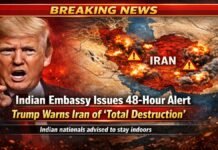
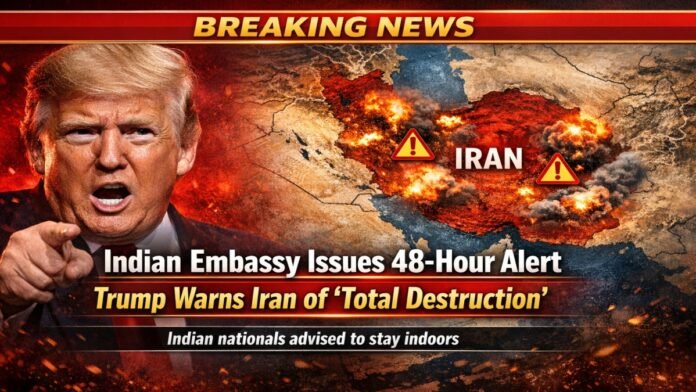
- Emergency Advisory: Indian citizens in Iran are directed to avoid multi-storey buildings and military installations for at least 48 hours.
- Trump’s Ultimatum: The U.S. President set a midnight GMT deadline for Iran to end its blockade of the Strait of Hormuz or face strikes on its power plants and bridges.
- “Civilization” Warning: In a viral Truth Social post, Trump suggested “complete and total regime change” is the only path to avoiding a historic military strike.
- Tehran’s Defiance: Iran has rejected the U.S. demands, asserting that the strategic waterway will never return to its previous status under “foreign hegemony.”
- Israeli Strikes: Concurrently, Israel confirmed it has already begun striking Iranian railways and bridges used by the Revolutionary Guards.
On Tuesday, April 7, 2026, the Embassy of India in Tehran issued an urgent safety notice as the Middle East stands on the precipice of a total regional war. The advisory, which comes amid the sixth week of the 2026 Iran conflict, instructs Indian nationals to exercise extreme caution and stay where they are.
Specifically, the embassy warned against occupying the upper floors of multi-storey buildings and urged citizens to distance themselves from military and electrical installations, which have been identified as primary targets in recent U.S. and Israeli tactical briefings. Any essential travel must now be coordinated strictly with embassy authorities to ensure safe passage through volatile corridors.
Trump’s Stark “Civilization” Warning
The global community was jolted early Tuesday by a series of posts from President Donald Trump on Truth Social. Addressing the standoff over the Strait of Hormuz, which has remained effectively closed to 20% of the world’s oil supply since late February, Trump issued his most severe threat to date.
“A whole civilization will die tonight, never to be brought back again,” Trump wrote, adding, “I don’t want that to happen, but it probably will.” The President framed the looming deadline as one of the most important moments in world history, suggesting that while the end of the current Iranian regime could lead to something “revolutionarily wonderful,” the alternative is “complete and total” destruction.
Strategic Stalemate at the Strait of Hormuz
The root of the current crisis is Iran’s continued blockade of the Strait of Hormuz. Following U.S. and Israeli strikes on Iranian nuclear and military assets earlier this year, the Islamic Revolutionary Guard Corps (IRGC) choked off the waterway, sending global energy prices to historic highs.
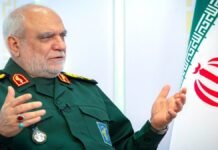
Tehran has remained defiant in the face of the Tuesday midnight deadline. Iranian President Masoud Pezeshkian responded to the threats by stating that millions of Iranians are prepared to “sacrifice their lives” to defend their sovereignty. Meanwhile, the IRGC Navy issued a statement claiming that the “era of foreign hegemony” over the Persian Gulf has ended, and that the Strait’s strategic reality has been “irreversibly changed.”
Broader Regional Conflict
The situation is further complicated by Israeli military operations. Prime Minister Benjamin Netanyahu confirmed on Tuesday that Israeli jets have already struck critical Iranian infrastructure, including railways and bridges, to disrupt the logistics of the IRGC.
As the U.S. deadline approaches, international diplomatic efforts at the United Nations have largely stalled, with Russia and China opposing a Bahrain-sponsored resolution to forcefully reopen the waterway. For the thousands of Indian expatriates currently in Iran, the next 48 hours represent the most dangerous period of a conflict that has already reshaped the geopolitical landscape of 2026.