































Key Points:
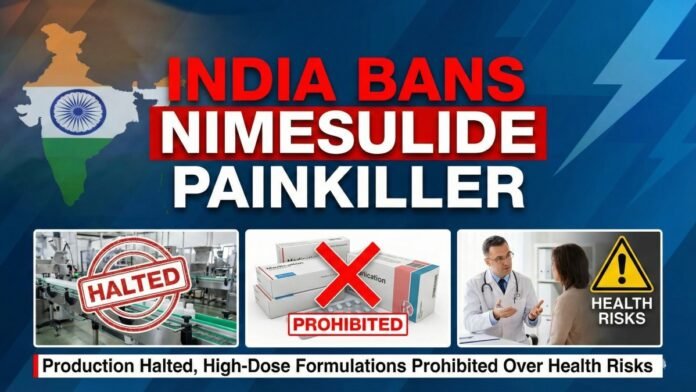
- Ministry of Health banned nimesulide production and sale of formulations containing more than 100 mg
- Decision based on ICMR and DTAB recommendations regarding liver and kidney damage risks
- Drug already prohibited for children under 12 and animals, now extended to high-dose human formulations
- Nimesulide is a fast-acting NSAID previously popular for toothaches, joint pain, menstrual cramps, and fever
- Pharmaceutical companies face significant financial losses from production shutdown and stock recall
- Lower-dose formulations (under 100 mg) remain available for sale
The Indian government has banned the production of the popular painkiller nimesulide, with the sale of all oral formulations containing more than 100 mg of the drug also prohibited. The Ministry of Health issued a notification to this effect on December 29, 2025, which has now been implemented immediately across the country.
According to reports, the Ministry of Health took this decision based on the recommendations of the Indian Council of Medical Research (ICMR) and the advice of the Drugs Technical Advisory Board (DTAB). These institutions had stated that doses of nimesulide exceeding 100 mg are harmful to human health, posing a risk of damage to the liver, kidneys, and other vital organs.
Ban Extends to Veterinary Use and Builds on Existing Restrictions
According to officials involved in the decision, nimesulide was already banned for children under 12 years of age. This year, all its formulations were also banned for animals. Now, all formulations containing more than 100 mg have been banned for human consumption. However, formulations with less than 100 mg can still be sold, providing a lower-dose alternative for patients who require this medication.
The progressive tightening of restrictions reflects growing concerns about the drug’s safety profile. Health regulators have been monitoring adverse event reports for several years, with accumulating evidence pointing to serious organ damage risks at higher doses.
Why Nimesulide Became Popular Despite Risks
According to health experts, nimesulide is a non-steroidal anti-inflammatory drug (NSAID) that has been used to reduce pain, inflammation, and fever. Doctors commonly prescribed it for conditions such as toothaches, joint pain, menstrual cramps, sprains, and fever. The drug provides quick relief from pain by blocking chemicals that cause inflammation in the body, and therefore, it has long been popular as a fast-acting painkiller among both physicians and patients.
Its rapid onset of action made it particularly attractive for acute pain management, leading to widespread prescription across India. Many patients specifically requested nimesulide due to its reputation for quick relief, contributing to its market dominance in the painkiller segment.
Health Risks Outweigh Benefits
According to health agencies, taking high doses of nimesulide increases the risk of serious liver and kidney damage. In several cases, it has been linked to hepatitis, liver failure, and adverse effects on other organs. Expert committees concluded in their recommendations that the risks outweigh the benefits, particularly for the high-dose formulations that have now been prohibited.
The drug’s mechanism of action, while effective for pain relief, can trigger toxic metabolites that damage hepatic cells. Patients with pre-existing liver conditions or those taking multiple medications face even higher risks, making the dose-dependent ban a critical public health intervention.
Industry Impact and Stock Recall
This government decision has caused a stir among pharmaceutical companies and medical stores. Many companies will have to shut down their production lines for high-dose nimesulide formulations. Not only that, but they will also have to recall their existing stock of high-dose nimesulide drugs, which will result in significant financial losses for manufacturers and distributors.
The recall process involves removing products from pharmacy shelves, warehouses, and distribution channels, creating logistical challenges and economic burdens for the pharmaceutical supply chain. Companies that heavily invested in nimesulide production may need to reformulate their products or shift focus to alternative pain management medications.
Moving Toward Safer Alternatives
However, this decision is considered very important for public health. According to doctors, this ban will lead patients towards safer alternatives and prevent the misuse of the drug. Healthcare providers will now need to prescribe alternative NSAIDs with better safety profiles, such as ibuprofen or paracetamol, for pain management.
Medical associations are expected to issue guidelines to help physicians transition away from nimesulide prescriptions. Pharmacists will play a crucial role in educating patients about alternative options and ensuring that lower-dose formulations are used appropriately when necessary.