




























Key Points
- RJD received 23.4 of % votes but won only 25 seats, while BJP (20.4%) and JDU (19.6%) secured nearly three times more seats despite lower vote percentages.
- NDA secured a massive 202-seat victory, with BJP winning 89 seats and JDU 85 seats, while the Grand Alliance collapsed to just 35 seats.
- Three major vote-cutters altered electoral arithmetic: Jan Suraj (3.4% vote share), BSP, and AIMIM collectively impacted 63 crucial seats.
- Jan Suraj’s debut under Prashant Kishor garnered 3.4% votes across 238 seats, exceeding victory margins in 33 constituencies.
- BSP’s vote share exceeded victory margins in 20 seats, with NDA winning 18 of those, reinforcing opposition claims of vote division.
- AIMIM became decisive in nine Muslim-majority constituencies, with 67% of those seats going to the NDA.
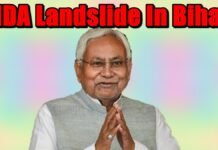
New Delhi: The 2025 Bihar Assembly Elections delivered a crushing verdict in favor of the National Democratic Alliance, which secured 202 seats in the 243-member assembly. The BJP emerged as the single largest party, with 89 seats, followed closely by its ally, the JDU, with 85 seats. The Lok Janshakti Party (Ram Vilas) also performed exceptionally, winning 19 of the 29 seats it contested. This victory margin represents one of the most decisive wins in Bihar’s electoral history, with Chief Minister Nitish Kumar set for a fifth consecutive term.
The election witnessed a historic voter turnout of 66.91%, the highest since Bihar’s first election in 1951, signaling massive public participation. However, the Grand Alliance, comprising RJD and Congress, faced its worst-ever rout, reduced to a mere 35 seats. The Congress described the results as “unbelievable” and called for a detailed review of the defeat.
Jan Suraj’s Debut: Prashant Kishor’s Strategic Impact
Political strategist Prashant Kishor made his electoral debut with the Jan Suraj party, and while it failed to win any seats, it left a significant imprint on the election outcome. Jan Suraj secured a 3.4% vote share statewide, a remarkable achievement for a first-time party. The party fielded candidates in 238 constituencies and garnered more votes than the victory margin in 33 seats.
Of these 33 critical seats, the NDA won 18 and the Grand Alliance won 13, validating Prashant Kishor’s claim that he was “cutting votes from both sides”. Jan Suraj attracted young voters and those seeking change, splitting the anti-incumbency vote that would otherwise have consolidated behind the opposition.
BSP and AIMIM: The Opposition’s Worst Nightmare
The Grand Alliance has long accused the Bahujan Samaj Party (BSP) of functioning as the “BJP’s B-team,” and the 2025 results seemed to confirm these allegations. Despite contesting 181 seats, the BSP won only one. However, its vote share exceeded the margin of victory in 20 constituencies. Of these 20 seats, the NDA won 18, while the Grand Alliance secured just two, meaning nearly 90% of the BSP’s impact favored the NDA by eroding Dalit votes from the opposition.
Similarly, the All India Majlis-e-Ittehadul Muslimeen (AIMIM) proved decisive in Muslim-majority areas. AIMIM’s vote share exceeded the victory margin in nine seats, with 67% (six seats) going to the NDA and only 33% (three seats) to the Grand Alliance. AIMIM repeated its 2020 performance by winning five seats, successfully pulling Muslim votes away from the opposition camp.
Vote Fragmentation: The Key to NDA’s Landslide
The 2025 Bihar election outcome was fundamentally shaped by severe vote fragmentation in the opposition camp. Of the 243 seats, 63 constituencies saw the combined vote share of Jan Suraj, BSP, and AIMIM exceed the margin of victory. Of these 63 crucial seats, the NDA won 44 (70%), while the Grand Alliance was reduced to just 19 (30%).
This fragmentation starkly highlighted the inefficiency of vote-to-seat conversion for the opposition. The Rashtriya Janata Dal (RJD), despite securing 23.4% of the total vote share, won only 25 seats. In contrast, the BJP with 20.4% and JDU with 19.6% won nearly three times as many seats due to their consolidated vote base. This disparity underscored how the NDA benefited from a unified vote, while the opposition’s support was divided among multiple smaller parties.
Opposition Alleges Foul Play, NDA Celebrates Development Mandate
The opposition raised concerns about “voter chori” (voter theft) and questioned the Election Commission’s processes, including the Special Intensive Revision drive. However, NDA leaders dismissed these allegations as excuses for defeat. JDU leader Lalan Singh stated that people had “expressed confidence in Bihar’s development” and that the opposition was “fabricating narratives” to explain their loss.
The NDA’s campaign focused on a comprehensive 69-page manifesto promising one crore employment opportunities, Mega Skill Centres, major infrastructure upgrades, including expressways, new rail lines, international airports, 10 new industrial parks, 100 MSME hubs, semiconductor parks, and welfare schemes such as one crore Lakhpati Didis and expanded Kisan Samman Nidhi. This development-focused agenda resonated strongly with voters, reinforcing Prime Minister Narendra Modi’s popularity and Chief Minister Nitish Kumar’s enduring appeal.
Political Realignment and Future Implications
The 2025 Bihar elections have fundamentally altered the state’s political landscape. The massive defeat of the RJD, founded by Lalu Prasad Yadav in 1997 and now led by his son Tejashwi Yadav, marks the party’s worst-ever rout. The Left parties also suffered significant setbacks, with the Congress and other allies drawing near blanks.
This election demonstrates that Bihar’s politics will now revolve around three new equations: the role of emerging parties like Jan Suraj as vote dividers, the BSP and AIMIM’s capacity to fragment opposition votes, and the NDA’s ability to consolidate its base while benefiting from a divided opposition. The results also brought a generational contrast to the forefront, with Nitish Kumar, despite his age and health narratives, proving his continued dominance over younger opposition leaders.
The 2025 Bihar Assembly Elections will be remembered as a watershed moment where strategic vote fragmentation, combined with the NDA’s development narrative, delivered one of the most lopsided victories in the state’s electoral history.