
























Key Highlights
- Strategic Victory: Goyal describes the deal as a “historic turning point” that places India in a superior trade position compared to regional competitors.
- Farmer Protection: The Minister categorically stated that sensitive sectors, including dairy and agriculture, remain safeguarded from foreign subsidies.
- Opposition Critique: Goyal launched a sharp attack on Rahul Gandhi and the INDIA bloc, accusing them of “anti-national” thinking and misleading the public.
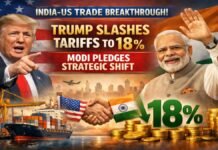
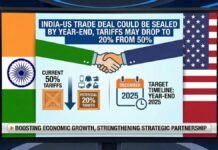
- Tariff Correction: Clarified that the US announced the deal first because they were the ones rolling back the reciprocal tariffs from 50% to 18%.
- Future Outlook: The deal is expected to accelerate India’s journey toward “Viktit Bharat 2047” by providing unprecedented access to US technology.
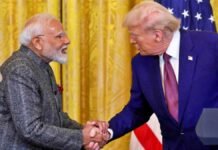
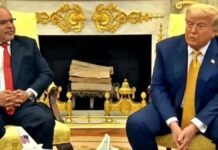
Union Minister of Commerce and Industry, Piyush Goyal, addressed the media in New Delhi on Tuesday, February 3, 2026, to provide clarity on the landmark trade agreement finalized between Prime Minister Narendra Modi and US President Donald Trump. Describing the pact as a “good omen for India’s bright future,” Goyal emphasized that the deal is the “best possible” outcome India has ever received, specifically noting that the 18% tariff rate is more favorable than those faced by neighboring and competing economies.
Defending the “Farmers-First” Approach
Addressing concerns regarding market access, Goyal reassured the nation that the Modi government negotiated from a position of absolute strength. He stated that the interests of the animal husbandry, agriculture, and dairy sectors were treated as “red lines” that were never crossed.
“PM Modi has ensured that India’s sensitive sectors are fully safeguarded, just as he protected the country from the RCEP previously,” Goyal noted. He highlighted that while the deal opens massive export opportunities for Indian fishermen and farmers, it does not compromise the livelihoods of small-scale domestic producers.
Scorched-Earth Critique of the Opposition
The press conference took a combative turn as Goyal addressed the disruptions in Parliament. He condemned the behavior of the Congress party and its allies, including the DMK, TMC, and Samajwadi Party, accusing them of creating “disgraceful scenes” to prevent the government from sharing the deal’s benefits with the House.
Specifically targeting Rahul Gandhi, Goyal asked, “Rahul Gandhi ko kya mirchi lagti hai?” (Why does Rahul Gandhi feel the burn?) He alleged that the Leader of the Opposition is “uncomfortable with the nation’s development” and possesses a “negative mentality” that seeks to hinder India’s progress. Goyal argued that the Opposition’s questions regarding the timing of the announcement were baseless, explaining that since the US had originally levied the reciprocal tariffs, it was only logical for Washington to announce the rollback first.
Economic Stimulus and Technology Access
Beyond immediate trade figures, Goyal framed the agreement as a catalyst for “Viksit Bharat 2047.” He explained that the partnership will allow the two nations to co-create technologies and co-develop solutions in high-growth areas.
The Minister predicted a massive surge in demand for “Made in India” products, particularly in:
- Textiles and Leather: Benefiting from a “double boost” alongside domestic budget incentives.
- MSMEs and Engineering: Gaining better integration into global value chains.
- Gems and Jewelry: Lowering the entry cost for Indian diamonds in the world’s largest market.
Finalization of Details
Goyal concluded by stating that while the framework is set, negotiating teams are currently in the final stages of detailing the technical chapters. A formal joint statement is expected in the coming days, once the technical processes for Customs Procedures and Trade Facilitation are finalized. He assured the public that the final document would be one that “makes every Indian proud.”