























Key Points:
- PM Modi proposed six initiatives: Global Traditional Knowledge Repository, Africa Skills Multiplier, Global Healthcare Response Team, Countering Drug-Terror Nexus, Open Satellite Data Partnership, and Critical Minerals Circularity Initiative
- Warned against AI concentration in few hands, advocated ban on AI use in deepfakes, cybercrime, and terrorism
- Laid foundation for Australia-Canada-India trilateral partnership on supply chains, clean energy, and AI
- At IBSA meeting, called UN Security Council’s lack of India, Brazil, South Africa as permanent members a “shortcoming of the old system”
- Held bilateral meetings with South African President Cyril Ramaphosa, UK PM Keir Starmer, German Chancellor Friedrich Merz, French President Emmanuel Macron, Brazilian President Lula da Silva, and UN Secretary-General Antonio Guterres
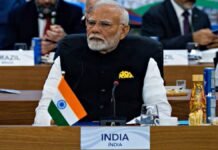
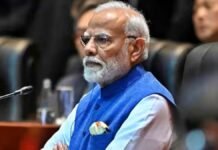
Prime Minister Narendra Modi, who attended the ongoing G20 Summit in Johannesburg, not only raised India’s voice on the global stage but also issued a stern warning to the world about terrorism and the misuse of technology. This is his 12th G20 Summit, where he outlined the future of humanity with the mantra of “One Earth, One Family, One Vision.” PM Modi made it clear that the time has come for reform and tough decisions.
Geopolitical activity also intensified on the second day of the summit
Canadian Prime Minister Mark Carney and German Chancellor Friedrich Merz held serious discussions on the Ukraine war and the situation in Gaza. Both leaders emphasized humanitarian aid and a peace plan in Gaza. Meanwhile, PM Modi, in a historic step, laid the foundation for a new trilateral agreement with Australia and Canada. This alliance will bring together three continents in the areas of supply chain, clean energy, and artificial intelligence, proving to be a major partnership on the frontiers of technology and innovation.
A Strong Message on the Dangers of AI
PM Modi warned the world about the increasing use of AI, saying that opportunities and resources should not be concentrated in the hands of a few. He advocated for a ban on the use of AI in deepfakes, cybercrime, and terrorism. He clearly stated that AI enhances human capabilities, but decisions must remain in human hands. Referring to the success of India’s AI mission and digital payments, he emphasized the need for open-source technology. Furthermore, PM Modi met with South African President Cyril Ramaphosa and emphasized the need to increase trade and investment.
Terrorism and the Call for Reform
At the IBSA meeting, PM Modi sharply questioned the lack of reform in the United Nations Security Council. He said that the absence of countries like India, Brazil, and South Africa as permanent members is a shortcoming of the old system. Calling for solidarity against terrorism, he said that there is no room for double standards. Modi called for new initiatives within the G20 to break the nexus between drugs and terrorism. He recalled that an NSA-level meeting on security cooperation was held in 2021, which now needs to be made permanent.
Six Global Initiatives Proposed
On the opening day of the summit, PM Modi proposed six new initiatives aimed at global development: setting up a Global Traditional Knowledge Repository, Africa Skills Multiplier program, Global Healthcare Response Team, initiative on Countering the drug-terror Nexus, Open Satellite Data Partnership, and a Critical Minerals Circularity initiative. He noted that some historic decisions from the New Delhi Summit have been carried forward and emphasized it was time to look at new parameters of development that address the imbalance of growth and overexploitation of nature, particularly when the G20 Summit was being held for the first time in Africa.
Bilateral Meetings and Diplomatic Engagements
PM Modi held productive bilateral meetings with multiple world leaders on the sidelines of the summit. He met South African President Cyril Ramaphosa, UK Prime Minister Keir Starmer, German Chancellor Friedrich Merz, French President Emmanuel Macron, Brazilian President Luiz Inacio Lula da Silva, South Korean President Lee Jae-myung, Malaysian Prime Minister Anwar Ibrahim, and UN Secretary-General Antonio Guterres. During his meeting with President Ramaphosa, he thanked him for the warm hospitality and successful conduct of the Summit, appreciating South African efforts to build on decisions from the New Delhi G20 Summit.
The summit’s theme, “Solidarity, Equality and Sustainability,” focused on strengthening disaster resilience, ensuring debt sustainability for low-income countries, mobilizing finance for a just energy transition, and harnessing critical minerals for inclusive growth. The second session specifically focused on building a resilient world in the face of disasters, climate change, and ensuring robust food systems.