






























Key Points
- EU and G7 moving toward complete maritime embargo on Russian oil exports
- Proposed plan eliminates price cap system, bans Western tankers, insurance, and registration services
- Oil contributes nearly 25% of Russia’s central budget, funding wartime economy
- Russia’s shadow fleet has grown to 1,423 tankers, carrying 44% of oil exports
- 38% of Russian oil still shipped by Western tankers, mainly from Greece, Cyprus, Malta
- EU wants to include ban in 20th sanctions package, effective early 2026
- US position crucial, Trump administration’s strategy key to G7 consensus
- Ban would impact Asian markets, including India and China deliveries
- Shadow fleet increasingly uses false flags to evade sanctions
- Western goal is to cut Russia’s wartime income without disrupting global oil market
The world’s most prosperous democratic economies are preparing their toughest measures yet against Russia’s maritime oil trade, with the European Union and G7 countries formulating a new strategy toward a complete maritime embargo on Russian oil exports. This move would directly target Russia’s wartime economy, as oil contributes nearly a quarter of its central budget, funding military operations in Ukraine.
According to an exclusive Reuters report, the proposed plan would eliminate the price cap system for Russian oil and prohibit the use of Western tankers, insurance, and registration services. Six sources directly involved in the discussions confirmed that the G7 countries and the European Union are considering this comprehensive ban, which represents the closest approach to a full prohibition on all dealings with Russian crude and fuel.
From Price Cap to Complete Ban
Following Russia’s invasion of Ukraine in 2022, the G7 and EU imposed restrictions on Russian oil imports but adopted a price cap mechanism instead of a complete ban. Under this system, Russia received Western shipping and insurance services only if it sold oil below $60 per barrel, intended to pressure Moscow’s earnings while maintaining global supply.
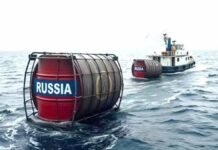
However, Russia gradually found ways around these restrictions by creating an alternative fleet called the “Shadow Fleet,” consisting of older, unregulated tankers operating outside Western regulations. By October 2025, 44% of Russia’s oil was shipped by this shadow fleet, while 38% continued to be transported by Western tankers, primarily from EU maritime nations Greece, Cyprus, and Malta. In September 2025, the EU and Canada reduced the price cap to $47.6 per barrel, but the United States did not support this further reduction.
Full Maritime Services Ban and Its Impact
The G7–EU are now moving toward a full maritime services ban that would eliminate the price cap entirely. This means any ship carrying Russian oil would be denied Western tanker insurance, flag registration, and related services, regardless of its destination. The ban would directly impact Russia’s Asian markets, as more than a third of its oil shipped to India and China still arrives on EU tankers.
According to the Centre for Research on Energy and Clean Air (CREA), sanctioned vessels in the first three quarters of 2025 carried 44% of Russia’s crude exports, while unsanctioned shadow tankers accounted for 26%, and the remaining 30% was transported by G7+ owned or insured vessels. The proposed ban would render price caps irrelevant and severely impact the maritime trade from which Russia reaps substantial profits.
Russia’s Growing Shadow Fleet and Evasion Tactics
To avoid price caps, Russia has increasingly diverted its oil exports to Asian countries using its own tankers, many of which operate without Western insurance and have unclear ownership. According to London-based Lloyd’s List Intelligence, the shadow fleet carrying contraband oil from Russia, Iran, and Venezuela has now reached 1,423 tankers.
The shadow fleet is employing increasingly sophisticated evasion tactics, including false flagging. CREA’s latest report reveals that 113 Russian vessels have flown false flags in the first nine months of 2025, transporting 11 million tonnes of oil valued at €4.7 billion ($5.4 billion). Six flag registries that had not previously registered Russian vessels now flag a total of 162 shadow vessels, exploiting the capacity limitations of economically weaker nations.
US Role and G7 Consensus
The EU’s 27 member states want to include this maritime ban in their next (20th) sanctions package, which could come into effect in early 2026. However, G7 consensus is required, and the final decision will largely depend on US policy, particularly the strategy adopted by President Donald Trump’s administration amid Russia-Ukraine peace efforts.
British and American officials are key supporters of this measure, advancing the proposal during technical G7 meetings. The Biden administration previously argued that forcing Russia to replace older ships would weaken its war economy, while the Trump administration has been less enthusiastic about tightening price caps. Any definitive US decision would hinge on strategic pressures the Trump administration chooses to employ during ongoing peace negotiations.
Global Market Implications
Western governments maintain their goal is to cut Russia’s wartime income without disrupting the global oil market. If a full maritime embargo is implemented, Russia’s access to Western shipping services would be severely limited, forcing it to either further expand its shadow fleet or reduce oil exports.
The success of this strategy depends on enforcement capabilities and coordination among sanctioning countries. As enforcement becomes increasingly challenging due to rising illicit trade, nations must focus on targeting vessels, intermediaries, and buyers to significantly curtail Russian oil exports. However, experts caution that actual enforcement might necessitate quasi-military interventions to inspect vessels, a strategy that countries might hesitate to implement.