






























Key Highlights of the DL104 Emergency
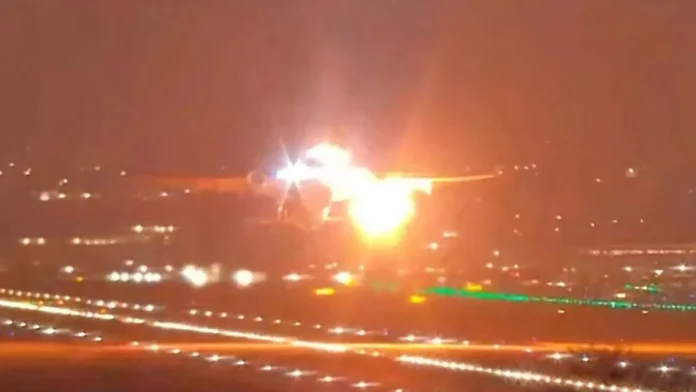
- Critical Failure: An Airbus A330-300 experienced an uncontained left engine fire moments after rotating from Guarulhos International Airport.
- ATC Intervention: Air traffic controllers alerted the cockpit crew immediately, stating, “Delta 104, you have a fire on your wing.”
- Ground Impact: Falling incandescent debris ignited a brush fire within the airport perimeter, forcing a temporary suspension of all international operations.
- Heroic Recovery: Pilots landed the heavily fueled aircraft just nine minutes after departure, despite the risks associated with an overweight emergency landing.
- Investigation Launched: Brazil’s CENIPA and the U.S. FAA are investigating the cause, with bird strikes and structural fatigue being primary points of interest.
The political and social buzz surrounding Brazil’s aviation safety has intensified following the harrowing events of Sunday night, March 29, 2026. Delta Air Lines flight DL104, a scheduled long-haul service from São Paulo, Guarulhos (GRU) to Atlanta (ATL), turned into a scene of mid-air terror just seconds after its wheels left the tarmac.
The aircraft, an Airbus A330-323 registered as N813NW, was carrying 272 passengers and 14 crew members. At approximately 11:49 PM local time, as the plane transitioned into its initial climb, the left Pratt & Whitney PW4168A engine suffered a catastrophic failure. Witnesses on the ground reported hearing a series of loud explosions followed by a steady trail of orange flames stretching behind the wing as the aircraft ascended into the dark sky.
Following the Delta A330-323(N813NW) engine failure after departure from São Paulo (GRU), many are asking: what actually happens if an airliner loses an engine just after takeoff?
— Turbine Traveller (@Turbinetraveler) March 30, 2026
As passenger in the cabin watching this scenario unfold, the panic is understandable. Seeing flames… pic.twitter.com/7vTod7WHKK
Inside the Cabin: Panic and Professionalism
For the 286 people on board, the nine minutes spent airborne were defined by sheer panic. Videos captured by passengers show bright flashes of light illuminating the cabin, while sparks and molten metal were visible through the left-side windows. Passengers reported the smell of smoke and intense vibrations, with many taking to social media later to describe a feeling of “absolute despair” as they watched the engine burn.
Despite the chaos in the cabin, the flight deck maintained exceptional composure. After being alerted by the control tower that their wing was on fire, the pilots immediately leveled off the climb at 4,500 feet. They executed the “engine fire or severe mechanical damage” checklist, shutting down the failing unit and activating the fire suppression systems.
Technical Challenges and the Overweight Landing
One of the most critical factors in this incident was the aircraft’s weight. Having just departed for an 11-hour transcontinental flight, the A330 was near its maximum takeoff weight, filled with thousands of gallons of Jet A fuel. Landing an aircraft in this state, especially with an active fire, presents a high risk of landing gear failure or brake fires due to the extreme heat generated during braking.
As the plane touched down on Runway 10L at 11:59 PM, the airport’s Rescue and Firefighting (ARFF) teams were already in position. While the landing was successful, reports indicate the left main landing gear also showed signs of overheating and minor sparking upon arrival. The airport had already been disrupted by a brush fire ignited by the falling engine parts, which had temporarily halted all other departures.
The Investigation: Bird Strikes vs. Structural Failure
As of April 1, 2026, the involved aircraft remains grounded on a taxiway at Guarulhos for technical inspection. Brazil’s Aeronautical Accidents Investigation and Prevention Center (CENIPA) is leading the probe. Preliminary reports are looking into a “bird strike” as a possible trigger, as another aircraft had reported a bird sighting in the area just minutes before Delta’s departure.
However, aviation analysts are also scrutinizing the age and maintenance history of the 20, year, old airframe. The investigation will determine if the fire was “uncontained,” meaning debris breached the engine’s armored casing, which would signal a more severe structural failure.
Delta’s Response and Passenger Safety
Delta Air Lines issued a formal apology on Monday, stating that “nothing is more important than the safety of our customers and people.” The airline has confirmed that all passengers were safely deplaned via mobile stairs rather than emergency slides to minimize the risk of injury, and they have since been re-accommodated on alternative flights.
While no physical injuries were reported, the psychological impact on the passengers has sparked discussions regarding the airline’s liability for traumatic stress, given the visible and sustained nature of the fire during the flight.