
































Key Points:
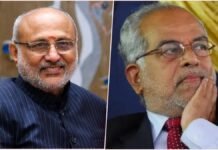
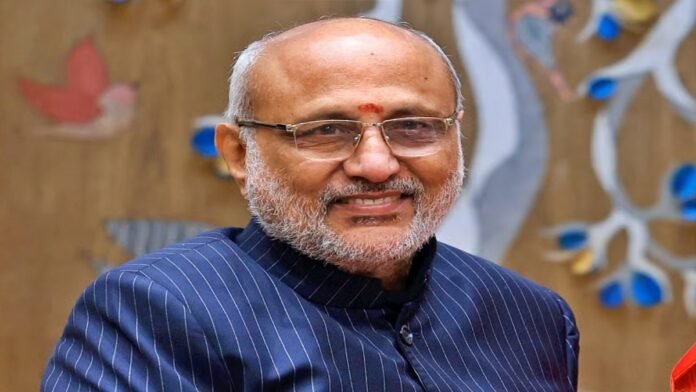
- Former Maharashtra Governor CP Radhakrishnan elected as India’s 15th Vice President with 452 votes, defeating B Sudershan Reddy who secured 300 votes
- Cross-voting from opposition ranks confirmed with 14 MPs switching sides, giving NDA higher margin than expected
- 767 MPs voted out of 788 eligible members, achieving 98.2% turnout; 15 votes declared invalid
- BJD, BRS, and SAD abstained from voting, with 13 MPs staying away from the election
- Victory margin of 152 votes represents one of the closest VP elections in recent history
New Delhi: The ruling National Democratic Alliance (NDA) candidate CP Radhakrishnan has been elected as India’s 15th Vice President, securing a decisive victory with 452 first-preference votes against the INDIA bloc’s nominee, former Supreme Court judge B Sudershan Reddy, who managed 300 votes. The election, conducted on Tuesday at the new Parliament building, witnessed significant cross-voting from opposition ranks.
Returning Officer PC Mody announced the results after counting concluded, confirming that out of 767 votes cast, 752 were valid while 15 were declared invalid. The 98.2% voter turnout reflected the high stakes involved in the election necessitated by Jagdeep Dhankhar’s unexpected resignation on July 21 citing health reasons.
Cross-Voting Delivers Unexpected NDA Advantage
The election results revealed substantial cross-voting by opposition MPs, with at least 14 parliamentarians switching allegiance to support the NDA candidate. This cross-voting phenomenon significantly boosted Radhakrishnan’s tally beyond the NDA’s base strength of 427 MPs, demonstrating cracks within the opposition alliance.
Congress leader Jairam Ramesh had predicted Reddy would secure 315 votes but the actual tally fell short by 15 votes, highlighting the impact of defections. The BJP claimed vindication of its pre-election assertions about potential cross-voting from opposition ranks.
Strategic Abstentions Impact Final Tally
Three key regional parties – Biju Janata Dal (BJD), Bharat Rashtra Samithi (BRS), and Shiromani Akali Dal (SAD) – deliberately abstained from the election. Specifically, seven BJD MPs, four BRS members, one SAD representative, and one independent MP stayed away from voting. This strategic neutrality effectively benefited the NDA by reducing opposition numbers.
The abstentions were particularly significant given the secret ballot nature of VP elections where MPs are not bound by party whips, allowing for individual conscience voting.
Historic Context and Narrow Victory Margin
The 152-vote victory margin between Radhakrishnan and Reddy represents one of the closest contests in Vice Presidential election history. In contrast, the 2022 election saw Jagdeep Dhankhar defeat Margaret Alva by a massive 346-vote margin (528 vs 182 votes).
Congress MP Jairam Ramesh described the opposition’s performance as “most respectable,” noting that Reddy’s 40% vote share significantly improved upon Alva’s 26% in the previous election. Ramesh characterized the result as a “moral and political setback” for the BJP despite their numerical victory.
NDA’s Strategic Candidate Selection
The NDA’s choice of 68-year-old CP Radhakrishnan, a two-time Lok Sabha MP from Tamil Nadu’s Coimbatore and current Maharashtra Governor, proved strategically sound. Belonging to the Gounder-Kongu Vellalar OBC community, Radhakrishnan brought significant grassroots experience and administrative knowledge to appeal to diverse voter segments.
His candidacy was announced on August 17, positioning him as an experienced leader with deep Rashtriya Swayamsevak Sangh (RSS) roots and a clean political record suited for presiding over the Rajya Sabha.
Opposition Unity Test and Future Implications
The election results highlighted both opposition resilience and internal contradictions. While the INDIA bloc managed to field a joint candidate in former Supreme Court Justice B Sudershan Reddy, the significant cross-voting exposed underlying fissures within the alliance.
Prime Minister Narendra Modi was among the first to vote, setting the tone for what became a carefully orchestrated NDA campaign led by Defense Minister Rajnath Singh’s outreach efforts. The victory strengthens the NDA’s grip on key constitutional positions ahead of future electoral battles.