

































Key Points
- MNREGA renamed to Pujya Bapu Grameen Rojgar Yojana, marking third name change since 2005
- Annual work days increased from 100 to 125 per rural household, highest ever enhancement
- Minimum daily wage raised to ₹240, up from previous average of ₹220-₹230 across states
- Decision taken at Union Cabinet meeting chaired by Prime Minister Narendra Modi
- Scheme originally launched as NREGA in 2005 by UPA government, renamed MGNREGA in 2009
- Expected to provide additional 25 days of employment to over 13 crore registered households
- Budget allocation likely to increase by ₹25,000-30,000 crore for FY 2026-27
The Union Cabinet, meeting at Prime Minister Narendra Modi’s residence on Friday, December 12, 2025, approved sweeping reforms to the country’s flagship rural employment program, fundamentally altering its structure and scope. The decision to rename the Mahatma Gandhi National Rural Employment Guarantee Act (MNREGA) as Pujya Bapu Grameen Rojgar Yojana represents more than a symbolic change; it signals a major expansion of the world’s largest public works program.
Rural Development Minister Shivraj Singh Chouhan announced the changes in a post-Cabinet briefing, emphasising that the reforms would inject new vitality into rural employment generation while honouring Mahatma Gandhi’s vision of rural self-reliance. The minister clarified that the new name maintains the spirit of the Mahatma’s teachings while making the scheme’s purpose more explicit to beneficiaries.
Evolution of a Landmark Scheme
This marks the third iteration of the scheme’s identity since its inception. Originally launched as the National Rural Employment Guarantee Act (NREGA) in 2005 by the Congress-led UPA government, the program was hailed as a revolutionary step toward guaranteeing livelihood security. In 2009, the government amended the legislation and prefixed Mahatma Gandhi’s name, creating MGNREGA to emphasise the Gandhian principle of dignity of labour.
The current NDA government’s decision to rename it Pujya Bapu Grameen Rojgar Yojana continues this tradition while imprinting its own governance philosophy. Political analysts view this move as part of the BJP’s broader strategy to rebrand legacy welfare schemes while expanding their reach and impact. The timing, just months before crucial state elections, also suggests political messaging aimed at rural voters.
Major Structural Enhancements
The increase in annual work days from 100 to 125 per household represents the most significant expansion in the scheme’s 20-year history. This enhancement means that each registered rural family can now earn up to ₹30,000 annually from the program, compared to the previous maximum of ₹22,000-₹23,000. For landless labourers and marginal farmers, this additional income could mean the difference between subsistence and modest economic security.
The wage revision to ₹240 per day standardises payments across states, addressing long-standing disparities where some states paid as low as ₹204 while others offered up to ₹238. This uniform wage floor ensures equitable compensation for rural workers nationwide, though states with higher costs of living may need to supplement from their own budgets. The wage hike also positions MNREGA wages above many state-level minimum wages for unskilled labour, potentially setting a new benchmark for rural employment.
Implementation and Budget Implications
The Rural Development Ministry has been tasked with implementing these changes from January 1, 2026, giving officials three weeks to update software systems, retrain field staff, and revise administrative guidelines. The additional 25 work days will require generating approximately 325 crore person-days of employment annually, up from the current 260 crore person-days.
Budgetary implications are substantial, with estimates suggesting an additional allocation of ₹25,000-30,000 crore needed for FY 2026-27. The ministry is exploring funding options, including reallocation from other schemes and potential increases in the rural development budget. Economists note that while the fiscal impact is significant, the multiplier effect on rural consumption and poverty reduction justifies the investment.
Types of Work and Community Impact
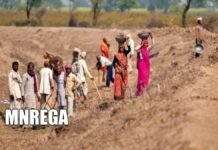
The scheme continues to focus on labour-intensive activities that create durable community assets. These include rural road construction, water conservation activities like check dam building and pond excavation, land development, gardening, and various small and large tasks related to village infrastructure development. The expanded work days will allow completion of more ambitious projects, such as comprehensive watershed management and rural connectivity improvements.
During the COVID-19 pandemic, MNREGA proved its worth as a lifeline for millions of migrant workers who returned to villages. The scheme employed over 11 crore workers in FY 2020-21, demonstrating its crisis-response capability. The current enhancements aim to strengthen this safety net, making it more resilient to future economic shocks.
Women’s Participation and Social Benefits
Women’s participation in MNREGA has increased significantly over the years, reaching approximately 55% of total workers in FY 2024-25. The wage increase and additional work days are expected to further empower rural women, providing them with independent income sources and financial autonomy. Studies have shown that when women control household income, spending on children’s education and nutrition improves substantially.
The scheme has also contributed to reducing rural-to-urban migration, keeping families intact and reducing pressure on urban infrastructure. By providing local employment, it enables workers to remain in their villages during the agricultural lean season, supporting rural social structures.
Expert Opinions and Stakeholder Reactions
Economists have largely welcomed the reforms, though with some caveats. Dr. Raghuram Rajan, former RBI Governor, praised the expansion but cautioned that implementation quality must improve. “More work days are welcome, but we need to ensure that assets created are productive and wages are paid on time,” he commented.
Rural activists have expressed mixed feelings. While welcoming the wage hike and additional days, some argue that the renaming is unnecessary political posturing. Nikhil Dey of the Mazdoor Kisan Shakti Sangathan said, “Workers care about timely payment and work availability, not the scheme’s name. The government should focus on reducing delays in wage payments and increasing work demand.”
State governments, particularly in non-BJP-ruled states, have raised concerns about funding. Kerala’s Finance Minister noted that while the wage increase helps workers, states may struggle to provide matching funds for materials and administrative costs, which remain their responsibility.
Challenges and Implementation Hurdles
The scheme faces persistent challenges that the reforms must address. Delayed wage payments, averaging 45-60 days in many states, remain a critical issue. The additional work days could strain an already burdened administrative system, potentially increasing payment delays. Corruption and ghost workers continue to plague some regions, though Aadhaar-based attendance has reduced leakages.
Climate change impacts, including erratic monsoons and extreme weather, sometimes limit the number of workable days, potentially preventing families from utilising their full entitlement. The ministry is developing climate-resilient work categories, but implementation remains uneven across states.
Comparison with International Programs
MNREGA remains the world’s largest public employment program, covering approximately 13.5 crore active workers across 2.5 lakh gram panchayats. When compared to similar programs globally, such as Ethiopia’s Productive Safety Net Programme or Argentina’s Jefes y Jefas de Hogar, MNREGA’s scale dwarfs them all. The wage levels, while modest by urban standards, are competitive within rural South Asian contexts.
The scheme’s legal guarantee of employment, unique worldwide, sets it apart from conditional cash transfer programs in Latin America or public works initiatives in Africa. This entitlement approach ensures demand-driven implementation, though it also creates fiscal uncertainty since the government must provide work whenever demanded.
Future Outlook and Expansion Plans
The Rural Development Ministry is simultaneously working on integrating MNREGA with other flagship programs like Pradhan Mantri Awas Yojana and Jal Jeevan Mission to create synergies. Plans are underway to introduce skill development components, allowing workers to upgrade from unskilled to semi-skilled labour, potentially earning higher wages.
Digital transformation continues, with a new mobile app launching in January 2026 to enable real-time attendance tracking, work demand registration, and wage payment monitoring. The government aims to reduce payment delays to 15 days by March 2026, leveraging technology and direct benefit transfers.