





























Key Points
- BJP wins 88 seats, becomes single largest party in Bihar Assembly
- NDA alliance crosses majority mark with combined tally of over 150 seats
- JD(U) secures 83 seats, consolidates position under Nitish Kumar’s leadership
- Chirag Paswan’s LJP(RV) makes dramatic surge with 18 seats
- Congress suffers major setback, wins only 6 of 61 contested seats
- RJD manages 24 seats, shows modest improvement from previous performance
Patna: The Bharatiya Janata Party has cemented its position as Bihar’s most powerful political force, winning 88 of the 101 seats it contested and leading in one additional constituency. This remarkable success rate of approximately 87% demonstrates the party’s deep organizational strength and voter appeal across diverse regions of Bihar. The victory marks a significant shift in the state’s political dynamics, where the BJP has transformed from a junior ally to the dominant partner in the ruling coalition.
The party’s comprehensive performance across urban centers, semi-urban areas, and rural constituencies indicates broad-based support cutting across demographic segments. Political analysts attribute this success to effective booth-level management, strategic candidate selection, and the Modi government’s welfare schemes that resonated with Bihar’s electorate.
JD(U) Holds Ground Under Nitish Kumar
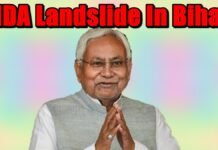
Chief Minister Nitish Kumar’s Janata Dal (United) demonstrated its enduring relevance by securing 83 seats out of 101 contested, with leads in two additional constituencies. Despite facing anti-incumbency challenges after multiple alliance switches, the JD(U) managed to retain its core vote base, particularly among extremely backward classes and women voters who have benefited from the state government’s welfare initiatives.
The party’s performance validates Nitish Kumar’s political acumen and his ability to navigate Bihar’s complex caste arithmetic. The JD(U)’s success in maintaining its traditional strongholds while adapting to the BJP’s growing influence showcases the party’s organizational resilience and Kumar’s continued appeal as an experienced administrator.
Opposition Alliance Falls Short
The Rashtriya Janata Dal, led by the Lalu Prasad family, managed to win 24 seats with a lead, showing marginal improvement from its previous performance but falling far short of expectations. The party’s inability to capitalize on anti-incumbency sentiment and effectively counter the NDA’s development narrative left it struggling to expand beyond its traditional Yadav-Muslim vote base.
The Indian National Congress suffered its worst performance in Bihar, securing merely 6 seats from 61 contested constituencies, a strike rate of less than 10%. This dismal showing reflects the party’s organizational weakness, lack of credible local leadership, and failure to connect with Bihar’s voters on key issues. The Congress’s poor performance has raised serious questions about its relevance in Bihar politics and its ability to lead opposition coalitions effectively.
Election Commission Official Results
| Party | Won | Leading | Total |
|---|---|---|---|
| Bharatiya Janata Party (BJP) | 88 | 1 | 89 |
| Janata Dal (United) (JD(U)) | 83 | 2 | 85 |
| Rashtriya Janata Dal (RJD) | 24 | 1 | 25 |
| Lok Janshakti Party (Ram Vilas) (LJP(RV)) | 18 | 1 | 19 |
| Indian National Congress (INC) | 6 | 0 | 6 |
| All India Majlis-e-Ittehadul Muslimeen (AIMIM) | 5 | 0 | 5 |
| Hindustani Awam Morcha (Secular) (HAMS) | 5 | 0 | 5 |
| Rashtriya Lok Morcha (RSHTLKM) | 4 | 0 | 4 |
| Communist Party of India (Marxist-Leninist) (Liberation) (CPI(ML)(L)) | 2 | 0 | 2 |
| Communist Party of India (Marxist) (CPI(M)) | 1 | 0 | 1 |
| Indian Inclusive Party (IIP) | 0 | 1 | 1 |
| Bahujan Samaj Party (BSP) | 0 | 1 | 1 |
Chirag Paswan’s LJP Makes Spectacular Gains
The most surprising story of the 2025 Bihar elections was the spectacular performance of Chirag Paswan’s Lok Janshakti Party (Ram Vilas). The party won 18 seats and led in one from just 29 contested constituencies, achieving an impressive strike rate of over 60%. This represents a quantum leap from the 2020 assembly elections, when the LJP won only a single seat.
Chirag Paswan’s strategic positioning as a reliable NDA partner, combined with his appeal among Dalit voters and youth demographics, proved highly effective. The party’s focus on development issues, employment generation, and social justice resonated particularly well in constituencies with significant Scheduled Caste populations. This breakthrough performance has elevated Chirag Paswan’s stature within the NDA and Bihar politics at large.
Regional and Smaller Parties’ Mixed Performance
The All India Majlis-e-Ittehadul Muslimeen (AIMIM) and Hindustani Awam Morcha (Secular) both secured 5 seats each, indicating their ability to maintain niche vote banks in specific constituencies. The AIMIM’s performance was concentrated in Muslim-majority areas, where it successfully positioned itself as an alternative to traditional parties.
The Communist Party of India (Marxist-Leninist) (Liberation) won 2 seats, maintaining its presence in specific pockets where it has traditionally enjoyed support among agricultural laborers and marginalized communities. The Bahujan Samaj Party’s single lead suggests its continued struggle to establish a foothold in Bihar despite having a national presence.
Implications for Bihar’s Political Future
The 2025 election results have fundamentally reshaped Bihar’s political landscape, establishing the BJP as the undisputed leader of the state’s ruling coalition. The NDA’s comfortable majority ensures political stability for the next five years, allowing for consistent policy implementation and governance.
The outcome also highlights the critical importance of alliances in Bihar politics. While the BJP emerged strongest individually, the contributions of JD(U) and LJP(RV) were crucial in achieving the coalition’s overwhelming majority. This interdependence suggests that coalition management will remain a key aspect of Bihar’s governance model.
For the opposition, the results present a sobering reality check. The RJD’s modest performance and Congress’s collapse indicate the urgent need for organizational restructuring, leadership rejuvenation, and a compelling alternative narrative to challenge the NDA’s dominance.
Key Factors Behind NDA Victory
Several factors contributed to the NDA’s comprehensive victory. The BJP’s aggressive campaigning, featuring national leaders including the Prime Minister, successfully nationalized key issues and leveraged the Modi brand’s popularity. The coalition’s emphasis on development, infrastructure projects, and welfare schemes countered opposition attacks on governance failures.
Additionally, the NDA benefited from a divided opposition that failed to present a unified front or coherent alternative vision. Internal conflicts within opposition parties, particularly the RJD’s leadership disputes and Congress’s organizational weaknesses, prevented effective coordination and resource mobilization.
The election results confirm that Bihar’s voters prioritized stability, development, and effective governance over traditional caste-based mobilization strategies. This shift in voter priorities represents a significant evolution in the state’s political culture and will likely influence electoral strategies in future contests.