































Key Highlights
- Total Ban: Applies to Bihar Health Service, Medical Education Service, and IGIC faculty.
- Strategic Initiative: Part of the Bihar government’s ‘7 Nishchay-3’ developmental program.
- Compensatory Allowance: Doctors will receive a Non-Practicing Allowance (NPA) to offset potential income loss.
- Patient Focus: Move aims to address doctor absenteeism and improve treatment quality in state-run hospitals.
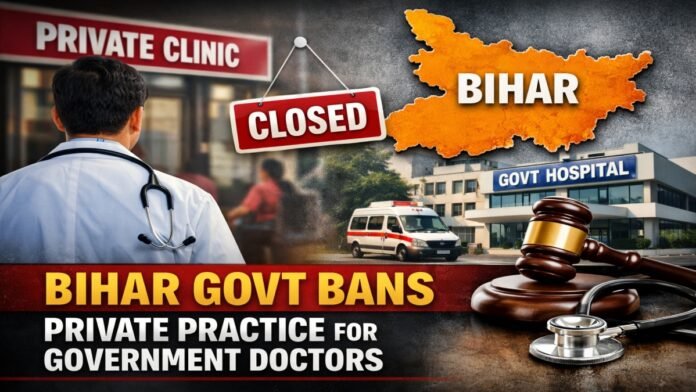
In a significant move to overhaul the state’s medical infrastructure, the Nitish Kumar government has formally ended the practice of government doctors operating private clinics. The Bihar Health Department issued a formal resolution this week, mandating that all medical professionals on the state payroll dedicate their full expertise and time to public facilities.
The decision is a central component of the ‘7 Nishchay-3’ (Seven Resolves-3) program, a 2026 policy framework designed to bring qualitative changes to public services. The ban is comprehensive, covering the Bihar Health Service Cadre, the Bihar Medical Education Service Cadre, and all faculty members associated with the Indira Gandhi Institute of Cardiology (IGIC). Under these new regulations, these professionals are strictly prohibited from practicing at private hospitals or independent clinics.
Addressing the Healthcare Gap
The rationale behind this stringent measure stems from long-standing grievances regarding the availability of specialists in government wards. Official assessments indicated that a significant number of doctors were prioritizing their private practices over their primary duties at government hospitals. This divide often led to:
- Punctuality issues and unannounced absences during peak hospital hours.
- Delays in emergency treatments for underprivileged patients.
- A general decline in the consistency of care within the public sector.
By enforcing a singular focus on government service, the administration aims to ensure that high-quality medical attention is available to the general public around the clock.
Financial Incentives and NPA
To balance the impact of this transition, the government has announced that doctors will not face a financial penalty for their public-only commitment. A Non-Practicing Allowance (NPA) will be integrated into their salary structures, alongside other financial incentives. While the exact percentage and disbursement guidelines are currently being drafted by the Finance and Health Departments, the move is intended to ensure that the medical fraternity remains motivated and fairly compensated for their full-time dedication to state service.
Implementation and Oversight
The Health Department is expected to release a detailed set of operational guidelines shortly. These will outline the monitoring mechanisms to prevent “under-the-radar” private consultations and define the punitive actions for non-compliance. Early reports suggest that violations could lead to severe disciplinary measures, including suspension or permanent removal from the state medical cadre.
This reform comes amid a shifting political landscape in Bihar, where governance and service delivery have become primary talking points for the NDA administration. While some medical associations have expressed concerns regarding the sudden shift, the government maintains that the priority remains the welfare of the millions who rely solely on state-run healthcare.