



























Key Points
- Crime Branch Action: The Delhi Police Crime Branch arrested Jawad Ahmed Siddiqui on February 5, 2026, securing a four-day remand to probe fraudulent accreditation claims.
- Terror Module Exposed: Investigations link university faculty to the November 10, 2025, Red Fort car blast, which claimed 15 lives, alleging the campus was used for logistics and shelter.
- Massive Asset Attachment: The Enforcement Directorate (ED) has attached immovable properties worth ₹139.97 crore, including 54 acres of the university campus.
- Regulatory Fraud: Siddiqui is accused of fabricating NAAC and UGC credentials and gaming NMC inspections using “on-paper” doctors and staged patients.
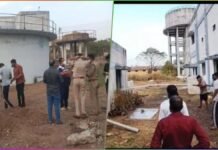
Al-Falah University in Faridabad, Haryana, has become the center of a massive national security and financial investigation. On Thursday, February 5, 2026, the Delhi Police Crime Branch arrested the university’s chairman, Jawad Ahmed Siddiqui, following a formal complaint from the University Grants Commission (UGC). The arrest marks a critical escalation in a case that spans money laundering, administrative corruption, and alleged links to international terror modules.
A Delhi court has remanded Siddiqui to four days of police custody. During this period, investigators aim to unravel the university’s financial network and the methods used to deceive regulators and thousands of students.
The “White-Collar” Terror Connection
The university first drew intense scrutiny from anti-terror agencies following the devastating car bomb blast near the Red Fort on November 10, 2025. DNA evidence and subsequent raids identified the driver as Dr. Umar un Nabi, an Assistant Professor of General Medicine at Al-Falah University.
Investigative agencies allege that Nabi and several other medical staff members, including Dr. Muzammil Ganaie and Dr. Shaheen Saeed, were part of a sophisticated “white-collar” terror module linked to Jaish-e-Mohammed and Ansar Ghazwat-ul-Hind. Police reports suggest that an explosive-laden vehicle was parked within the university campus for nearly 20 days prior to the attack, and campus facilities were allegedly used to plan logistics for the bombing.
ED Investigation: ₹493 Crore Proceeds of Crime
Parallel to the terror probe, the Enforcement Directorate (ED) has filed a comprehensive charge sheet against Siddiqui and the Al-Falah Charitable Trust. The agency has quantified the “proceeds of crime” at a staggering ₹493.24 crore, primarily generated through fees collected under false pretenses.
The ED has provisionally attached 54 acres of land and all university buildings, valued at approximately ₹139.97 crore. According to the agency, Siddiqui exercised “dominant and absolute control” over the trust, using it as a vehicle to route over ₹110 crore to family-controlled shell companies. Investigations also uncovered suspicious outward foreign remittances, including ₹3 crore to his wife and ₹1 crore to his son.
Fraudulent Accreditation and NMC Violations
A major pillar of the investigation involves the systemic deception of educational and medical regulators. The university allegedly advertised an expired NAAC “A” grade accreditation to lure students into its medical and engineering programs.
Furthermore, the ED has flagged severe violations of National Medical Commission (NMC) norms. The university is accused of hiring “on-paper” doctors immediately before inspections to satisfy faculty requirements and using middlemen to arrange “staged patients” in the teaching hospital to simulate a functional clinical environment. Siddiqui allegedly obtained these regulatory approvals by concealing material facts and submitting forged documentation.
Administrative Dominance and Future Outlook
Investigators have described Siddiqui’s administrative style as one of “absolute dominance,” where other trustees were merely nominal or proxy figures. This centralization of power allegedly allowed him to approve major financial diversions without oversight.
As the Crime Branch and ED continue their questioning, further arrests are expected among the university’s administrative staff and the network of intermediaries involved in the forged certifications. While the National Medical Commission has assured that the academic future of current innocent students will be protected, the institution’s overall status remains under review by both the Haryana state government and central agencies.