


































Key Points:
- Israeli minister threatens Iran with sevenfold retaliation for any future attacks
- Barkat calls Iran’s military power hollow and claims Israel has severely crippled Tehran
- Israel opposes Pakistan, Qatar, and Turkey involvement in Gaza peacekeeping
- Minister endorses Trump’s peace framework, rejects UN role as biased
- Two-state solution dismissed as non-starter by Israeli government
- Hebron model being considered for Gaza’s future governance
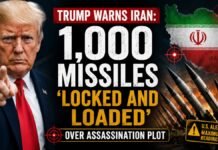
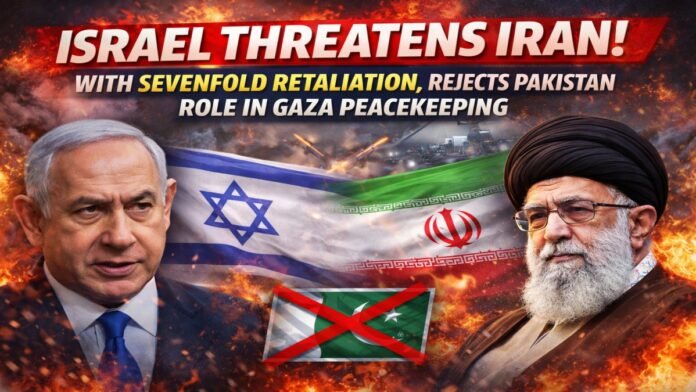
In a high-profile interview at the World Economic Forum in Davos on Friday, Israeli Economy Minister Nir Barkat delivered Israel’s most explicit warning to date against Iran. Speaking to international media, Barkat stated that any future Iranian attack would trigger an Israeli response seven times more powerful than previous actions. “We have defeated Iran once, and we have exposed the hollowness of their military power to the entire world,” Barkat declared, emphasizing that Tehran’s capabilities are far weaker than its rhetoric suggests.
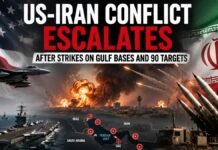
The minister’s comments come amid heightened tensions following recent Israeli strikes on Iranian military installations, which Barkat claimed have severely degraded Iran’s defense infrastructure. “Iran is not as powerful as it portrays itself to be,” he asserted, citing unspecified intelligence assessments that suggest Tehran’s missile and drone programs have suffered significant setbacks. Barkat labeled Iran the “ringleader of the axis of evil” that is destabilizing West Asia, framing the conflict as a broader struggle against Iranian influence across the region.
Gaza Peacekeeping, Pakistan’s Role Rejected
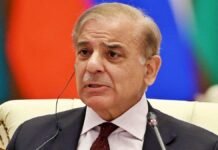
Barkat forcefully condemned reports suggesting Pakistan’s potential inclusion in US President Donald Trump’s proposed “Board of Peace” for Gaza, calling such considerations unacceptable to Israel. “Any country that has directly or indirectly supported terrorism should have no place in the future of Gaza or in any international peacekeeping force,” Barkat stated, explicitly naming Pakistan, Qatar, and Turkey as nations Israel cannot trust to deploy troops on the ground.
The minister’s remarks reflect deep-seated Israeli concerns about these countries’ historical support for Hamas and other militant groups. Israeli officials have privately expressed alarm at the prospect of Pakistani military presence near its borders, citing Islamabad’s nuclear capabilities and alleged ties to radical elements. The statement puts Israel at odds with Trump’s evolving peace framework, which reportedly seeks broader Muslim-nation participation in Gaza’s reconstruction.
Trump Peace Plan Endorsed, UN Rejected
Despite objections to Pakistan’s involvement, Barkat praised Trump’s broader peace proposals, describing them as a superior alternative to UN-led initiatives. “The United Nations has proven itself biased against Israel time and again,” Barkat argued, welcoming the American president’s direct engagement approach. The minister clarified that Israel’s primary goal is not regime change in Iran but ensuring its own security through deterrence and preemptive capabilities.
On the Palestinian question, Barkat completely rejected the internationally favored two-state solution, calling it a “non-starter” with no support in the Israeli Knesset. “The Palestinian Authority only wants a state to destroy Israel,” he claimed, aligning with the current Israeli government’s hardline stance that has dismissed previous peace frameworks as failed experiments.
Hebron Model for Gaza’s Future
Barkat revealed that Israel is considering the “Hebron model” for Gaza’s governance, referencing the West Bank city where local Arab leaders and tribal sheikhs cooperate with Israeli security forces under the Abraham Accords framework. This approach would involve empowering traditional Palestinian leadership structures while maintaining Israeli security oversight, effectively bypassing the Palestinian Authority.
The minister emphasized that Israel stands ready to “turn enemies into friends” if they choose the path of peace, but warned that “any provocation will have serious consequences.” The proposal signals a shift toward decentralized governance models that prioritize Israeli security interests while offering limited autonomy to compliant local leaders.
Regional Implications and International Response
Diplomatic sources in Davos indicated that Barkat’s statements have complicated ongoing negotiations about Gaza’s post-war governance. The explicit rejection of Turkey and Qatar, both key mediators in hostage negotiations, could strain ceasefire talks. Meanwhile, Pakistan’s foreign ministry has not officially responded to Barkat’s comments, though analysts expect a strong rebuttal given the domestic political sensitivity of relations with Israel.
Energy markets showed slight volatility following Barkat’s threats against Iran, with Brent crude futures rising 1.2% on concerns of potential supply disruptions in the Strait of Hormuz. Indian officials monitoring the situation expressed concern about escalating rhetoric, given India’s strategic interests in both Iranian oil supplies and growing defense partnerships with Israel.