































Key Points:
- Trump warns Iran of forceful US response if protesters are executed
- Previous US airstrikes on Iranian nuclear facilities in June 2025 described as “peanuts” compared to potential future action
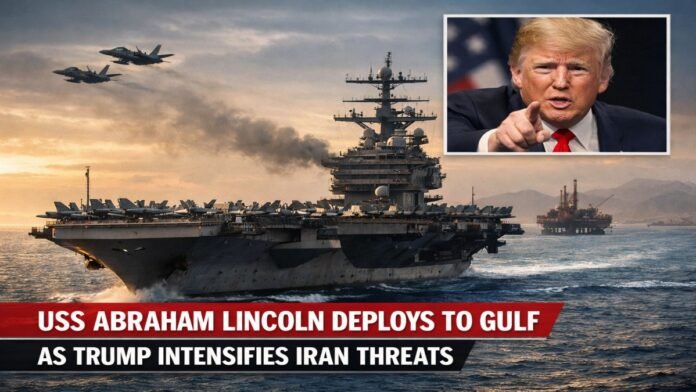
- USS Abraham Lincoln aircraft carrier and strike group ordered to Gulf from South China Sea
- Iran experiencing largest protests since 1979 revolution, with 5,002 killed and 26,300 arrested
- Iranian Foreign Minister Abbas Araghchi vows immediate retaliation if US attacks
- Trump’s hardline stance raises concerns about global diplomatic fallout and regional stability
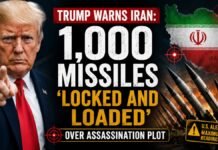
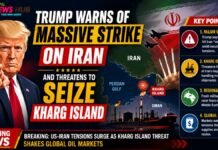
US President Donald Trump has dramatically escalated his confrontation with Iran, issuing an unambiguous warning that any execution of anti-government protesters will trigger a US military response far exceeding the intensity of previous strikes. Speaking to reporters aboard Air Force One while returning from the World Economic Forum in Davos, Switzerland, Trump delivered his message with characteristic bluntness, signaling a potential shift toward direct military conflict.
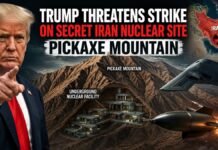
The president explicitly referenced the US airstrikes on Iranian nuclear facilities in June 2025, describing them as “peanuts” compared to what might follow. “I said, if you execute those people, you will be hit harder than ever before,” Trump stated, his words reflecting a hardening position that has alarmed diplomatic observers worldwide. The statement suggested that Washington has prepared contingency plans for attacks on Iran’s nuclear program and other strategic targets that would dwarf previous operations in scale and impact.
Naval Deployment and Military Preparations
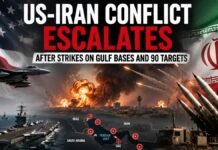
The verbal warning coincides with tangible military movements. Trump confirmed that he has ordered the USS Abraham Lincoln aircraft carrier and its entire strike group to redirect from the South China Sea to the Middle East. The carrier, which carries approximately 90 aircraft and is escorted by destroyers, cruisers, and submarines, represents a formidable show of force in the strategically vital Gulf region. Administration officials have framed the deployment as precautionary, though Trump acknowledged that while he hopes military action proves unnecessary, the fleet positions the US to respond rapidly if provoked.
The movement marks a significant concentration of American naval power in waters near Iran, joining existing assets in the region. Military analysts note that Lincoln’s arrival would give the US multiple carrier strike groups within striking distance of Iranian targets, a configuration typically reserved for major combat operations.
Crisis Inside Iran and Regional Tensions
Iran is currently experiencing its most severe domestic crisis since the 1979 Islamic Revolution, with anti-government demonstrations spreading across the country. Human rights organizations report that at least 5,002 people have been killed in the government crackdown, while security forces have arrested more than 26,300 individuals, including journalists, activists, and ordinary citizens. The protests, which began over economic hardships and political repression, have evolved into broad-based calls for systemic change, challenging the regime’s legitimacy.
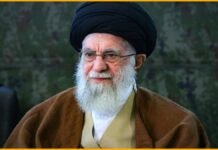
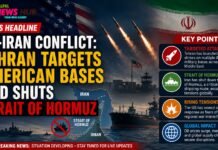
Iranian Foreign Minister Abbas Araghchi responded swiftly to Trump’s threats, warning that Tehran would not hesitate to retaliate if attacked. “This confrontation would be fierce and would affect ordinary people around the world,” Araghchi stated, implying that Iran might target US allies, disrupt global energy supplies, or activate proxy forces across the Middle East. His statement reflects Tehran’s strategy of framing any US action as a threat to regional stability, hoping to mobilize international opposition to American military intervention.
Global Diplomatic Fallout
Trump’s hardline stance has sent ripples through diplomatic circles worldwide, with allies expressing concern about escalating tensions in a region still recovering from previous conflicts. European Union officials have privately urged restraint, warning that renewed military action could destabilize global oil markets and trigger a refugee crisis. Meanwhile, Russia and China have condemned what they describe as American aggression, pledging support for Iran’s right to self-defense.
The president’s rhetoric about creating a “new world order” against Iran suggests a broader strategic vision that extends beyond the current crisis. Analysts interpret this as an attempt to forge a coalition of nations willing to isolate Tehran economically and diplomatically, though many US partners remain hesitant to commit to such a confrontational approach.
International Aid Organizations on Alert
Humanitarian organizations operating in Iran have expressed alarm at the potential for military escalation. The International Committee of the Red Cross has called on all parties to protect civilian lives, while Doctors Without Borders has warned that any conflict would devastate Iran’s already strained healthcare system. The organization noted that hospitals in protest-affected areas are already overwhelmed with casualties from the internal crackdown.
As the USS Abraham Lincoln steams toward the Gulf and Iranian leaders vow defiance, the world watches anxiously. The coming days will likely determine whether Trump’s warnings serve as effective deterrence or prelude to a wider conflict that could reshape the Middle East.