































Key Points:
- Hindu community gets continuous worship rights from sunrise to sunset at Bhojshala
- Muslim community allocated 1 PM to 3 PM slot for Friday prayers in separate complex area
- 8,000 police personnel, CRPF, CCTV cameras, and drones deployed for security
- Supreme Court mandates separate routes, identity passes for Muslim devotees
- Diesel, petrol in bottles banned; prior permission required for all events
- First coinciding Basant Panchami and Friday prayers in Dhar after 10 years
- Past coincidences in 2006, 2013, 2016 led to communal tension, violence
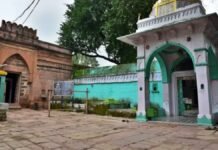
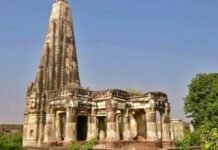
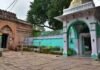
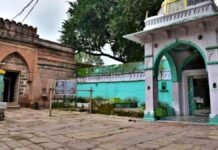
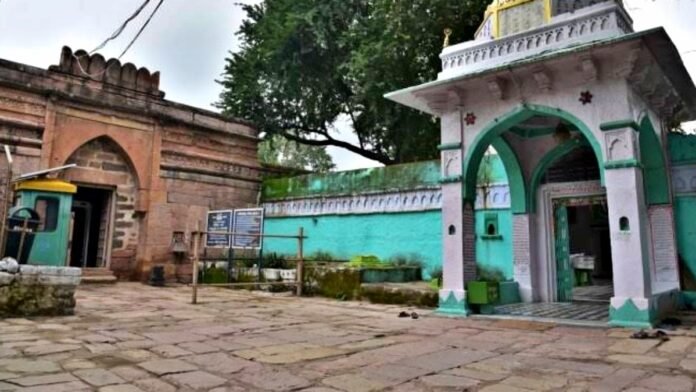
A historic precedent in religious coexistence unfolds today at Bhojshala, the contested 11th-century monument in Dhar district, as Hindu and Muslim communities observe their respective festivals simultaneously under Supreme Court supervision. This marks the first occasion in a decade that Basant Panchami and Friday prayers have converged, prompting authorities to implement India’s most intensive security operation for a religious event outside conflict zones.
The Supreme Court’s nuanced judgment, delivered late Thursday evening, crafted a time-sharing arrangement that acknowledges both communities’ claims. Hindu devotees began gathering at dawn for uninterrupted worship and havan of Goddess Saraswati, a tradition they assert dates back to the Parmar dynasty era. The worship will continue until sunset, accommodating an estimated 15,000 pilgrims from across Madhya Pradesh and neighboring states.
Timed Arrangements and Access Control
Muslim worshippers, estimated at 2,000, will access the monument between 1 PM and 3 PM for Friday prayers, utilizing a separate entrance on the eastern side of the complex. The court mandated that the Dhar administration issue color-coded identity passes to Muslim devotees, with QR codes for digital verification. Separate routes, stretching 1.5 kilometers apart, have been demarcated for each community’s procession to prevent any intersection.
District Collector Priyank Mishra confirmed that three-tier security checkpoints will screen all entrants. “We have established 15 metal detector gates and 30 handheld scanner units. Every devotee will undergo frisking, and no bags larger than A4 size will be permitted,” Mishra stated during a press briefing at the Collectorate.
Prohibited Items and Surveillance Measures
The Supreme Court’s order explicitly prohibits carrying diesel or petrol in bottles or cans, a precaution following intelligence reports about potential inflammable material misuse. Other banned items include lighters, matchboxes, sharp objects, and recording devices in the inner sanctum. Prior permission from the district magistrate is mandatory for any event, procession, or assembly within a 2-kilometer radius of Bhojshala.
The security apparatus includes 8,000 police personnel drawn from 35 districts, supplemented by 12 companies of the Central Reserve Police Force (CRPF). The Archaeological Survey of India has temporarily suspended its conservation activities and handed over full control to security forces. Drone surveillance, operating at 200-meter altitude, provides real-time aerial monitoring, while 250 CCTV cameras cover every corner of the complex and approach roads. Police have conducted 47 flag marches since Wednesday night, with commandos positioned on rooftops.
Community Responses and Historical Context
Representatives from both communities expressed cautious satisfaction after a conciliatory meeting at the Collectorate on Thursday. Vijay Singh Rathore, president of the Hindu Jagran Manch, said, “Our 20-year struggle for continuous worship has finally received judicial validation. We will cooperate fully with the administration.” On the Muslim side, Qazi Mohammad Haroon, chief of the Dhar Muslim Coordination Committee, pledged, “We respect the court’s wisdom. Our community will offer prayers peacefully and vacate the premises by 3 PM sharp.”
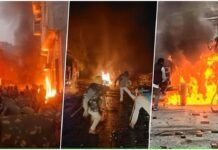
This convergence revives painful memories of previous clashes. In 2006, the coinciding festivals resulted in 12 injuries and three days of curfew. The 2013 and 2016 incidents proved more severe, with arson destroying six shops, stone-pelting damaging the monument’s outer wall, and Section 144 imposed for 10 days. Intelligence reports indicate that 47 individuals with criminal records in communal cases are under preventive detention since Wednesday.
Latest Developments and Monitoring
As of Friday morning, 3,200 Hindu devotees had already entered the complex, while 850 Muslim pass holders were verified at the outer checkpoint. The administration has deployed 50 medical personnel with an ambulance on standby, and two temporary hospitals have been set up. The National Human Rights Commission has stationed observers at three locations.
The Supreme Court has directed the district administration to submit a compliance report by Saturday evening, with photographs and video evidence of peaceful observance. The court will review this case on Monday to determine if such arrangements could serve as a template for other disputed religious sites.