
































Key Points:
- Supreme Court bench headed by CJI Surya Kant allowed both communities to pray at Bhojshala on Basant Panchami, January 23
- Prayers scheduled between 1 PM and 3 PM, with special passes required for attendees
- Separate designated areas created within the temple complex for Hindu and Muslim worshippers
- Court rejected Hindu side’s demand to stop Muslim Friday prayers, suggesting Hindus can worship before and after the 1-3 PM slot
- Madhya Pradesh government assured the court that no law and order problems would be allowed to occur
- Vishnu Shankar Jain represented Hindu Front for Justice, Salman Khurshid appeared for Muslim side
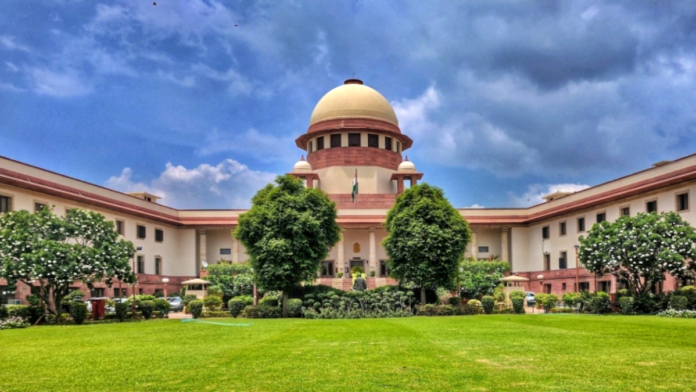
The Supreme Court delivered a balanced verdict Thursday in the sensitive Bhojshala dispute, permitting both Hindu Basant Panchami celebrations and Muslim Friday prayers to proceed at the historic site in Dhar, Madhya Pradesh, on January 23 when both festivals coincide.
A three-judge bench comprising Chief Justice Surya Kant, Justice Joymalya Bagchi, and Justice Vipul M. Pancholi heard the petition filed by Hindu Front for Justice, which had sought to prevent Muslim community members from offering Friday prayers during Basant Panchami. The court rejected this demand while establishing a structured framework to accommodate both religious observances.
Court’s Structured Prayer Arrangement
The Supreme Court ordered that prayers will be offered between 1 PM and 3 PM, with special passes issued to control attendance and ensure orderly conduct. A separate area within the temple complex will be designated specifically for Friday prayers during this two-hour window. For the Basant Panchami puja, the court designated a separate area without imposing any time restrictions, allowing Hindu devotees to continue worship beyond the designated prayer period.
During the proceedings, Chief Justice Surya Kant questioned the Hindu side’s insistence on exclusive access, asking, “Why can’t Hindus perform their prayers until 1 PM? Namaz will be offered from 1 to 3 PM, and after that, the Basant Panchami prayers can continue.” This pragmatic solution aims to prevent conflict while respecting both communities’ religious rights.
Legal Arguments Presented
Vishnu Shankar Jain, representing the Hindu Front for Justice, argued that Basant Panchami puja traditionally takes place from sunrise to sunset and requested that Muslim prayers be held after 5 PM. He pointed out that Basant Panchami had fallen on a Friday three times previously, leading to disputes over prayer timings.
Salman Khurshid, appearing for the Muslim side, defended the community’s right to offer Friday prayers at their traditional time. The court’s decision acknowledges that both religious observances hold significance for their respective communities and attempts to create a harmonious coexistence framework.
Government’s Security Assurance
The Additional Solicitor General appearing for the Madhya Pradesh government assured the court that comprehensive security arrangements would prevent any law and order problems. Chief Justice Surya Kant emphasized that while both communities can be allowed to pray, maintaining law and order is essential for peaceful coexistence.
The state government has been directed to implement strict security measures, issue controlled entry passes, and deploy adequate police personnel to manage crowds and prevent any potential conflict between the communities.
Historical Context
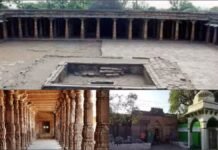
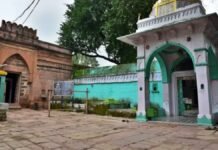
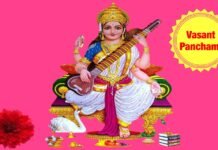
Bhojshala, an archaeological site in Dhar, has been at the center of a long-standing dispute between Hindus, who consider it a temple of Goddess Saraswati, and Muslims, who regard it as a mosque. The site becomes particularly contentious when Basant Panchami and Friday prayers coincide, as both communities traditionally gather at the location for worship.
This Supreme Court intervention provides a judicial framework for managing such sensitive religious overlaps, potentially setting a precedent for resolving similar disputes at other shared religious sites across the country. The verdict emphasizes constitutional values of religious freedom while prioritizing public order and communal harmony.
Local authorities in Dhar are now working to implement the court’s directions, preparing separate entry points, designated worship areas, and security protocols to ensure both communities can observe their religious practices peacefully on January 23.