

































Key Points:
- Supreme Court dismissed Justice Yashwant Verma’s petition against Lok Sabha Speaker’s committee
- Court ruled that since neither House passed the motion, joint committee formation wasn’t possible
- Justice Verma had argued the Judges (Inquiry) Act, 1968 procedure wasn’t followed
- He claimed the Speaker formed committee without consulting Rajya Sabha Chairman
- Justice Verma questioned impeachment when officials failed to secure crime scene
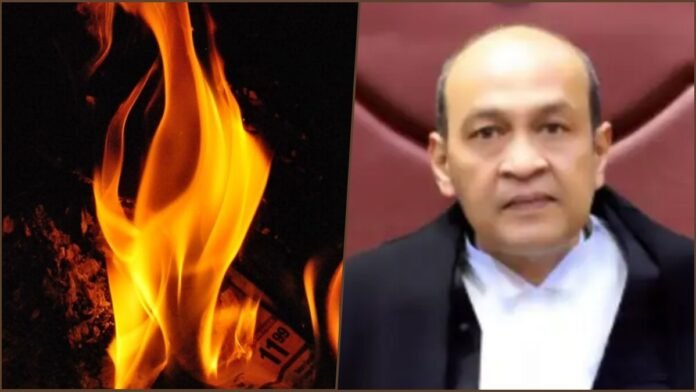
Justice Yashwant Verma has suffered a major setback in the cash-for-query scandal case as the Supreme Court has dismissed his petition against the committee constituted by the Lok Sabha Speaker. Justice Verma had objected to the validity of the three-member committee formed by the Lok Sabha Speaker to investigate allegations against him in the scandal.
In the previous hearing, the apex court had directed Justice Verma to appear before the committee constituted by the Lok Sabha Speaker on January 12. The Supreme Court had acknowledged procedural flaws in the formation of the committee in the previous hearing, but the court also questioned whether this flaw was serious enough to warrant intervention.
Supreme Court Dismisses Justice Verma’s Petition
The Supreme Court, while dismissing Justice Yashwant Verma’s petition, stated that Justice Verma had not challenged the rejection of the motion by the Rajya Sabha Deputy Chairman. Since neither the Lok Sabha Speaker nor the Rajya Sabha Chairman passed the motion, the formation of a joint committee was not possible. The court held that under these circumstances, the Lok Sabha Speaker’s decision to constitute a three-member committee was appropriate and within the procedural framework.
The bench observed that the procedural irregularities pointed out by Justice Verma did not substantially prejudice his rights or violate the core principles of natural justice. The court emphasized that the impeachment process under the Judges (Inquiry) Act, 1968, provides sufficient safeguards and that the committee formation, even if procedurally imperfect, did not warrant judicial interference at this stage.
Justice Verma’s Objection
Justice Verma had challenged the three-member committee constituted by the Lok Sabha Speaker, arguing that the procedure laid down in the Judges (Inquiry) Act, 1968, was not followed. According to him, despite impeachment notices being given in both houses, the Lok Sabha and the Rajya Sabha, the Lok Sabha Speaker constituted the committee without consulting the Rajya Sabha Chairman.
He contended that the Act mandates consultation between the presiding officers of both Houses before constituting an inquiry committee. Justice Verma’s legal team argued that the unilateral action by the Lok Sabha Speaker undermined the constitutional scheme of judicial accountability and violated the statutory requirements.
Justice Verma’s Defense Before the Committee
Earlier, Justice Yashwant Verma had filed his response before the parliamentary committee constituted regarding the impeachment. In his response, he questioned why he should face impeachment when government officials failed to secure the crime scene. In his response before the parliamentary committee, Justice Verma presented several arguments in his defense. He stated that he was not the first person to arrive at the scene, and if the police failed to secure the scene, how could he be held responsible?
He argued that the allegations against him were based on circumstantial evidence and that the procedural lapses by investigating agencies should not be visited upon him. Justice Verma maintained that his actions were consistent