





























Key Points
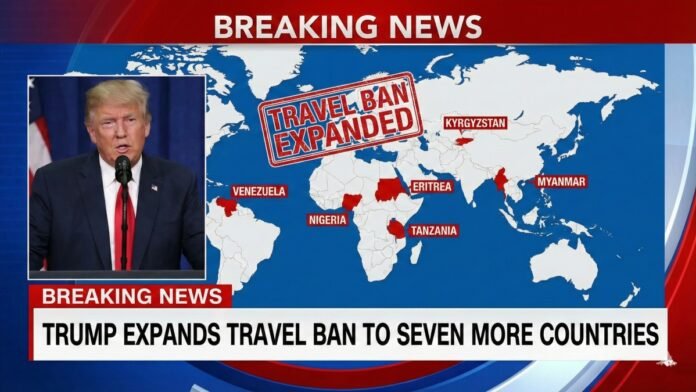
- Seven more countries added to US travel ban, effective January 1
- Complete entry ban imposed on Burkina Faso, Mali, Niger, South Sudan, and Syria
- Laos and Sierra Leone upgraded from partial to complete ban
- Palestinian Authority travel document holders now face complete ban
- Over 30 countries now subject to full or partial US entry restrictions
- Green Card holders, existing visa holders, and diplomats remain exempt
- Turkmenistan receives exemption, restrictions lifted on non-immigrant visas
President Donald Trump has significantly expanded America’s travel restrictions by signing a new proclamation that adds seven more countries to the list of nations whose citizens are banned from entering the United States. The announcement represents one of the most comprehensive immigration policy changes in recent years, affecting millions of potential travelers worldwide.
Under this new executive action, Burkina Faso, Mali, Niger, South Sudan, and Syria have been placed under complete entry bans, effective January 1, 2026. The administration cited grave national security concerns, inadequate traveler vetting mechanisms, and unstable governance structures as primary reasons for these restrictions. This expansion brings the total number of countries facing full or partial US entry restrictions to over 30, marking a substantial tightening of America’s immigration enforcement.
Laos and Sierra Leone Restrictions Upgraded
The proclamation also upgrades existing restrictions on two countries that were previously subject to partial limitations. Laos and Sierra Leone, which had faced selective entry restrictions, are now under complete bans similar to the newly added nations. This escalation reflects the administration’s assessment that previous measures were insufficient to address security concerns.
Citizens of these countries who had been planning travel to the United States will now face indefinite prohibition from entry, except under specific exemption categories. The upgrade affects thousands of potential visa applicants and disrupts established travel patterns between these nations and America.
Palestinian Authority Travel Documents Banned
In a controversial addition, the proclamation specifically targets individuals holding travel documents issued by the Palestinian Authority, subjecting them to a complete entry ban. The Trump administration justified this measure by arguing that ongoing conflict in Palestinian territories and the presence of militant organizations make reliable vetting impossible.
This restriction affects Palestinians living in the West Bank and Gaza Strip who use Palestinian Authority-issued passports for international travel. The administration stated that the absence of stable governmental control and widespread security concerns prevent adequate background checks on travelers from these regions.
National Security and Vetting Concerns Drive Policy
The White House has outlined three primary justifications for the expanded travel restrictions, emphasizing that these measures are essential for protecting American citizens and national security interests. Administration officials conducted extensive reviews of immigration patterns, security threats, and diplomatic cooperation levels before finalizing the country list.
The first major concern involves active terrorist threats in several African nations. Burkina Faso and Mali have experienced significant insurgent activity from groups affiliated with international terrorist networks. The administration argued that the presence of these militant organizations, combined with limited governmental control in certain regions, creates unacceptable risks for allowing unrestricted entry of citizens from these countries.
Documentation and Governance Challenges
Syria presents unique challenges due to its prolonged civil conflict that has devastated governmental infrastructure. The administration cited the absence of a functioning central authority capable of issuing reliable passports or maintaining comprehensive civil documentation systems. After more than a decade of civil unrest, Syria’s document issuance processes have become fragmented and vulnerable to fraud.
The lack of verifiable records makes background checks nearly impossible, according to US immigration officials. Without confidence in document authenticity or the ability to confirm applicant identities through reliable databases, the administration determined that a complete ban was necessary until Syria establishes credible documentation systems.
High Visa Overstay Rates Trigger Restrictions
Another critical factor in the decision involves countries with persistently high visa overstay rates. Some nations on the restricted list have shown substantial numbers of visitors who remain in the United States beyond their authorized periods on both B-1/B-2 tourist visas and student visas. These overstay patterns raised concerns about immigration enforcement and visa program integrity.
The administration views high overstay rates as indicators of weak vetting processes, inadequate return enforcement mechanisms, and potential immigration fraud. Countries demonstrating consistent patterns of visa violations face stricter scrutiny under the new proclamation.
Partial Restrictions Expanded to 15 Additional Countries
Beyond the complete bans, the proclamation imposes partial entry restrictions on 15 additional countries, significantly broadening the scope of Trump’s immigration enforcement. Burundi, Cuba, Togo, Venezuela, Nigeria, and Zimbabwe are among the nations facing selective restrictions on certain visa categories.
Partial restrictions typically involve enhanced vetting procedures, limitations on specific visa types, or additional documentation requirements. These measures allow limited travel while addressing specific security concerns identified by US immigration authorities. The exact nature of restrictions varies by country based on individual risk assessments.
Turkmenistan Receives Rare Exemption
In a notable exception to the overall tightening trend, Turkmenistan has been removed from travel restriction lists. The Central Asian nation is the only country receiving relief under the new proclamation, with all restrictions on non-immigrant visas for Turkmen citizens being lifted.
This exemption suggests improved cooperation between Turkmenistan and US immigration authorities, potentially including enhanced information sharing, document security improvements, or diplomatic agreements. The administration has not provided detailed explanations for Turkmenistan’s exemption, but the move indicates that countries can be removed from restriction lists by addressing US security concerns.
Exemptions Preserve Critical Travel Categories
Despite the sweeping nature of the restrictions, the administration has clarified that several important categories remain exempt from the travel bans. Lawful permanent residents holding Green Cards retain their right to enter the United States regardless of their country of origin. This protection ensures that immigrants who have already established legal residency are not affected by the new policies.
Individuals holding valid visas issued before the proclamation takes effect will generally be allowed to use those visas for travel. Diplomatic personnel and their families remain exempt to preserve essential international relations and governmental functions. Additionally, individuals whose entry serves critical US national interests, such as essential workers or those with unique expertise, may receive special authorization.
Humanitarian Waivers Available on Case-by-Case Basis
The proclamation preserves the possibility of case-by-case waivers on humanitarian grounds, providing limited flexibility for exceptional circumstances. Family emergencies, urgent medical treatment, or other compelling humanitarian situations may qualify individuals for temporary exemptions from the ban.
However, these waivers require extensive documentation and approval processes, and the administration has emphasized that they will be granted sparingly. Applicants must demonstrate extraordinary circumstances and prove that their entry poses no security risk to the United States.
Implementation Timeline and Global Impact
The expanded travel restrictions will take effect on January 1, 2026, giving affected individuals and immigration authorities time to prepare for implementation. The administration expects the policy to significantly reduce visa applications from restricted countries and strengthen overall border security.
With over 30 countries now facing various levels of entry restrictions, the policy affects hundreds of millions of people worldwide. Critics argue that the broad scope disrupts legitimate travel, separates families, and damages America’s international relationships. Supporters contend that these measures are necessary sacrifices to protect national security and maintain immigration system integrity.