

































Key Points
- New Western Disturbance to affect Western Himalayas within 48-72 hours, bringing light rain and snow
- Cold wave conditions to intensify across Delhi, Punjab, Haryana, Uttar Pradesh, Rajasthan, and Bihar
- Delhi records minimum temperature of 8.5°C, one degree below seasonal average, with AQI around 300
- Another Western Disturbance expected on December 13, likely to worsen cold conditions in Kashmir, Himachal Pradesh, and Uttarakhand
- South India to receive light rainfall in Tamil Nadu, Kerala, and Lakshadweep from December 12, with heavy rain alert for Andaman and Nicobar Islands
- Temperatures drop to 5°C in Rajasthan’s Nagaur, 4.9°C in Punjab’s Faridkot, and minus 2°C in Srinagar
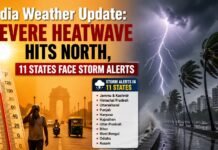
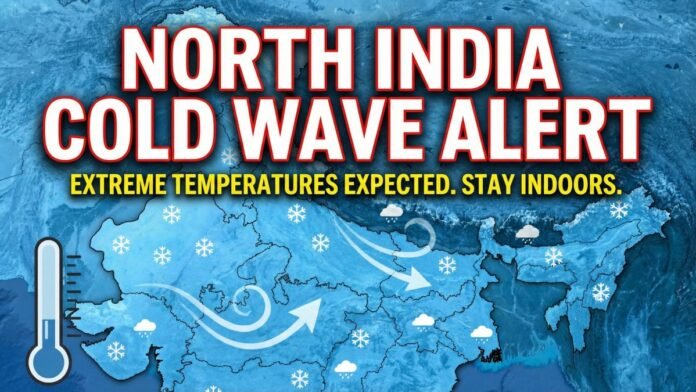
The India Meteorological Department has forecast the arrival of a new Western Disturbance over the Western Himalayas within the next 48 to 72 hours, marking the second weather system to affect the region this month. This disturbance will bring light precipitation to the higher reaches of Jammu and Kashmir and Himachal Pradesh, while its influence on the plains will trigger a severe cold wave across North India. The weather system is expected to amplify existing cold conditions, with temperatures likely to drop further across the region.
A subsequent Western Disturbance is anticipated to arrive on December 13, which will sustain the chilly weather pattern in the mountainous states of Kashmir, Himachal Pradesh, and Uttarakhand. The combined effect of these back-to-back weather systems will keep the northern plains in the grip of severe winter conditions for the foreseeable future. The IMD has issued alerts for dense fog formation, particularly during early morning hours, which will significantly reduce visibility and disrupt transportation networks.
Delhi Weather and Air Quality Conditions
The national capital continues to experience below-normal temperatures, with the mercury settling at 8.5 degrees Celsius this morning, a full degree below the seasonal average. The maximum temperature is expected to reach around 24 degrees Celsius under clear skies. However, the city remains shrouded in light fog, which is forecast to intensify on Saturday, potentially causing traffic disruptions and flight delays.
Delhi’s air quality remains a pressing concern, with the Air Quality Index hovering around 300, categorizing it as ‘poor’ according to the Central Pollution Control Board’s classification. The CPCB guidelines indicate that an AQI between 201 and 300 is considered poor, while 301 to 400 falls into the very poor category. Residents have been advised to limit outdoor activities, especially those with respiratory conditions. Light winds and temperature inversion are preventing the dispersion of pollutants, exacerbating the situation.
Uttar Pradesh and Bihar Weather Patterns
Western Uttar Pradesh is likely to experience partly cloudy conditions starting next week as the Western Disturbance begins to influence the region. Strong cold winds will sweep across the state for the next two days, with rural areas experiencing dense fog and developing frost conditions. The IMD has warned that daytime cold wave conditions will result in chilly evenings, with temperatures dropping significantly after sunset.
The weather will change rapidly across Uttar Pradesh and Bihar, leading to severe cold conditions that will affect daily life and agricultural activities. Farmers have been advised to take protective measures for their crops, particularly horticultural produce that is vulnerable to frost damage. The meteorological department has predicted that minimum temperatures may see a slight increase of one to two degrees after December 15, but cold winds will continue to cause discomfort as skies clear.
Rajasthan and Punjab Temperature Extremes
Winter continues to pound many parts of Rajasthan, with temperatures dropping to exceptionally low levels. In Fatehpur, the mercury has fallen below four degrees Celsius, while Nagaur recorded five degrees, Lunkaransar five degrees, Dausa six degrees, Jalore six degrees, Karauli six degrees, Sirohi 6.5 degrees, Pali seven degrees, and Jhunjhunu 7.5 degrees. Jaipur is expected to record a minimum of 10 degrees Celsius. The IMD has stated that the weather is expected to remain dry in most parts of the state for the next week, though the partial impact of a weak Western Disturbance may bring partly cloudy skies for the next two to three days.
In Punjab, minimum temperatures have dropped below normal in many places, with Faridkot recording the lowest temperature at 4.9 degrees Celsius. Several other locations recorded temperatures several degrees below normal, including Amritsar at 6.7 degrees Celsius, Ludhiana at 6.4 degrees Celsius, Patiala at 7.4 degrees Celsius (two degrees below normal), Pathankot at 6.9 degrees Celsius, Bathinda at 6.2 degrees Celsius, and Gurdaspur at seven degrees Celsius. Chandigarh recorded 6.9 degrees Celsius, three degrees below normal, indicating the severity of the cold wave across the region.
Haryana and Jammu & Kashmir Conditions
Cold wave conditions continue to grip Haryana, with temperatures dropping to uncomfortable levels across the state. According to the IMD, the minimum temperature was 8.7 degrees in Ambala, 6.4 degrees in Hisar, 6.5 degrees in Karnal, six degrees in Narnaul, 7.8 degrees in Rohtak, 7.5 degrees in Bhiwani, and 7.2 degrees in Sirsa. A weakening Western Disturbance over the mountains after December 15th will bring a slight increase in temperatures, but cold winds will continue to cause trouble as the skies clear and radiational cooling intensifies.
In Jammu and Kashmir, falling temperatures are making nights extremely cold across most parts of the region. Light fog prevailed in many areas, reducing visibility during morning hours. Srinagar recorded a minimum temperature of minus 2 degrees Celsius, while other areas experienced even harsher conditions. The Meteorological Department reported that the minimum temperature in Qazigund was minus 3.2 degrees, Kupwara minus 4 degrees, Kokernag minus 1 degree, Pahalgam minus 4.3 degrees, and Gulmarg reached 0 degrees. The impending Western Disturbances are expected to bring light snowfall to higher reaches, which may provide some respite from the dry cold conditions.
South India Rainfall Forecast
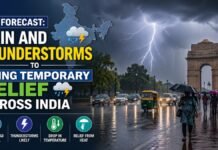
While North India grapples with severe cold, South India is preparing for wet weather conditions. The IMD has issued an alert for light rain in Tamil Nadu, Kerala, and Lakshadweep starting December 12th, which may provide relief from the prevailing dry conditions. The Andaman and Nicobar Islands are under a heavy rain alert, with authorities taking precautionary measures to ensure the safety of residents and tourists.
The rainfall in southern states is expected to be light to moderate, with isolated heavy spells possible in coastal areas. Fishermen have been advised to exercise caution while venturing into the sea, as moderate winds and rough conditions are likely to prevail. The contrast between the cold wave in the north and rainfall in the south highlights the diverse weather patterns affecting the Indian subcontinent during this winter season.
Extended Forecast and Weather Outlook
Looking ahead, meteorologists are monitoring another potential Western Disturbance that may become active in some parts of northwestern India around December 18th and 20th. This system could further influence weather patterns and temperature distribution across the region. The IMD has advised residents in northern states to prepare for prolonged cold wave conditions, with temperatures likely to remain below normal for at least the next week.
The combination of fog, frost, and cold wave conditions will require a coordinated response from authorities to ensure public safety, particularly for vulnerable populations. Health officials have recommended wearing layered clothing, avoiding early-morning exposure, and maintaining indoor heating when possible. The agricultural sector remains on high alert, with horticultural crops in Punjab, Haryana, and western Uttar Pradesh facing potential frost damage.