






























Key Points
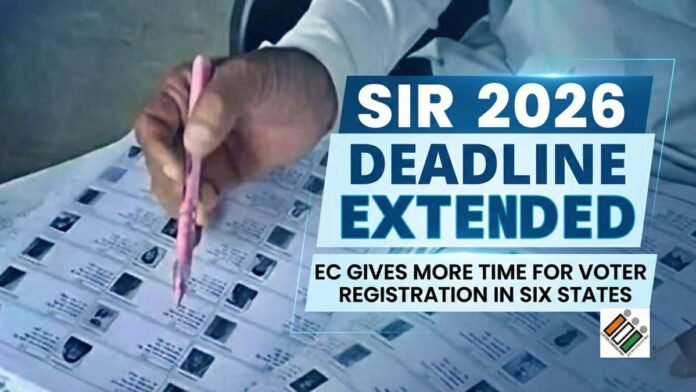
- Election Commission extends SIR 2026 deadline in Uttar Pradesh, Gujarat, Tamil Nadu, Madhya Pradesh, Chhattisgarh, and Andaman & Nicobar Islands
- Uttar Pradesh gets 15-day extension until December 26, with final voter list publication on December 31, 2025
- Gujarat and Tamil Nadu deadline extended from December 14 to December 19, 2025
- Madhya Pradesh, Chhattisgarh, and Andaman & Nicobar Islands deadline moved from December 18 to December 23
- Approximately 2.91 crore entries in UP remain unverified, including 1.27 crore shifted voters
- New schedule for UP: draft rolls December 31, claims/objections until January 30, 2026, final list February 28
- EC urges citizens not to wait until last minute and complete documentation promptly
The Election Commission announced the revised schedule on December 11, 2025, after reviewing the progress of the Special Electoral Roll Revision campaign across the six states. The decision addresses significant technical challenges and the overwhelming volume of applications received, particularly in India’s most populous state, Uttar Pradesh.
For Tamil Nadu and Gujarat, the Commission extended the deadline from December 14 to December 19, providing five additional days for citizens to submit their SIR forms. This extension came after district election officers reported server slowdowns and verification bottlenecks due to simultaneous bulk submissions from housing societies and corporate offices.
In Madhya Pradesh, Chhattisgarh, and the Andaman & Nicobar Islands, the deadline shifted from December 18 to December 23, giving voters an extra five days. Election officials in these states faced challenges in verifying deceased voters and those who had permanently relocated, requiring more time for door-to-door verification and cross-referencing with municipal death records and postal address databases.
Uttar Pradesh’s Special Extension and Verification Challenge
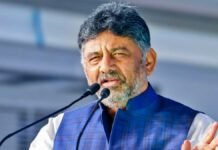
Uttar Pradesh received the most substantial extension, with the deadline moving from December 11 to December 26, a 15-day reprieve that acknowledges the massive scale of the verification exercise. Uttar Pradesh Chief Electoral Officer Navdeep Rinwa revealed that he had requested a two-week extension from the Commission, citing the enormous task of verifying approximately 2.91 crore unverified entries across the state’s 75 districts.
These unverified entries include 1.27 crore voters who have permanently shifted residences, millions of deceased voters whose names remain on rolls, and duplicate entries created due to migration between districts. The verification process requires election officials to physically visit addresses, cross-check with Aadhaar databases, and confirm death certificates from municipal corporations, a time-consuming process that cannot be rushed without compromising accuracy.
Revised Timeline for Uttar Pradesh Electoral Rolls
According to the new schedule announced by CEO Navdeep Rinwa, the draft electoral rolls for Uttar Pradesh will be published on December 31, 2025. This publication will allow citizens to verify their details and identify any errors or omissions. Following this, the Commission will accept claims and objections from voters until January 30, 2026, providing a month-long window for corrections.
Election officials will then process all claims and objections by February 21, 2026, requiring booth-level officers to verify each application and update records accordingly. Finally, the final voter list for Uttar Pradesh will be released on February 28, 2026, completing the comprehensive revision exercise just months before the state’s crucial municipal elections and ahead of the 2027 Assembly elections.
Technical Challenges and System Upgrades
The Election Commission cited technical reasons for the extensions, including server capacity issues and software glitches in the ERONET (Electoral Roll Management System) platform. During peak submission periods, the system experienced slowdowns, preventing many voters from uploading supporting documents like Aadhaar cards, proof of address, and passport-sized photographs.
To address these issues, the Commission has deployed additional server capacity and upgraded the ERONET platform’s bandwidth. District election officers have been instructed to set up help desks at every tehsil and block office to assist voters with form submissions and document scanning. Special camps will be organised in rural areas where internet connectivity remains poor, ensuring inclusive participation.
Importance of SIR 2026 and Voter Awareness
The Special Electoral Roll Revision campaign 2026 aims to create accurate, error-free electoral rolls ahead of the 2026 Assembly elections in several states and the 2027 elections in Uttar Pradesh. The exercise is crucial for removing deceased voters, eliminating duplicate entries, and adding new voters who have turned 18 since the last revision.
The Election Commission has launched an extensive awareness campaign through radio, television, and social media, urging voters not to wait until the last minute. Celebrity ambassadors and local influencers are spreading messages in regional languages, emphasizing that inclusion in the voter list is essential for exercising democratic rights. The Commission has also partnered with India Post to deliver SIR form information to every household in rural areas.
Verification Process and Quality Control Measures
To ensure accuracy, the Commission has implemented a three-tier verification process. First, booth-level officers conduct field verification by visiting residences. Second, data entry operators cross-check information with Aadhaar, PAN, and passport databases. Third, district election officers conduct random sampling audits, verifying at least 10% of entries in each assembly constituency.
Special attention is being given to urban areas where migration rates are high, and to border districts where voters may have relocated to neighboring states. The Commission has also directed officials to verify the credentials of service voters, including armed forces personnel and government employees posted outside their home constituencies.
Implications for Upcoming Elections
The successful completion of SIR 2026 will directly impact the electoral landscape in these six states. In Uttar Pradesh, where the BJP faces a strong challenge from the SP-Congress alliance, accurate voter rolls are critical for fair elections. In Gujarat and Madhya Pradesh, where Assembly elections are due in 2026, the revised rolls will form the basis for candidate selection and campaign strategies.
The Commission has assured that the extended deadlines will not delay the election schedule, as the final rolls will be published well in advance of the notification dates. Political parties have welcomed the extension, as it gives them more time to verify their supporters’ names and file claims for missing voters.
Official Statements and Voter Guidance
Chief Electoral Officer Navdeep Rinwa urged citizens to utilize the extended deadline wisely, stating, “We have requested this extension to ensure no eligible voter is left out due to technical glitches or verification delays. I appeal to all citizens to check their names in the draft rolls and file any corrections promptly.”
The Election Commission has set up a toll-free helpline (1950) and a dedicated portal (voterportal.eci.gov.in) where voters can track their application status. Voters are advised to keep their Aadhaar number, mobile phone, and address proof ready when submitting forms to avoid rejection due to incomplete information.
Latest Updates and Future Schedule
As of December 11, 2025, the Election Commission has confirmed that no further extensions will be granted beyond the announced dates. District election officers have been instructed to work on weekends and holidays to clear the backlog. In Uttar Pradesh alone, over 50,000 booth-level officers and 10,000 data entry operators are working round the clock to complete verification.
The Commission will release daily progress reports on its website, showing the number of forms processed and verified in each district. Voters can expect SMS notifications once their applications are approved, and physical voter ID cards will be distributed through booth-level officers by March 2026.