



































Key Points
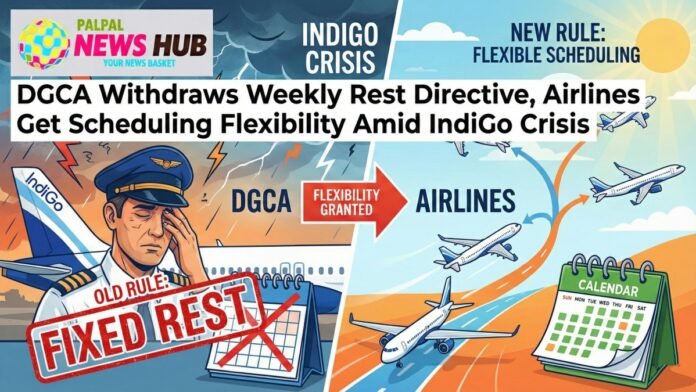
- DGCA withdrew the instruction that “no leave shall be substituted for weekly rest” with immediate effect on December 5
- Decision follows massive flight disruptions, IndiGo canceled over 1,150 flights since December 2
- New FDTL rules increased weekly rest to 48 hours from 36, limited night landings to two per week
- IndiGo admitted misjudging crew requirements, sought exemptions till February 10
- Airlines get flexibility to count leave as weekly rest, easing rostering constraints
- DGCA continues strict monitoring, IndiGo must submit crew recruitment roadmap and fortnightly progress reports
The Directorate General of Civil Aviation withdrew a key provision of its new fatigue management rules on December 5, rescinding the instruction that prohibited airlines from substituting weekly rest with leave for crew members. The circular states that the directive contained in the referenced paragraph, stating that no leave shall be substituted for weekly rest, is withdrawn with immediate effect. The regulator acted after receiving representations from various airlines regarding the need to ensure continuity and stability of operations amid ongoing disruptions.
The withdrawal gives airlines much-needed flexibility in crew rostering, particularly as they grapple with the stringent new Flight Duty Time Limitations that came into force in two phases on July 1 and November 1. Under the revised norms, weekly rest periods for pilots increased to 48 hours from 36, night landings were limited to two per week from six, and the definition of night hours was extended.
IndiGo Crisis Triggers Policy Reversal
The policy reversal follows a severe operational meltdown at IndiGo, which has canceled over 1,150 flights since Tuesday and entered a fourth consecutive day of disruptions on December 5. The airline admitted it misjudged crew requirements under the new FDTL scheme, leading to inadequate pilot availability during winter weather and congestion challenges. IndiGo CEO Pieter Elbers apologized for the disruptions and said the airline is working to restore normal operations by February 10.
During a detailed review meeting on Thursday, DGCA concluded that IndiGo’s crisis stemmed from a combination of revised fatigue-management rules, crew-planning deficiencies, and seasonal constraints. Inspections at major airports revealed inadequate passenger-handling manpower, prompting the regulator to direct the airline to urgently increase ground staff and strengthen support services.
New FDTL Rules And Safety Framework
The DGCA’s new pilot rest rules impose stricter limits to combat fatigue and enhance safety. Crew members cannot fly more than 8 hours daily, 35 hours weekly, or 125 hours monthly. The rules mandate a continuous 48-hour rest period every week, including two local nights, ensuring there are never more than 168 hours between the end of one weekly rest and the start of the next.
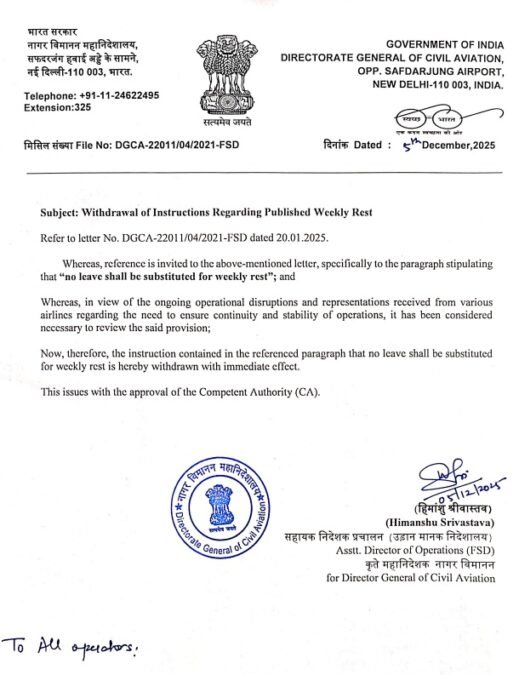
While the withdrawal of the leave substitution rule provides temporary relief, the core safety framework remains intact. The regulator has deployed officers to IndiGo’s operational control centers for continuous oversight and directed regional offices to conduct real-time field inspections at major airports. DGCA teams are monitoring crew-deployment, rostering practices, and on-ground coordination during delays and cancellations.
Compliance Requirements And Monitoring
Despite the concession, DGCA has imposed strict compliance measures on IndiGo. The airline must submit a detailed roadmap covering projected crew recruitment vis-a-vis aircraft induction, training and roster restructuring plans, safety-risk assessments, and mitigation measures leading to full compliance. IndiGo is also required to outline immediate steps to stabilize operations and ensure progressive reduction in cancellations.
The regulator has mandated fortnightly progress reports covering operational improvements, crew availability, and roster stability. Additionally, DGCA asked IndiGo to submit a precise list of FDTL relaxations it believes are necessary to normalize operations, though sources indicate this request is unlikely to find favor. The airline must also increase passenger-handling manpower at airports to manage disruptions more effectively.
Industry Impact And Future Outlook
The withdrawal provides immediate breathing space for airlines struggling with crew rostering under the new rules. For IndiGo, which operates a significant number of night-time flights, the flexibility to count leave as weekly rest could help stabilize operations faster. However, industry experts note that the relief is temporary, and airlines must quickly adapt their crew planning systems to the enhanced safety standards.
The crisis has highlighted the importance of robust crew management and the challenges of implementing fatigue-management reforms in a high-growth aviation market. As IndiGo works to meet DGCA’s compliance requirements, passengers are advised to check flight status before heading to airports, with the airline continuing to cancel flights for the next two to three days.