



































KEY POINTS
, Cyclone Ditwa claims 47 confirmed deaths in Sri Lanka, 21 people missing
, Massive landslides and flooding across multiple provinces
, Heavy rainfall exceeding 200mm expected in northern, central, and western regions
, Wind speeds of 60-90 kmph causing severe structural damage
, Military and disaster management teams conducting large-scale rescue operations
, Tourist advisory issued, urging postponement of travel to Sri Lanka
, Kelani River flooding threat to 15 low-lying areas including Colombo
, Cyclone approaching eastern India coast, Tamil Nadu and Andhra Pradesh at risk
, Meteorological Department warns of extreme weather by November 30
, High-risk flood zones identified in Eheliyagoda, Kelaniya, Wattala, and surrounding areas
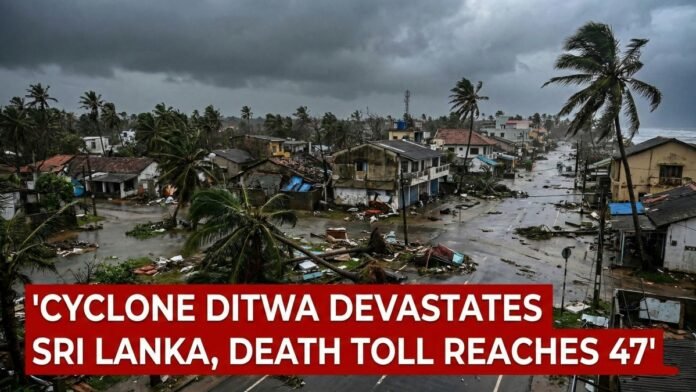
Cyclone Ditwa has unleashed catastrophic devastation across Sri Lanka, emerging as one of the most destructive weather systems to impact the island nation in recent years. Since making landfall on the eastern coast yesterday morning, the powerful cyclone has claimed the lives of at least 47 people, with authorities confirming 21 additional missing persons. Hundreds more have sustained injuries ranging from minor to critical conditions, with rescue teams continuing to search for survivors amid ongoing severe weather conditions. The disaster has prompted a nationwide emergency response, with military forces and disaster management agencies mobilizing comprehensive rescue and relief operations across affected regions.
CATASTROPHIC DAMAGE: FLOODS AND LANDSLIDES DEVASTATE COMMUNITIES
Torrential rains and powerful winds unleash unprecedented destruction across island nation
Cyclone Ditwa’s arrival has brought catastrophic weather conditions to Sri Lanka, with torrential rainfall and destructive winds reshaping the landscape of affected areas. The meteorological department has recorded rainfall measurements exceeding 200 millimeters across northern, north-central, central, and western provinces, creating dangerous flooding conditions in multiple districts. Extreme wind speeds ranging from 60 to 70 kilometers per hour, with devastating gusts reaching 80 to 90 kilometers per hour, have caused significant structural damage to buildings, uprooted trees, and destroyed critical infrastructure including power lines and communication networks.
The combination of heavy precipitation and powerful winds has triggered numerous deadly landslides in hilly and mountainous regions, particularly in districts with unstable soil conditions and steep terrain. Flash flooding has inundated residential areas, agricultural lands, and public infrastructure, displacing thousands of families from their homes. Emergency shelters have been rapidly established in schools, community centers, and government facilities to accommodate evacuated residents and provide emergency assistance.
KELANI RIVER FLOODING ALERT: 15 CRITICAL AREAS AT SEVERE RISK
Authorities issue urgent warning for low-lying communities over next 48 hours
Meteorological and flood management authorities have issued an urgent critical alert regarding Kelani River flooding potential within the next 48 hours. Rising water levels caused by continuous heavy rainfall pose an imminent threat to numerous low-lying communities and urban settlements in the greater Colombo metropolitan area. The 15 identified high-risk zones requiring immediate preparedness measures include Eheliyagoda, Yatiyantota, Ruwanwella, Dehiowita, Sitawaka, Dompe, Padukka, Homagama, Kaduwela, Biyagama, Kolonnawa, Kelaniya, Wattala, Colombo proper, and surrounding residential districts.
Residents in these vulnerable areas have been advised to relocate to higher ground and evacuate to designated emergency shelters immediately. Local administrators have established communication networks to provide real-time flood updates, and emergency response teams remain on standby to assist in rapid evacuations if water levels exceed critical thresholds. Water management authorities are closely monitoring dam levels and conducting controlled water releases to prevent catastrophic dam failures.
COMPREHENSIVE RESCUE OPERATIONS: MILITARY AND DISASTER TEAMS MOBILIZED
Large-scale evacuation efforts underway as emergency services work around the clock
Sri Lanka’s military forces, disaster management authority, and civilian emergency responders have launched an unprecedented coordinated rescue operation spanning multiple affected provinces. Specialized rescue teams equipped with boats, helicopters, and advanced search equipment are actively searching for the 21 confirmed missing persons and conducting evacuations from stranded areas. Military helicopters are conducting aerial surveys to identify isolated communities requiring emergency assistance and delivering critical supplies to areas unreachable by ground transportation.
Disaster management teams have established coordination centers in each affected district to streamline rescue operations, manage resource allocation, and provide real-time status updates to government authorities and international relief organizations. Emergency medical teams have been positioned in temporary medical facilities established throughout affected regions to provide immediate healthcare to injured survivors, treating trauma injuries, waterborne illnesses, and weather-related health complications.
TOURISM ADVISORY: MINISTRY URGES TRAVEL POSTPONEMENT
Government appeals to international visitors to delay visits for safety and operational reasons
The Sri Lankan Ministry of Tourism has issued an urgent official advisory requesting all international and domestic tourists to postpone travel plans to the island nation until the cyclone situation normalizes and recovery operations conclude. The advisory emphasizes that ongoing rescue operations require full mobilization of transportation infrastructure, emergency services, and government resources that would otherwise support tourism operations. The ministry states that postponing travel will prevent hampering rescue efforts and ensure the safety of visitors during dangerous weather conditions and unstable environmental circumstances.
Hotels and tourism businesses across the country have temporarily suspended operations, and transport networks including flights and train services have been disrupted by the cyclone. The government has established an online portal for travelers to reschedule bookings without penalty, and tourism insurance providers have been directed to honor cancellation claims for weather-related postponements without administrative complications.
CYCLONE DITWA TRAJECTORY: APPROACHING EASTERN INDIA COAST
Storm moving north-northwest toward Tamil Nadu and Andhra Pradesh threat zones
Cyclone Ditwa is currently positioned near Trincomalee on Sri Lanka’s eastern coast and is gradually moving in a north-northwest directional path across the Indian Ocean. According to the India Meteorological Department and Sri Lankan meteorological authorities, the cyclone is projected to approach the eastern coastline of India by November 30, 2025, bringing severe weather conditions to Tamil Nadu, Puducherry, and Andhra Pradesh regions.
The cyclone’s movement across the ocean is expected to maintain significant meteorological intensity, with current projections indicating sustained wind speeds and moisture content capable of producing extreme rainfall in India’s coastal regions. Preparedness measures have been initiated along the Tamil Nadu and Andhra Pradesh coasts, with authorities establishing emergency response protocols, evacuation routes, and emergency shelters in potentially affected coastal districts.
SEVERE WEATHER WARNINGS AND EMERGENCY PREPAREDNESS
Indian coast remains vigilant as cyclone approaches by month’s end
The India Meteorological Department has issued severe weather alerts for Tamil Nadu, Puducherry, and Andhra Pradesh, warning of extremely heavy rainfall, strong winds, and potentially dangerous storm surge conditions. Coastal residents have been advised to remain vigilant, secure loose items that could become dangerous projectiles, stock emergency supplies, and prepare evacuation plans in advance of the cyclone’s arrival.
Officials in both countries have appealed to all citizens to prioritize personal safety, follow official emergency instructions, and avoid traveling to affected areas during the cyclone’s passage. Weather forecasts will be continuously updated every six hours, providing real-time storm track information and localized weather predictions. Emergency hotlines have been activated in both nations to provide citizens with immediate assistance and real-time safety information during the critical period.
HUMANITARIAN RESPONSE AND INTERNATIONAL SUPPORT
Aid organizations mobilize relief efforts as cyclone devastates South Asian region
International humanitarian organizations, including the Red Cross, United Nations Disaster Management agencies, and neighboring country relief organizations, have begun coordinating assistance for Sri Lanka. Preliminary assessments indicate significant humanitarian needs including emergency shelter materials, clean drinking water, medical supplies, food provisions, and temporary housing solutions for displaced families.
The international community has pledged support for Sri Lanka’s recovery efforts, with offers of technical expertise in disaster management, medical personnel, and humanitarian supplies. Regional countries are preparing border crossing protocols to facilitate the rapid delivery of emergency aid without administrative delays.