
Key points
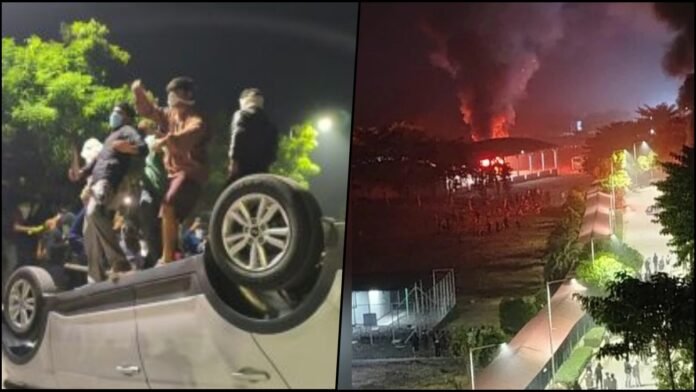
- Violent protests erupted at VIT University near Bhopal on Tuesday night, with an estimated 3,000–4,000 students on campus, buses, cars and an ambulance were set ablaze.
- Students allege poor quality food and contaminated hostel water caused a jaundice outbreak, with dozens falling ill and some claiming multiple deaths, while officials insist there are no fatalities.
- Registrar KK Nair says one girl and 22 boys have been confirmed or suspected with jaundice and are recovering, and that rumours of student deaths are false.
- Police from several stations and paramilitary forces were deployed through the night, the SP says the situation is now under control and the university has been closed till November 30, with students leaving the campus.
- Opposition leaders have called the incident a symptom of systemic failure and corruption, while district officials and the higher education department have ordered an inquiry and begun recording complaints from hostel students.
Bhopal: According to police and eyewitness accounts, demonstrations that had been simmering for days over food, water and hygiene suddenly escalated late Tuesday at VIT University, which is located along the Indore–Bhopal highway in Sehore district. Large groups of students spilled out of hostels around midnight, shouting slogans and soon torching a bus, at least two cars, an ambulance, motorcycles, hostel window panes, an RO plant and parts of the campus near the administrative block and the chancellor’s bungalow.
As flames and thick black smoke rose from the parking area and buildings, police teams from at least five police stations rushed in, with paramilitary forces also deployed to prevent the unrest from spreading and to protect staff quarters. Officials said the situation worsened around 3 a.m., before security forces finally managed to push students back to the hostels and secure key buildings by early morning.
Health crisis and official version
Students say the spark for the protest was a jaundice outbreak that they link to unsafe drinking water and unhygienic hostel kitchens, claiming that for days they were forced to buy bottled water while complaints were ignored. Several reports mention that around two dozen students had recently developed jaundice like symptoms and were admitted in hospitals in Bhopal, Ashta and Sehore, with some now sent home to recover.
In contrast to social media posts alleging student deaths, Registrar KK Nair has released a video statement saying that as of 26 November one girl and 22 boys have been diagnosed or preliminarily detected with jaundice, but no deaths have occurred and most are out of danger. Local administration officials, including the SDM, have also publicly denied any fatalities, though they acknowledge that more students may have suffered mild symptoms without hospitalisation.
Violence, policing and student allegations
Student groups allege that when they gathered to demand safe water and accountability, some security guards or staff members manhandled them instead of addressing their concerns, which they say pushed a peaceful sit in into a full scale riot. Police sources confirm there was a confrontation between students and campus security before the arson began, and that heavy force was then deployed to stop further damage to academic blocks and the chancellor bungalow.
On Wednesday morning, the campus presented a bleak picture, with charred buses and cars, shattered glass, burnt out rooms and smoke stains on walls even as authorities declared a five day holiday and asked students to go home. Long queues of students carrying luggage could be seen on the approach road, creating traffic jams at the main gate while police and paramilitary personnel remained stationed at key points.
Politics, probe and next steps
Sehore Superintendent of Police Deepak Shukla has said the situation is presently normal, although a strong force will remain on the ground and CCTV and mobile footage are being scanned to identify those involved in arson and vandalism. District authorities have tasked the SDM and SDOP with collecting written complaints from hostel students about food, water and medical care and with compiling details of all those who fell ill, which will feed into a wider inquiry.
Opposition leaders, including Madhya Pradesh Congress figures, have seized on the unrest to attack the state government, alleging widespread jaundice, negligence in monitoring private universities and deep rooted corruption in the higher education system. The state higher education department has ordered a formal probe into the incident and the health conditions on campus, but for now the blackened walls and burnt vehicles at VIT Sehore remain a visible symbol of student anger and institutional failure.