Key points
- India has about 116 crore wireless subscribers, making it one of the world largest mobile markets.
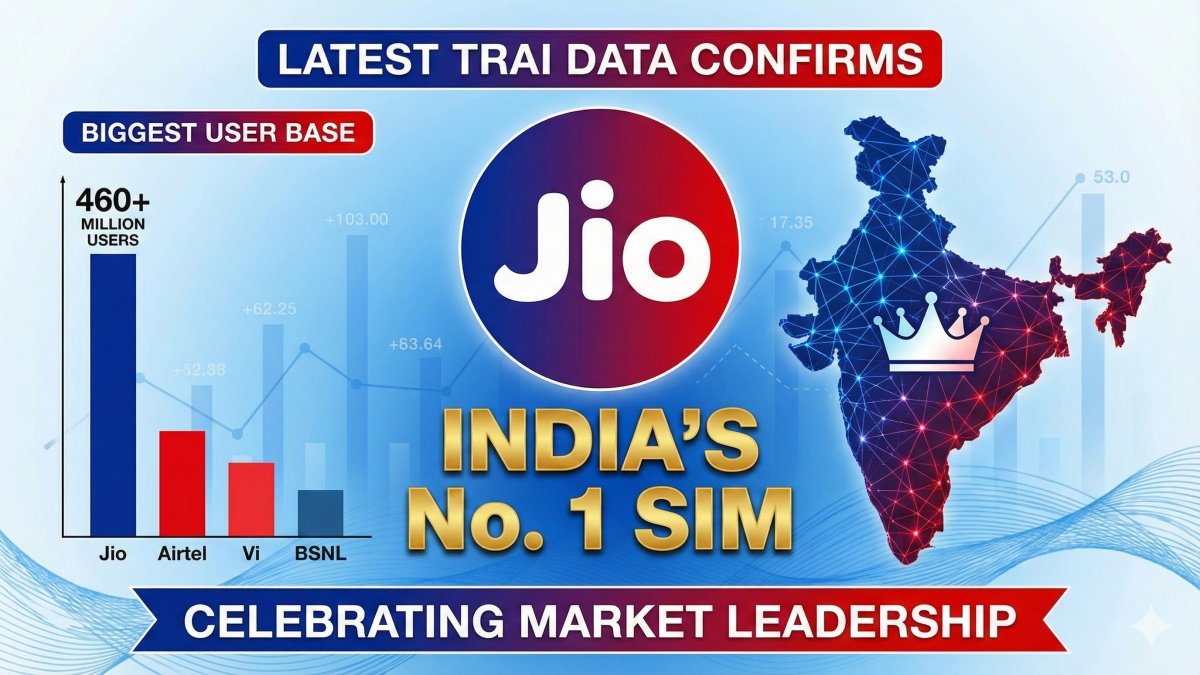
- As of July 2025, Reliance Jio has around 477.5 million mobile subscribers and 41.04 percent wireless market share, making it India largest telecom operator.
- Bharti Airtel is in second place with about 391.5 million mobile users and 33.65 percent share, and continues to add subscribers every month.
- Vodafone Idea has fallen to roughly 203.9 million users with 17.52 percent share, and is still losing customers, while BSNL and MTNL together hold under 8 percent.
- User choice is being driven mainly by cheap data and 5G speeds, where Jio leads, and by premium call quality and stable coverage, where Airtel is seen as strong, while Vi struggles due to network and financial issues.
TRAI’s latest subscription data shows India had about 1,163.5 million wireless users in July 2025, with a slight overall growth but a clear shift towards private operators. Urban users increased, while rural subscriptions dipped a little, underlining how competitive city markets, 4G, 5G and fixed wireless access are driving growth.
Jio and Airtel together account for nearly 75 per cent of all mobile connections, while Vi, BSNL and MTNL share the remaining quarter, a consolidation trend that has been strengthening over the last few years. Alongside mobile, Jio and Airtel are also adding wireline broadband and 5G fixed wireless users rapidly, which deepens their hold on high-value customers.
Jio at number one
According to TRAI data analysed by industry trackers, Reliance Jio holds about 477.5 million wireless subscribers, with a 41.04 per cent share of the mobile market in July 2025. In that single month, Jio added around 4.8 lakh new users, and by September,r its total subscriber base across mobility and broadband had crossed 506.4 million, helped by aggressive 5G and JioAirFiber expansion.
Jio built this lead through low entry tariffs, bundled data-heavy plans, relatively fast 4G and early 5G availability, and pan-India coverage that reached small towns faster than many rivals. With most new 5G fixed wireless users and a growing share of home broadband connections also on its side, Jio remains the default first SIM for a large share of price-conscious and data-heavy users.
Airtel strong second
Bharti Airtel is Jio’s closest competitor, with around 391.5 million wireless users and 33.65 per cent market share as of July 2025, and it too added about 4.6 lakh subscribers that month. TRAI’s active user data shows Airtel with one of the highest visitor location register ratios, above 99 per cent, indicating that a very high portion of its customers are actually active on the network.
Airtel’s branding and plans focus on premium call quality, stable data speeds, enterprise services and postpaid offerings, which appeal to users who prioritise reliability over only the lowest tariff. Rapid 5G rollout in metro and tier two cities, bundled OTT and broadband plans, and strong performance in wireline and machine-to-machine connections are also helping it hold and grow its high-value base.
Why Vi keeps losing users
The merged Vodafone Idea, now Vi, has seen its user base shrink to about 203.86 million subscribers with a 17.52 per cent wireless market share, and in July alone, it lost around 3.6 lakh customers. Subscriber losses have been moderating compared with earlier years, but Vi is still not adding net customers, while Jio and Airtel continue to gain.
Analysts point to Vi’s heavy debt, relatively slower network investments, patchy data speeds in some circles and delayed 5G rollout as key reasons why many users have ported their numbers to Jio or Airtel over time. Unless Vi is able to raise substantial funds and accelerate network and 5G deployment, experts believe its market share will keep gradually slipping in favour of the top two.
How Indians choose a SIM
For most users today, SIM choice is guided first by cheap data and fast 4G or 5G speeds, which strongly favours Jio, especially in prepaid and budget segments. For another large segment, especially working professionals and urban families, consistent call quality, indoor coverage and customer service matter more, which keeps Airtel as the first preference.
Vi still has a presence in several circles and some loyal customers, but continuing complaints around coverage and speeds, plus the uncertainty of its long-term financial health, are pushing many to port out. With Jio and Airtel adding subscribers every month and leading in both 5G and broadband, the current trend clearly suggests that these two operators will shape the future of India’s telecom industry, while smaller players fight to stay relevant in niche pockets.