



































Key points
- Russian Urals crude is being offered to Indian refiners at discounts of up to $7 per barrel to dated Brent, more than double the previous $3 discount, for December loading and January arrival.
- US sanctions on Russian oil majors Rosneft and Lukoil took effect on November 21, 2025, turning their crude into a “sanctioned molecule” and forcing Indian refiners to reassess supply channels.
- Reliance Industries, India’s largest buyer of Russian crude, stopped importing Russian oil into its export-only SEZ refinery in Jamnagar from November 20, diverting any post-deadline cargoes to its domestic refinery.
- Only about 20% of available Russian cargoes are now marketed by non-sanctioned sellers, limiting options for Indian refiners seeking to avoid sanctions exposure.
- The steep discounts have prompted some Indian buyers to reopen discussions with non-blacklisted entities, though banks remain cautious about financing Russian oil trade.
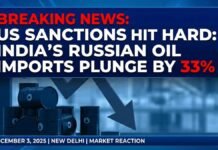
- India’s Russian oil imports are expected to hit their lowest level in at least three years in December 2025, as refiners turn to Middle East alternatives and US oil imports surge to highest levels since June 2024.
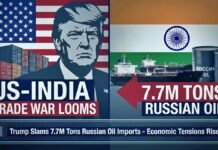
Russian Urals crude is being offered to Indian refiners at the steepest discount in at least two years, with cargoes for December loading and January arrival quoted at up to $7 per barrel cheaper than dated Brent on a delivered basis, according to Bloomberg reports citing sources familiar with the matter. This represents more than double the previous discount of around $3 per barrel before US sanctions took effect last week, marking a dramatic shift in Moscow’s pricing strategy to retain its key Indian market. The massive discount comes as many of India’s major buyers, including Reliance Industries, have virtually stopped booking new Russian oil purchases after Washington imposed fresh sanctions on top Russian producers.
Western sanctions disrupt Russian oil trade
Recent US sanctions have targeted Russia’s major producers, Rosneft PJSC and Lukoil PJSC, and their majority-owned subsidiaries, impacting the Russia-India oil trade that had been booming since 2022. The sanctions, announced on October 22 and effective November 21, 2025, have turned crude linked to these firms into a “sanctioned molecule,” effectively reducing cargo availability from non-restricted sellers to just 20% of total supply. Indian refiners had largely paused new purchases of Russian barrels scheduled to arrive after the sanctions kicked in, but the record discounts have created new excitement in the market and prompted some buyers to reconsider, provided the cargoes come from non-blacklisted companies to avoid sanctions risk. Indian banks are also considering financing non-sanctioned Russian oil trade, though they remain cautious about compliance issues.
Reliance stops processing Russian oil at export refinery
Last week, Reliance Industries revealed that it had stopped processing Russian crude at its export-only SEZ refinery in Jamnagar, India’s largest oil refining complex. This move was taken due to strict European Union regulations that prohibit fuel exports to countries that have imposed sanctions on products made from Russian crude, with stricter EU sanctions set to take effect in January 2026. The company stated that starting December 1, the SEZ refinery will only use non-Russian oil, and Russian cargoes arriving after November 20 will be diverted to its domestic-focused refinery within the same Jamnagar complex. Reliance purchased about half of the 1.7-1.8 million barrels per day of discounted Russian crude shipped to India, making it the world’s biggest buyer of seaborne Russian crude. The move is considered “advanced compliance” ahead of stricter regulations, ensuring full compliance while honouring pre-committed Russian cargoes placed before the October 22 sanctions announcement.
Major impact on India’s energy strategy
The steep discounts from Russia have created both opportunities and increased sanctions risk for India, forcing a delicate balancing act in procurement strategies. Urals blend had become India’s primary crude oil since 2022, as Russia continued to offer India steep discounts after losing markets in Europe. Now that the US has imposed new sanctions on major producers, Indian refiners are turning to alternative sources like the Middle East, while the share of US oil in India’s imports surged to 10.7% in October 2025 from around 3% in 2024, partly reflecting efforts under “Mission 500” to increase India-US bilateral trade to $500 billion by 2030. Despite the record discounts, Indian refiners are cautious, with India’s Russian oil imports set to hit their lowest in at least three years in December 2025, down from multi-month highs in November. Nayara Energy, partly owned by Rosneft, is exclusively processing Russian oil after other suppliers pulled back, while the government is under pressure to buy more US energy after Washington doubled tariffs on Indian imports to 50%, citing New Delhi’s Russian oil purchases. The coming months will determine how much these record discounts will actually benefit India’s energy bill while navigating the complex sanctions landscape.