

































Key Points
- India’s first structured long-term US LPG import contract signed on November 16, 2025, for 2.2 million tonnes annually in 2026
- State-run IOC, BPCL, and HPCL jointly finalized the one-year agreement after months of negotiations with major US producers
- Import volume represents close to 10% of India’s annual LPG imports, sourced from US Gulf Coast using Mount Belvieu pricing benchmark
- Deal seen as significant step toward broader India-US bilateral trade agreement amid easing tariff tensions
- Government absorbed over ₹40,000 crore in subsidies last year to keep Ujjwala LPG cylinders at ₹500-550 despite actual costs exceeding ₹1,100
- India’s LPG consumption reached 31 million tonnes with 66% import dependency; production at 13 million tonnes annually
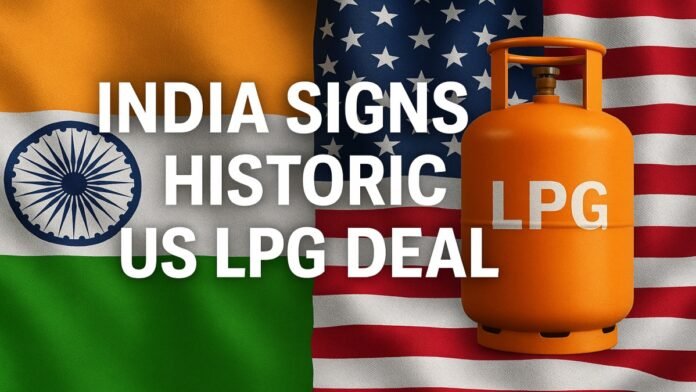
New Delhi: Union Petroleum and Natural Gas Minister Hardeep Singh Puri announced on Monday, November 16, 2025, that Indian public sector oil companies have successfully concluded India’s first structured long-term agreement to import liquefied petroleum gas from the United States. Calling it a “historic first,” Puri stated that one of the largest and the world’s fastest-growing LPG markets has opened up to the United States, marking a significant milestone in the country’s efforts to diversify its LPG sourcing. The agreement covers imports of approximately 2.2 million tonnes per annum (MTPA) of LPG for the contract year 2026, to be sourced from the US Gulf Coast.
The minister shared the development through a social media post on X (formerly Twitter), highlighting that this volume represents close to 10% of India’s annual LPG imports. This is the first structured contract involving US LPG for the Indian market, distinguishing it from previous spot purchases or shorter-term arrangements. The agreement uses Mount Belvieu, a key pricing point for global LPG trade located in Texas, as the benchmark for the supplies.
Three PSU Oil Companies Lead Agreement
State-run Indian Oil Corporation Limited (IOCL), Bharat Petroleum Corporation Limited (BPCL), and Hindustan Petroleum Corporation Limited (HPCL) jointly finalized the one-year agreement with major American LPG producers. Minister Puri explained that teams of officials from these three public sector undertakings (PSU) oil companies had visited the United States over the last few months to engage in extensive discussions with leading US producers, which have now been successfully concluded. The collaborative approach by India’s three largest oil marketing companies demonstrates the strategic importance of this agreement in ensuring secure and affordable LPG supplies for Indian consumers.
The contract is structured to begin deliveries in 2026, with LPG shipments originating from the US Gulf Coast and arriving directly at Indian ports. This direct sourcing arrangement is expected to enhance supply chain efficiency and provide price stability through the benchmark pricing mechanism. The agreement represents a significant shift in India’s LPG sourcing strategy, which has traditionally relied heavily on Middle Eastern suppliers.
Strategic Energy Diversification Move
Minister Puri emphasized that the new agreement forms part of India’s broader endeavor to provide secure, affordable supplies of LPG to the people of India while diversifying the country’s LPG sourcing. The deal strengthens energy security for one of the world’s fastest-growing LPG markets by reducing dependence on traditional suppliers and creating alternative supply channels. India has been actively pursuing diversification of its energy imports across crude oil, natural gas, and LPG to mitigate supply risks and price volatility associated with over-reliance on specific regions.
The timing of this agreement is particularly significant as it comes amid ongoing negotiations for a broader India-US Bilateral Trade Agreement and represents a concrete step forward in economic cooperation between the two nations. Energy analysts view the deal as demonstrating both countries’ commitment to strengthening commercial ties and addressing each other’s strategic priorities, with India seeking energy security and the United States seeking market access for its abundant LPG production. The agreement also signals easing of trade tensions that had emerged earlier over tariffs and market access issues.
India’s Growing LPG Import Dependency
India’s LPG consumption has grown substantially to approximately 31 million tonnes annually, with domestic production meeting only about 42% of this demand. In fiscal year 2023-24, India’s LPG imports totaled 20.1 million tonnes, projected to increase to 20.5 million tonnes in fiscal year 2024-25, representing approximately 66% of total LPG requirements. The country produced approximately 13 million tonnes of LPG in fiscal year 2024, leaving a significant gap that necessitates continued reliance on imports.
India’s largest LPG suppliers have traditionally been Middle Eastern countries, with 8.1 million tonnes imported from the United Arab Emirates, 5 million tonnes from Qatar, 3.4 million tonnes from Kuwait, and 3.3 million tonnes from Saudi Arabia in the previous year. The new US contract for 2.2 million tonnes annually will diversify this supply base, reducing concentration risk and potentially providing competitive pricing leverage. As India’s LPG consumption is projected to increase to 32 million tonnes in 2025, the country’s import requirements will continue growing, making strategic sourcing agreements increasingly important.
Government Subsidies Shield Consumers
Minister Puri highlighted the government’s commitment to ensuring affordable LPG for Indian households, particularly for women benefiting from the Pradhan Mantri Ujjwala Yojana, a flagship welfare scheme providing subsidized cooking gas connections to economically disadvantaged families. He pointed out that even as global LPG prices surged by more than 60% last year, Prime Minister Narendra Modi ensured that Ujjwala consumers continued to receive LPG cylinders at just ₹500-550, whereas the actual cost of the cylinder was over ₹1,100.
To shield consumers from international price shocks and volatility, the Government of India absorbed a financial burden exceeding ₹40,000 crore during the year, ensuring that mothers and sisters did not feel the burden of rising international LPG prices. This substantial subsidy demonstrates the government’s prioritization of social welfare and energy access over fiscal constraints, recognizing LPG as an essential commodity for household cooking and a critical element in improving living standards and reducing indoor air pollution from traditional biomass fuels. The new US import deal is expected to reinforce the government’s ongoing efforts to secure reliable and affordable energy supplies while managing subsidy expenditures.
Domestic Production Expansion Plans
India produced approximately 13 million tonnes of LPG in fiscal year 2024, accounting for approximately 42% of total consumption, with production running at about 1 million tonnes per month through April of fiscal year 2025. Indian Oil Corporation produces the highest volume among domestic producers at 30,000 tonnes annually. While LPG production has increased by approximately 30% over the past decade, demand has grown even faster at 32%, causing import dependency to increase rather than decrease.
To address this growing gap, the government has planned to increase LPG production by 15% by 2030, targeting an estimated annual growth rate of 3.5% during this period. To achieve this ambitious production expansion, the government will invest ₹17,700 crore through the Oil Industry Development Fund, supporting infrastructure development, exploration, and production enhancement projects. However, even with this planned production increase, India will continue to rely heavily on imports to meet its rapidly growing LPG consumption, making strategic sourcing agreements like the US deal critical for long-term energy security.
Trade Agreement Implications
The LPG supply contract is viewed as a significant step forward in the ongoing negotiations for a comprehensive India-US Bilateral Trade Agreement, signaling mutual willingness to address each other’s commercial priorities. Energy sector observers interpret the deal as part of a broader balancing act in India’s trade relationships, with the country reportedly reducing purchases of Russian oil while simultaneously increasing energy imports from the United States. This rebalancing reflects India’s strategic navigation of complex geopolitical relationships while prioritizing its economic and energy security interests.
Market analysts suggest the agreement provides incrementally positive signals for broader trade negotiations and could help ease remaining tensions over tariffs and market access issues. Earlier reports had indicated that the United States had softened its insistence on Indian agricultural market access as a precondition for trade deals, potentially smoothing the path for sectoral agreements like the LPG contract. The successful conclusion of this energy deal may serve as a template for future commercial agreements across other sectors, building momentum toward a comprehensive bilateral trade framework.
Market Impact And Future Outlook
The announcement of India’s first structured US LPG import agreement is expected to have neutral to slightly positive impact on domestic oil marketing company stocks, with the primary significance lying in the strategic and geopolitical implications rather than immediate financial effects. For HPCL, BPCL, and IOC, the deal represents diversification of supply sources and potential price stability benefits rather than transformational changes to their business operations. However, the broader market may interpret the agreement positively as evidence of strengthening India-US commercial ties and progress toward comprehensive trade normalization.
Looking ahead, the one-year duration of the current agreement suggests that both sides are taking a measured approach, allowing for evaluation of logistics, pricing dynamics, and commercial viability before committing to longer-term arrangements. If the 2026 contract proves successful, it could pave the way for multi-year agreements with larger volumes, further deepening energy cooperation between the two countries. As India’s LPG market continues its rapid growth trajectory, the country will require increasingly diverse and reliable supply sources, positioning the United States as a potentially significant long-term supplier alongside traditional Middle Eastern partners.