

































Key Points
- Kolkata Knight Riders lead with highest purse of ₹64.3 crore for IPL 2026 mini auction
- Chennai Super Kings second with ₹43.4 crore after blockbuster Sanju Samson trade
- Mumbai Indians have smallest budget with only ₹2.75 crore remaining
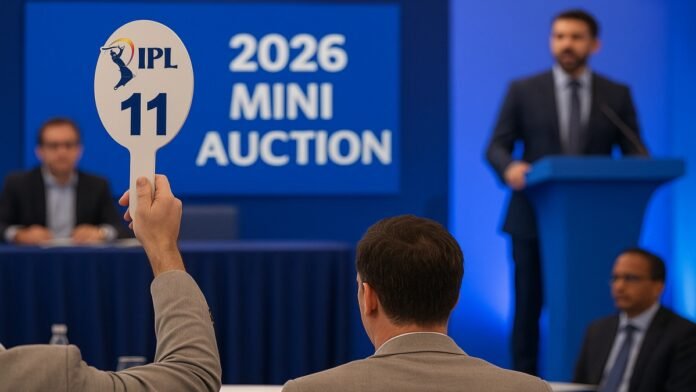
- IPL 2026 mini auction scheduled for December 15, 2025
- Major trades include Jadeja to Rajasthan Royals, Samson to CSK, Shami to LSG
- KKR released Andre Russell and Venkatesh Iyer in major squad overhaul
- Teams looking to fill between 4 to 13 vacant roster slots
New Delhi: The two-time IPL champions Kolkata Knight Riders have positioned themselves as the most financially powerful franchise heading into the IPL 2026 mini auction, retaining a substantial war chest of ₹64.3 crore after releasing 10 players from their IPL 2025 championship-winning squad. This strategic decision to create maximum financial flexibility suggests KKR’s management is planning significant squad restructuring despite their recent success.
The most shocking releases from KKR include West Indian power-hitter Andre Russell, who has been synonymous with the franchise for years, and former captain Shreyas Iyer, both of whom commanded premium salaries. By releasing these high-profile players, KKR has freed up considerable funds while maintaining their core leadership and performance base. The franchise now faces the challenge of filling 13 vacant roster slots during the December auction, the joint-highest number among all teams, providing them opportunities to completely reshape their squad composition.
This aggressive approach indicates KKR’s willingness to take calculated risks, potentially targeting emerging talents or creating a more balanced salary structure rather than concentrating resources on a few marquee players. With the largest purse available, KKR can afford to be aggressive bidders for any player they identify as crucial to their plans, giving them a distinct advantage in the auction room.
Chennai Super Kings: Blockbuster Samson Trade Reshapes Squad
Chennai Super Kings, one of the IPL’s most successful franchises, enters the mini auction with the second-largest purse of ₹43.4 crore after executing one of the most significant trades in IPL history. The five-time champions acquired wicketkeeper-batsman Sanju Samson from Rajasthan Royals for ₹18 crore, signaling a major shift in the franchise’s leadership structure and batting approach.
The trade becomes even more significant considering CSK released legendary all-rounder Ravindra Jadeja, who served the franchise for 12 seasons and was integral to their success story. Jadeja moved to the Rajasthan Royals alongside England all-rounder Sam Curran in the swap deal that brought Samson to Chennai. CSK also released Sri Lankan pace sensation Matheesha Pathirana, freeing up ₹13 crore in salary commitments.
Additional releases include New Zealand openers Devon Conway and Rachin Ravindra, both of whom failed to make significant impacts during IPL 2025, as well as experienced Indian middle-order batsmen Rahul Tripathi, Deepak Hooda, and Vijay Shankar. Despite these departures, CSK retained captain Ruturaj Gaikwad, MS Dhoni in his mentorship role, and promising young talents like Ayush Mhatre, Dewald Brevis, and Urvil Patel. The retained squad also includes all-rounders Shivam Dube and Jamie Overton, Afghan spinner Noor Ahmad, and Indian pacers Khaleel Ahmed, Anshul Kamboj, Mukesh Choudhary, and Nathan Ellis.
With 9 vacant slots to fill and substantial financial resources, CSK will likely target quality overseas fast bowlers and middle-order batting depth to complement their existing core. The Samson acquisition suggests the franchise is planning for leadership transition while maintaining their competitive edge.
Sunrisers Hyderabad: Balanced Retention Strategy
Sunrisers Hyderabad, runners-up in IPL 2025, have adopted a more conservative retention approach, entering the mini auction with ₹25.5 crore in their purse. The franchise has 10 vacant slots to fill, indicating they released several players while maintaining their core strength that propelled them to the finals last season.
SRH’s retention strategy likely focuses on preserving their successful opening combination and bowling attack that proved effective throughout IPL 2025. The franchise will use their moderate purse to target specific skill sets and fill gaps identified during their title run, potentially focusing on middle-order stability and death bowling options.
Lucknow Super Giants: Impact Trade Acquisition
Lucknow Super Giants have ₹22.9 crore remaining in their purse with 6 vacant slots to fill, representing a focused retention strategy. The franchise made headlines by acquiring experienced Indian pacer Mohammed Shami through the trade window, adding a seasoned match-winner who can anchor their pace attack from the season’s opening match.
LSG also traded in Arjun Tendulkar from Mumbai Indians, providing the franchise with a young, developing left-arm seam bowling option. The team retained key players including captain KL Rahul, all-rounder Axar Patel, batsmen Karun Nair and Abishek Porel, South African Tristan Stubbs, and promising Indian talents Sameer Rizvi, Ashutosh Sharma, Vipraj Nigam, Ajay Mandal, and Tripurana.
With fewer slots to fill and targeted needs, LSG can afford to be selective during the auction, potentially pursuing premium players for specific positions rather than spreading resources across multiple acquisitions. The Shami trade significantly strengthens their bowling department, allowing them to focus auction resources on batting depth.
Delhi Capitals: Mid-Range Strategy
Delhi Capitals occupy the fifth position with ₹21.8 crore in their purse and 8 vacant slots to fill. The franchise acquired experienced domestic performer Nitish Rana from Kolkata Knight Riders, adding middle-order batting depth and leadership experience to their squad.
DC’s retention and trade strategy suggests a balanced approach, maintaining financial flexibility while securing players who can contribute immediately. With 8 slots to fill, the franchise has meaningful roster construction work ahead during the December auction.
Royal Challengers Bangalore: Champions’ Calculated Approach
Defending champions Royal Challengers Bangalore have ₹16.4 crore remaining after retentions, positioning them in the middle tier of financial resources. Despite winning IPL 2025, RCB opted to release several players, creating 8 vacant slots that need filling during the mini auction.
This measured approach suggests RCB’s management believes their championship core remains intact while identifying specific areas for squad improvement. The relatively modest purse indicates the franchise invested heavily in retaining their title-winning players, accepting limited financial flexibility for the auction in exchange for continuity.
Rajasthan Royals: Strategic Trades Strengthen Core
Rajasthan Royals enter the auction with ₹16.05 crore and 9 vacant slots after executing major trades that reshaped their squad composition. The franchise traded away star wicketkeeper-batsman Sanju Samson to Chennai Super Kings while acquiring Ravindra Jadeja, Sam Curran, and Donovan Ferreira through various deals.
RR retained 13 players including Yashasvi Jaiswal, Riyan Parag, Dhruv Jurel, child prodigy Vaibhav Sooryavanshi, Shubham Dubey, Yudhvir Singh, Sandeep Sharma, and Tushar Deshpande among Indians. Their overseas contingent features Shimron Hetmyer, Lhuan-dre Pretorius, English pacer Jofra Archer, and South African pace prospects Kwena Maphaka and Nandre Burger.
The franchise released Kunal Singh Rathore, Akash Madhwal, Ashok Sharma, Fazal Farooqi, Kumar Kartikeya, Wanindu Hasaranga, and Maheesh Theekshana. The addition of Jadeja significantly strengthens RR’s Indian all-rounder options, while Curran provides overseas all-round capability.
Gujarat Titans: Focused Roster Approach
Gujarat Titans, led by Shubman Gill, have ₹12.9 crore remaining with only 5 vacant slots to fill, representing one of the most retention-heavy approaches among all franchises. This conservative strategy suggests GT’s management believes their existing core requires minimal changes, with auction additions serving as targeted squad enhancements rather than major rebuilding.
With fewer slots and limited purse, Gujarat will need to be extremely strategic during bidding, potentially targeting undervalued players or specific skill sets that complement their retained squad. The focused approach could prove advantageous if they identify their needs precisely.
Punjab Kings: Minimal Flexibility
Punjab Kings find themselves in the ninth position with ₹11.5 crore remaining and just 4 vacant slots to fill. The limited purse combined with few roster openings restricts PBKS’s ability to make significant squad changes through the auction.
This situation suggests Punjab retained most of their IPL 2025 squad, betting on continuity and internal development rather than external acquisitions. The franchise will need to maximize value from their limited resources during the December auction.
Mumbai Indians: Severe Budget Constraints
Five-time champions Mumbai Indians face the most challenging financial situation heading into the mini auction, with only ₹2.75 crore remaining in their purse while needing to fill 5 vacant roster slots. This extremely limited budget severely constrains MI’s options and represents the tightest financial position among all franchises.
MI retained their core leadership group including Hardik Pandya, Rohit Sharma, Jasprit Bumrah, Suryakumar Yadav, and Tilak Varma, ensuring their championship-winning nucleus remains intact. The franchise also retained young talents AM Ghazanfar, Ashwani Kumar, Deepak Chahar, Naman Dhir, Raghu Sharma, Raj Angad Bawa, and Robin Minz.
Through trades, MI acquired Mitchell Santner, Shardul Thakur, and Sherfane Rutherford, while also retaining overseas players Ryan Rickelton, Will Jacks, Corbin Bosch, and Trent Boult. The franchise traded away Arjun Tendulkar to Lucknow Super Giants and released eight players including Bevon Jacobs, Karn Sharma, KL Shrijith, Lizaad Williams, Mujeeb Ur Rahman, PSN Raju, Reece Topley, and Vignesh Puthur.
With less than ₹3 crore available, Mumbai Indians will be restricted to bidding on uncapped Indian players or overseas players at base price, severely limiting their strategic options. This situation arose from MI’s decision to invest heavily in retaining their established stars, accepting minimal auction flexibility as the trade-off for squad continuity.
IPL 2026 Mini Auction: Complete Team Purse Summary
| Team | Purse Remaining | Vacant Slots | Strategy |
|---|---|---|---|
| Kolkata Knight Riders | ₹64.3 crore | 13 | Maximum flexibility, major rebuild |
| Chennai Super Kings | ₹43.4 crore | 9 | Strong purse after Samson trade |
| Sunrisers Hyderabad | ₹25.5 crore | 10 | Balanced approach, targeted needs |
| Lucknow Super Giants | ₹22.9 crore | 6 | Focused strategy, quality over quantity |
| Delhi Capitals | ₹21.8 crore | 8 | Mid-range flexibility |
| Royal Challengers Bangalore | ₹16.4 crore | 8 | Champions’ continuity approach |
| Rajasthan Royals | ₹16.05 crore | 9 | Trade-focused squad building |
| Gujarat Titans | ₹12.9 crore | 5 | Minimal changes, core retention |
| Punjab Kings | ₹11.5 crore | 4 | Limited flexibility |
| Mumbai Indians | ₹2.75 crore | 5 | Severe budget constraints |
Auction Dynamics and Competitive Balance
The wide disparity in remaining purses creates fascinating dynamics for the December 15 mini auction. Kolkata Knight Riders’ massive ₹64.3 crore purse positions them as potential kingmakers who can drive up prices for desired players, while also having the financial muscle to secure virtually any player they target. This advantage could prove decisive in landing marquee names entering the auction pool.
Chennai Super Kings’ substantial ₹43.4 crore provides similar competitive advantages, particularly given they have fewer slots to fill than KKR. This combination of significant resources and focused needs allows CSK to be aggressive bidders for premium players without budget constraints limiting their options.
Conversely, Mumbai Indians face an unprecedented challenge with their minimal ₹2.75 crore purse. The franchise will effectively be sidelined during bidding for established players, forced to focus exclusively on uncapped talents or hope that quality players go unsold at base prices. This situation could significantly impact MI’s competitive prospects for IPL 2026 unless their retained core performs exceptionally.
Teams in the middle tier like Sunrisers Hyderabad, Lucknow Super Giants, and Delhi Capitals occupy interesting strategic positions. With moderate purses and specific needs, these franchises must balance aggressive bidding for priority targets against maintaining budget reserves for multiple acquisitions. The auction’s dynamics will largely depend on how these mid-tier teams deploy their resources.
Player Market and Expected Bidding Wars
The retention deadline has created an intriguing player market for the December auction. High-profile releases like Andre Russell and Shreyas Iyer from KKR, Matheesha Pathirana from CSK, and potentially others will generate intense bidding wars as multiple franchises compete for proven match-winners.
Younger talents who impressed as replacement players during IPL 2025 but weren’t retained by their franchises represent value opportunities for teams seeking emerging stars at reasonable prices. These players enter the auction with recent IPL experience and demonstrated capabilities, potentially offering excellent return on investment.
Overseas fast bowlers consistently command premium prices in IPL auctions, and the mini auction will likely follow this trend. Franchises seeking death bowling specialists or new-ball wicket-takers will compete aggressively, potentially driving prices beyond rational valuations for limited roster spots.
Conclusion: Setting the Stage for December
The retention deadline has definitively established the auction landscape for IPL 2026. Kolkata Knight Riders’ aggressive release strategy positions them as the auction’s dominant force with unmatched financial resources, while Chennai Super Kings’ blockbuster Samson trade combined with substantial remaining purse creates another power center. At the opposite end, Mumbai Indians’ budget constraints present a cautionary tale about the consequences of heavy retention spending.
As franchises finalize their auction strategies over the coming month, the December 15 mini auction promises intense competition, strategic maneuvering, and potentially franchise-altering decisions that will shape IPL 2026’s competitive balance. The stage is set for one of the most consequential mini auctions in IPL history.