

































Key points
- INDIA bloc nominates former Supreme Court judge B. Sudarshan Reddy; NDA has named CP Radhakrishnan.
- Poll on 9 September; about 781 MPs eligible to vote (vacancies reduce full strength).
- Simple majority needed: 391 MPs. Current arithmetic indicates NDA has an edge.
- Over 130 MPs are unaffiliated/outside formal blocs; their votes may be decisive at the margins.
- No party whip applies; cross-voting remains a real possibility.
- Reddy’s profile: ex-Chief Justice (Gauhati HC), Supreme Court judge (2007–2011), Goa’s first Lokayukta (2013).
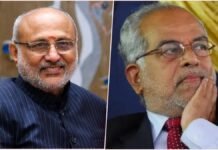
New Delhi: The Vice-Presidential election is now set for a direct face-off: NDA’s CP Radhakrishnan versus INDIA bloc’s B. Sudarshan Reddy, a former Supreme Court judge. Voting will take place on 9 September, with MPs from both Houses forming the electoral college. Given the current alignments, the NDA starts with a numerical advantage, but the absence of a whip and the presence of a sizeable number of unaffiliated MPs add uncertainty to the final tally.
Electoral arithmetic: who needs what
- Total MPs (effective): Lok Sabha 543 (1 vacant), Rajya Sabha 245 (6 vacant) → around 781 currently eligible.
- Majority mark: 391.
- Indicative bloc strength (as shared):
- Government/NDA support base: ~427 MPs (293 LS + 134 RS).
- INDIA bloc/opposition support base: ~355 MPs (249 LS + 106 RS).
- More than 130 MPs are not firmly aligned with either bloc, making their preferences and any cross-voting potentially influential for the victory margin rather than the basic outcome.
While the headline numbers suggest a clear runway for the NDA nominee, Vice-Presidential polls are conducted by secret ballot, and MPs sometimes vote across party lines, which can narrow or widen the gap unexpectedly.
Why cross-voting matters here
- No whip applicability: MPs can vote by conscience or strategy without formal censure.
- Regional dynamics: Smaller parties and independents often leverage constitutional posts for issue-based bargaining.
- Candidate profiles: Radhakrishnan’s political stature and Reddy’s judicial credentials could sway individual assessments beyond party positions.
Who is B. Sudarshan Reddy?
- Judicial career: Judge, Andhra Pradesh High Court (from 1995); Chief Justice, Gauhati High Court (2005).
- Supreme Court: Judge from 2007 to 2011.
- Post-retirement: Appointed Goa’s first Lokayukta (2013), focusing on anti-corruption oversight.
- Reputation: Known for judicial propriety and administrative experience, seen by INDIA bloc as a consensus-building constitutional figure.
What to watch before 9 September
- Formal endorsements: Signals from unaffiliated MPs and smaller regional parties.
- Turnout/attendance: Health or travel-related absences can shift the arithmetic on polling day.
- Campaign outreach: Candidate meetings with party leaders and independents may shape late momentum.
- Whisper counts: Backchannel assessments on cross-voting tendencies within both camps.
Possible scenarios
- Straightforward NDA win: Most likely if bloc voting holds roughly as indicated by current strengths.
- Closer-than-expected margin: If INDIA bloc consolidates independents and triggers limited cross-voting.
- Upset math: Low-probability scenario requiring significant cross-voting plus abstentions on the government side.
Process recap
- Electorate: Members of Lok Sabha and Rajya Sabha vote in a secret ballot.
- Majority: Simple majority of valid votes cast decides the winner.
- Tenure: Vice President serves a 5-year term, also chairs the Rajya Sabha.

Advertisement