


























Key Points
- More than 300 journalists killed and over 700 family members killed since October 2023
- Palestinian Journalists Syndicate reports 436 family members killed in 2023, 203 in 2024, and 67 in 2025
- Israeli army accused of targeting temporary camps where displaced journalist families sought refuge
- Muhammad al-Lahham of the Syndicate says Israel has erased the distinction between the pen and the home
- Reporters Without Borders confirms Israel killed most journalists globally in 2025
- Surviving journalists suffer profound mental trauma and guilt over family deaths
- International press freedom organizations condemn the killings as attacks on independent journalism worldwide
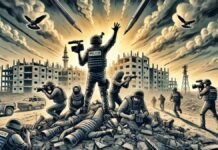
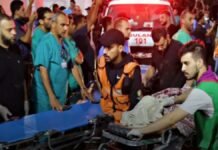
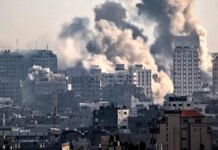
The Israel-Hamas conflict has become the deadliest war for journalists in modern history, with casualty figures exceeding those of any previous conflict, including Vietnam, Iraq, or Syria. According to the Palestinian Journalists Syndicate’s latest report, Israeli military operations have killed 312 journalists in Gaza since October 7, 2023, with the majority targeted in their homes, while reporting, or during Israeli airstrikes on media offices. The Committee to Protect Journalists has independently verified 295 journalist deaths, making it the most lethal conflict for media workers in its records. The killings have decimated Gaza’s local media infrastructure, with major outlets like Al-Aqsa TV, Palestine Today, and Al-Quds TV losing entire reporting teams. International journalists have also faced severe restrictions, with Israel denying press access to Gaza and only allowing embedded reporting with military units under strict censorship protocols.
Systematic Targeting of Families as Psychological Warfare
The Palestinian Journalists Syndicate’s Freedom Committee has documented what it describes as a deliberate Israeli strategy to target journalists’ families, transforming journalism into an “existential burden.” According to their report, Israeli forces have killed 706 family members of journalists, including 436 in 2023, 203 in 2024, and 67 in the first months of 2025. These attacks frequently targeted temporary camps and tents in Rafah, Khan Younis, and Deir al-Balah, where displaced families had sought refuge. The report details specific incidents, an Israeli airstrike on January 15, 2025, that killed the wife and three children of Al Jazeera cameraman Samer Abu Daqqa, while another strike in March 2025 killed the elderly parents of freelance journalist Hind Khoudary in their tent. The Syndicate claims these attacks follow a pattern: Israeli intelligence identifies journalists through their work, then tracks their family locations through drone surveillance and cellular data before launching precision strikes. This strategy aims to create a chilling effect, forcing journalists to choose between their profession and their family’s safety.
Mental Health Crisis Among Surviving Journalists
The systematic violence has inflicted profound psychological trauma on Gaza’s surviving journalists, many of whom continue reporting while grieving lost family members. According to a mental health assessment conducted by the Gaza Community Mental Health Programme in partnership with the Syndicate, 94% of journalists surveyed show symptoms of severe PTSD, including survivor’s guilt, intrusive memories, and emotional numbness. Many journalists report believing their professional work directly caused their families’ deaths, leading to intense self-blame and suicidal ideation. The report quotes one journalist, who lost his wife and two daughters in an airstrike, saying, “Every story I file feels like a death sentence for someone I love.” The psychological toll is compounded by the constant danger, lack of safe spaces, and inability to access mental health services in Gaza’s collapsed healthcare system. International organizations like the Dart Center for Journalism and Trauma have offered remote counseling, but connectivity issues and language barriers limit effectiveness. The Syndicate has established a peer support network, but members acknowledge it provides minimal relief amid ongoing attacks.
International Condemnation and Press Freedom Crisis
Reporters Without Borders’ annual report for 2025 confirms that Israel killed more journalists than any other country in the world, surpassing even Myanmar, Iran, and Russia. The organization has formally requested the International Criminal Court to investigate Israeli attacks on journalists as potential war crimes. The International Federation of Journalists has called the situation “a systematic campaign to eliminate witnesses to human rights violations.” UNESCO Director-General has condemned the killings as “an attack on the world’s right to know.” The United Nations Human Rights Council passed a resolution in March 2025 calling for an independent investigation into attacks on journalists in Gaza, though Israel has refused to cooperate. Western governments have issued muted condemnations, with the United States State Department expressing “concern” but continuing military aid to Israel. Press freedom organizations note that Israel’s actions set a dangerous precedent; if journalists can be targeted with impunity in Gaza, authoritarian regimes worldwide may feel emboldened to attack media workers in their own conflicts.
Global Implications for Independent Journalism
The crisis in Gaza represents what press freedom advocates call an “extinction-level event” for local journalism, with implications that extend far beyond the region. The systematic targeting of journalists’ families introduces a new and terrifying tactic that could be replicated in other conflicts, fundamentally altering the risk calculus for war correspondents worldwide. Media organizations are now reassessing how to protect not just their journalists but also their families, with some considering relocation programs and enhanced digital security measures. The killings have also created an information vacuum in Gaza, with social media filling the gap with unverified content, propaganda, and misinformation. This has made it increasingly difficult for international media to independently verify events, forcing greater reliance on Israeli military statements and Hamas propaganda. The long-term impact may be a chilling effect on conflict journalism globally, as the message that reporting from war zones could cost your family’s lives may deter a new generation of journalists from covering similar situations.