





























Key Highlights
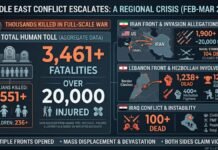
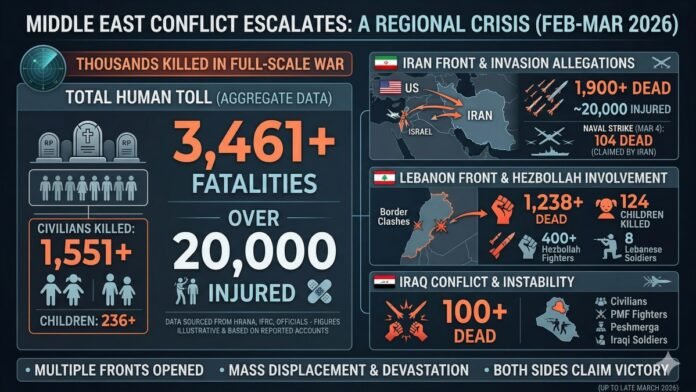
- Casualty Toll: Over 3,461 confirmed dead since February 28, 2026, including 236 children.
- Iranian Front: At least 1,900 fatalities and 20,000 injuries reported within Iran following invasion allegations.
- Lebanese Escalation: Over 1,238 killed in Lebanon as Hezbollah opens a secondary front against Israel.
- Regional Impact: Conflict has spread to Iraq and international waters, including a high-fatality naval strike off Sri Lanka.
- Humanitarian Crisis: The IFRC warns of a collapsing medical infrastructure as injury counts exceed 20,000.
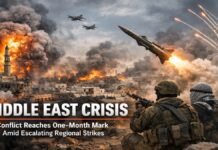
What began on February 28, 2026, as a localized flare has rapidly devolved into a broad regional conflict. The United States and Israel currently face accusations of initiating a ground and air invasion of Iranian territory, an act that triggered a massive retaliatory response. Tehran has since deployed a sophisticated array of missile and drone swarms targeting Israeli population centers, U.S. strategic bases, and key Gulf infrastructure.
The scope of the war expanded significantly on March 2, when the Lebanese Shia group Hezbollah entered the fray. This shift turned the border regions of Israel and Lebanon into an active combat zone, further stretching the military resources of all parties involved.
The Human Cost: Data and Demographics
According to the Human Rights Activists News Agency (HRANA), a U.S.-based monitoring group, the confirmed death toll has reached 3,461. The demographic breakdown highlights the heavy toll on non-combatants, with 1,551 civilians confirmed dead. This figure includes at least 236 children, a statistic compiled from hospital records, local emergency services, and verified open-source intelligence.
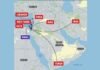
The International Federation of Red Cross and Red Crescent Societies (IFRC) provided a harrowing update on Friday, noting that 1,900 people have died within Iran alone. With 20,000 injuries reported, the Iranian medical system is reportedly nearing a breaking point. These figures may yet rise as investigators look into a March 4 incident where the Iranian military claims 104 sailors were killed during a U.S. strike on an Iranian vessel near Sri Lanka, marking a rare and dangerous expansion of the war into the Indian Ocean.
The Northern Front and Iraqi Instability
In Lebanon, the situation remains dire. Officials in Beirut report 1,238 fatalities, including 124 children, since the Israeli offensive began in early March. Military analysts suggest the conflict is taking a heavy toll on armed groups as well, with more than 400 Hezbollah fighters reportedly killed in action. The Lebanese military has not been spared, losing eight soldiers, primarily during defensive operations in the southern districts.
Simultaneously, Iraq has been pulled into the vacuum of violence. Health officials in Baghdad have confirmed at least 100 deaths. The casualties in Iraq are particularly diverse, including:
- Civilians caught in crossfire.
- Members of the Shia Popular Mobilization Forces (PMF).
- Kurdish Peshmerga fighters.
- Standard Iraqi military personnel.
Current Strategic Outlook
As of late March 2026, the military advantage remains obscured by the “fog of war.” While Israel and the U.S. claim to have neutralized key Iranian nuclear and military assets, Tehran asserts that its domestic defense remains intact and its retaliatory capabilities are growing. Both sides continue to issue daily claims of victory, even as the humanitarian landscape continues to deteriorate across the Middle East.