






























Key Points:
- Trump canceled Greenland tariff threats after meeting NATO chief Mark Rutte in Davos
- Vice President JD Vance and Secretary of State Marco Rubio appointed to special Arctic team
- Trump declared security and national defense, not money, as Greenland’s true value
- NATO chief recalled post-9/11 solidarity while assuring continued US alliance support
- European Parliament had suspended trade negotiations in response to Trump’s threats
- Special Envoy Steve Witkoff will directly coordinate Arctic strategy with the President
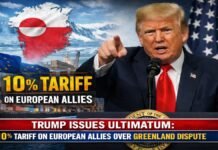
In a dramatic policy reversal at the World Economic Forum, President Donald Trump abandoned his controversial plan to levy tariffs on Greenland, citing productive discussions with NATO Secretary General Mark Rutte and new security priorities in the Arctic region.
The announcement, made Thursday via Trump’s social media platform, eliminates trade restrictions that were scheduled to take effect on February 1. The decision represents a significant de-escalation in transatlantic tensions that had intensified after Trump repeatedly suggested using economic pressure to advance US interests in the autonomous Danish territory.
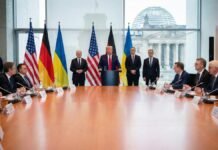
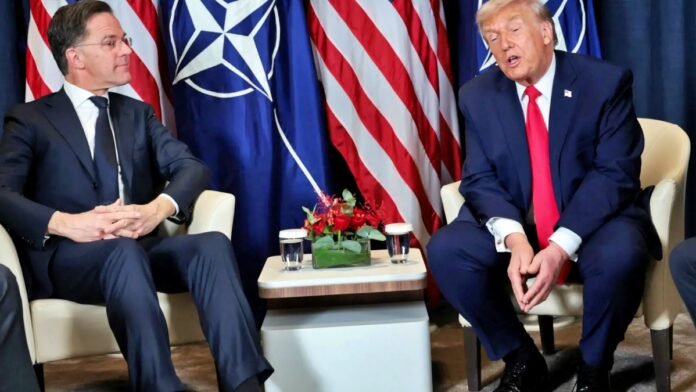
Details of the policy shift emerged after Trump’s closed-door meeting with Rutte, where both leaders negotiated a forward-looking framework for Arctic cooperation. Sources familiar with the discussions said the agreement prioritizes collective security arrangements over unilateral economic coercion, marking a notable return to multilateral diplomacy.
Trump revealed he has commissioned a high-level team to develop the Arctic framework, with Vice President JD Vance and Secretary of State Marco Rubio leading the initiative. Special Envoy Steve Witkoff, who has handled sensitive diplomatic assignments including Middle East negotiations, will serve as the President’s direct liaison on Greenland matters.
When pressed by journalists about the financial cost of securing US interests in Greenland, Trump dismissed monetary considerations entirely. “The real price isn’t dollars, it’s international security and national defense,” he stated during a brief press encounter. The President emphasized that Greenland’s value lies in its strategic position rather than its economic output, a framing that shifted the conversation from trade warfare to geopolitical strategy.
Rutte, who assumed NATO leadership earlier this year, successfully anchored the discussion in alliance solidarity. He reminded reporters of NATO’s immediate invocation of Article 5 after the September 11 attacks, stressing that allied nations “stood shoulder-to-shoulder with America in its darkest hour.” Trump responded by calling Rutte “a very trustworthy leader” who understands the paramount importance of mutual security guarantees.
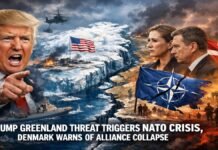
The timing of Trump’s announcement proved crucial. Just hours earlier, the European Parliament had voted to indefinitely postpone a major transatlantic trade agreement, specifically citing Trump’s aggressive posture toward Greenland as a breach of diplomatic norms. Lawmakers from across the political spectrum argued that negotiating with a partner threatening economic retaliation against an allied territory was untenable. The tariff reversal may reopen pathways for trade dialogue, though European officials remain cautious about the administration’s long-term intentions.
Trump’s acknowledgment of Greenland’s strategic significance represents an evolution from his previous dismissive characterization of the territory as merely “a piece of ice.” Security experts note that the Arctic region faces intensifying competition from Russia and China, both expanding their military and economic presence. Greenland hosts the Pituffik Space Base and controls critical shipping lanes that are becoming increasingly navigable due to climate change, making it indispensable for missile defense and maritime security.
The framework team faces immediate pressure to deliver concrete proposals within a 90-day window, according to administration officials. Their mandate includes strengthening defense cooperation with Denmark and Greenland’s home rule government, enhancing intelligence sharing among Arctic allies, and developing economic incentives that benefit local Greenlandic communities while advancing US security interests.
Diplomatic observers in Davos interpreted the move as a pragmatic recalculation rather than an ideological shift. By framing Greenland through a NATO security lens instead of a bilateral trade dispute, Trump found a face-saving path to retreat from a position that had alienated European partners and lacked clear legal authority. The success of this new approach will depend on whether the promised framework materializes into substantive policy or remains a temporary truce in the President’s broader America First agenda.