





























Key Points
- Incident occurred during AYUSH doctors’ appointment ceremony in Patna on December 15, 2025.
- Video shows Nitish Kumar pulling off Dr. Nusrat Parveen’s hijab while questioning her attire.
- Three FIRs filed in Lucknow and Hyderabad under IPC Section 354 and Section 153A.
- Amnesty International condemns act as violation of autonomy, identity, and dignity.
- POSH Act applies as incident occurred at workplace during official government function.
- No constitutional immunity for CM, arrest possible under Supreme Court guidelines.
- Historical precedents include Arvind Kejriwal and J. Jayalalithaa arrests while in office.
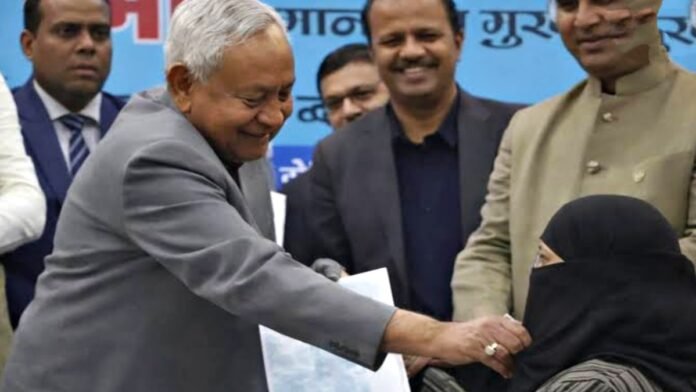
During a distribution ceremony for 250 AYUSH doctors’ appointment letters at Patna’s Gyan Bhawan on December 15, Chief Minister Nitish Kumar was captured on official live-stream cameras pulling off Dr Nusrat Parveen’s hijab while questioning, “What is this?” The eight-second clip shows Deputy Chief Minister Samrat Choudhary attempting to intervene as the visibly distressed doctor adjusts her clothing. The video circulated across social media platforms within three hours, triggering nationwide condemnation.
Opposition parties responded within 24 hours. RJD leader Tejashwi Yadav demanded Nitish Kumar’s immediate resignation, tweeting that the incident exposed “hollow claims of good governance” and represented “saffronization of public spaces.” Congress spokesperson Supriya Shrinate called it a “deliberate assault on Muslim identity and women’s autonomy,” demanding legal action under non-bailable sections.
Multiple FIRs and Jurisdictional Complexities
Three separate First Information Reports have been filed against the Chief Minister across different states. Sumaiya Rana, a Lucknow-based social activist, registered the first FIR at Kaiserbagh police station on December 16, invoking IPC Section 354 (assault or criminal force to a woman with intent to outrage her modesty) and Section 509 (word, gesture or act intended to insult the modesty of a woman).
Khalida Parveen from Hyderabad filed the second complaint at Langar Houz police station, alleging Section 153A IPC (promoting enmity between different groups on grounds of religion) and Section 298 (uttering words with deliberate intent to wound religious feelings). Lubna Sarwath filed a third complaint at Osmania police station, specifically demanding the invocation of the Sexual Harassment of Women at Workplace (Prevention, Prohibition and Redressal) Act, 2013, and requesting a Zero FIR for transfer to Patna.
International Condemnation and Government Defense
Amnesty International issued a formal statement on December 17, describing the incident as “a flagrant violation of a woman’s bodily autonomy, religious identity, and human dignity.” The organisation called for an independent investigation and mandatory sensitivity training for all constitutional officeholders.
BJP leaders adopted a defensive posture. Bihar BJP president Samrat Choudhary claimed Nitish Kumar acted with “paternal affection, like a father correcting his daughter’s attire.” This justification drew immediate rebuke from women’s rights activists and Muslim organisations. The National Commission for Women has sought a detailed report from the Bihar government within seven days, while the Minorities Commission has requested a separate inquiry.
Legal Analysis and Applicable Provisions
Gyan Ranjan Mishra, advocate at Allahabad High Court, explains that the incident triggers multiple legal provisions beyond simple eve-teasing. Section 354 IPC applies directly as the act involves non-consensual physical contact in a manner that outrages modesty. The public nature of the ceremony, attended by over 300 people and broadcast live, amplifies the humiliation and could attract enhanced penalties under Section 354A.
The POSH Act becomes critically relevant because Gyan Bhawan functioned as a workplace during an official government