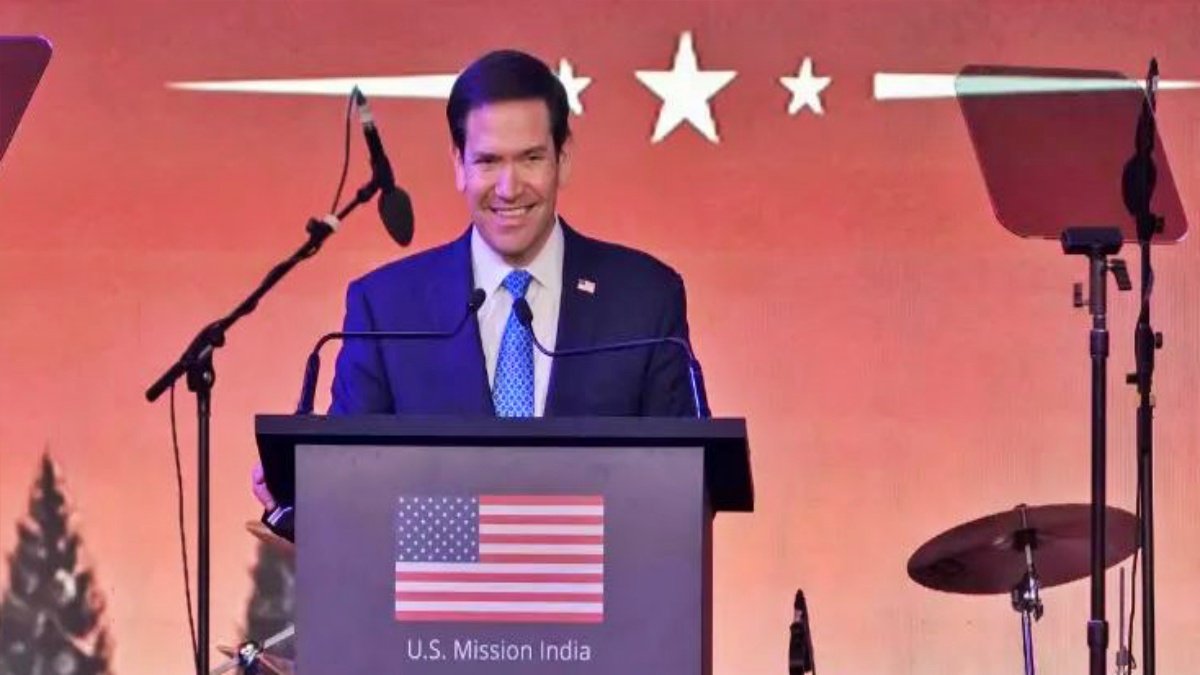
U.S. Secretary of State Marco Rubio has dismissed United Nations experts’ comments on India’s protests, calling them a domestic political matter and criticizing the UN for its stance.
U.S. Secretary of State Rejects UN Criticism
NEW DELHI: U.S. Secretary of State Marco Rubio has rejected United Nations experts’ comments on protests in India, stating that the issue is a domestic political matter. During a press briefing, Rubio was asked about the UN experts’ concerns regarding protests in India, where authorities have been accused of taking action against protesters and limiting peaceful demonstrations. In response, Rubio questioned the credibility of UN experts, saying, ‘The UN experts, yes. My favorite. The UN experts, or is that a contradiction in itself?’
Rubio emphasized that India, as a democracy, must handle its internal political matters independently. He stated, ‘This is a domestic political matter. I will not interfere in India’s politics. It is a democracy. Elections are held here. Therefore, I will not take sides on its internal political matters.’ He acknowledged the importance of peaceful protests as part of democratic systems but drew a clear distinction between lawful demonstrations and violent acts such as breaking things, setting fires, or damaging property.
Rubio also highlighted the contrast between India’s democratic framework and countries where dissent is met with repression. Citing Cuba as an example, he noted that in some nations, individuals may face imprisonment or forced exile for expressing opposing views. ‘We will not comment on India’s internal political matters,’ he said, reiterating that the responsibility of decision-making lies with the Indian people.
India’s Response to UN Allegations
India has previously raised objections at the United Nations regarding comments made about its protests. Indian diplomat Barsha Tamrakar addressed these concerns at the UN General Assembly, stating that human rights should not be used as a tool for political pressure or to target specific countries. She emphasized that India’s Constitution includes robust safeguards, particularly Article 21, which protects human rights and ensures due legal process.
Tamrakar pointed out that India firmly opposes any attempt to portray its image negatively based on unverified allegations or incomplete data. ‘Human rights should not be used as a tool for political pressure or targeting specific countries,’ she said. India has also drawn attention to the UN High Commissioner for Human Rights, Volker Türk’s comments on protests in France and Europe. According to reports, Türk referred to violent protesters as ‘troublemakers.’ India argued that different countries adopt varying approaches toward protests and that conclusions about a nation should not be drawn from unverified allegations or reports lacking specific details about India.
International Reactions and Context
The U.S. stance aligns with its broader policy of non-interference in the internal affairs of sovereign nations, a principle often invoked in diplomatic discussions. However, this position has been scrutinized by international observers who argue that human rights concerns should not be dismissed as purely domestic. Critics suggest that while the U.S. emphasizes non-interference, it has occasionally engaged in similar criticisms of other nations, including China and Russia, raising questions about consistency.
India’s diplomatic efforts have focused on defending its democratic credentials against what it perceives as external scrutiny. The country has consistently maintained that its approach to managing protests is in line with its legal framework and constitutional rights. However, the UN’s recent focus on India has sparked debates about the balance between national sovereignty and international human rights norms. As global discussions around democracy and governance evolve, India’s response to such criticisms will be closely watched by both allies and adversaries in the international community.