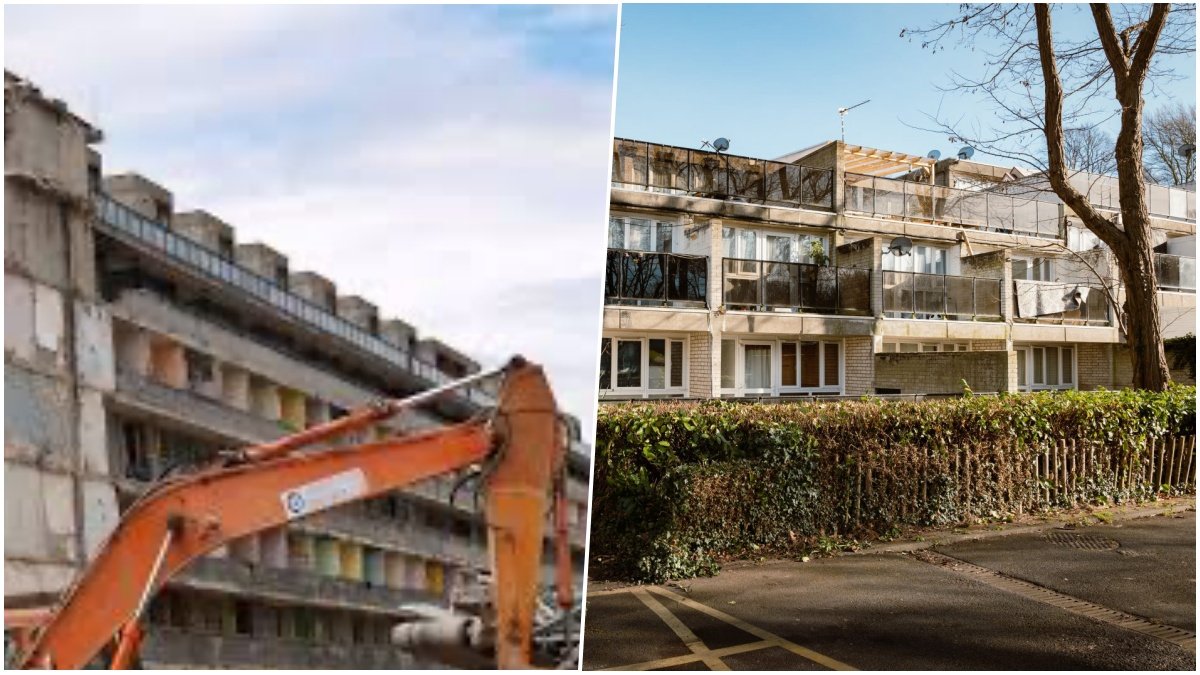
Residents of two 1960s London housing estates may finally keep their homes after Lambeth Council proposed scrapping demolition plans, opting instead for repairs and community-focused redevelopment.
Key Points
- Demolition Scrapped: Lambeth Council has proposed removing two estates from its demolition plans after 12 years of uncertainty.
- Retention Focus: The council will now focus on repairing, improving, and reusing existing homes rather than rebuilding from scratch.
- Financial Reasons: Redevelopment was deemed financially unviable, prompting a shift in policy to preserve communities and architecture.
- Next Steps: The proposal will be reviewed by the council’s Cabinet on October 21, with residents to receive updates before the meeting.
LONDON: Residents of Central Hill in Crystal Palace and Cressingham Gardens near Brockwell Park may finally be able to remain in their homes after over a decade of uncertainty. Lambeth Council has proposed removing these estates from its demolition and redevelopment programme, choosing instead to retain, repair, and improve the existing homes. The decision comes after a long campaign by residents who argued that these estates are not just buildings but established communities with shared histories and strong social ties. The proposal will be reviewed by the council’s Cabinet on October 21, according to Lambeth Council and The Guardian.
Policy Shift: From Demolition to Repair
The new plans mark a significant shift in policy, moving away from the threat of demolition to a focus on preserving and upgrading existing housing stock. Council officials found that comprehensive redevelopment of both estates was financially unviable, leading to the recommendation of a different approach. This strategy aims to keep existing homes in place while also increasing the supply of genuinely affordable council and social housing. The proposal also includes removing Knights Walk and Trinity Rise from the New Homes Hexagon Portfolio, as the second phase of development at Knights Walk has made the remaining site inaccessible and unviable.
Residents’ Relief After Years of Uncertainty
For residents, the announcement offers a long-awaited sense of stability after years of fearing the loss of their homes. Many have actively campaigned against demolition, emphasizing that these estates represent more than just buildings, they are communities with deep-rooted social connections and a strong sense of place. Councillor Pete Elliott, Lambeth’s Cabinet Member for Housing, stated that the proposals would end years of uncertainty and prioritize repairing homes, supporting communities, and filling empty properties. He noted that the council had fought for a better future for these estates over the past 12 years.
Preserving Architectural and Community Legacy
Central Hill and Cressingham Gardens are notable examples of 1960s social housing design. Their retention would preserve not only homes but also an architectural legacy created by earlier generations of planners and designers. Lambeth Council leader Councillor Martin Abrams described the proposal as a decisive moment for these estates, acknowledging the efforts to secure their future without demolition. The council emphasized that it can build needed affordable homes without erasing the architectural and community value of these estates.
New Approach to Affordable Housing
While the council is stepping back from wholesale demolition, it acknowledges that the need for more affordable homes remains urgent. Lambeth plans to use a broader range of delivery routes, including purchasing existing homes and delivering new council housing directly. The borough will also explore suitable small sites and infill opportunities to expand the housing supply without clearing large estates. Residents will be involved in future planning for other estates, including proposals for the Westbury estate in Clapham Town and reviews of options for Fenwick Estate and South Lambeth.
Next Steps and Community Involvement
The council’s Cabinet will consider the proposals on October 21. Residents are expected to receive letters with updates, and further information will be published on each estate’s website before the meeting. If approved, this decision would represent a significant victory for campaigners who have opposed demolition for over a decade. It also signals a potential shift in how some London boroughs approach estate renewal, balancing the need for new housing with preservation of community and architectural heritage.