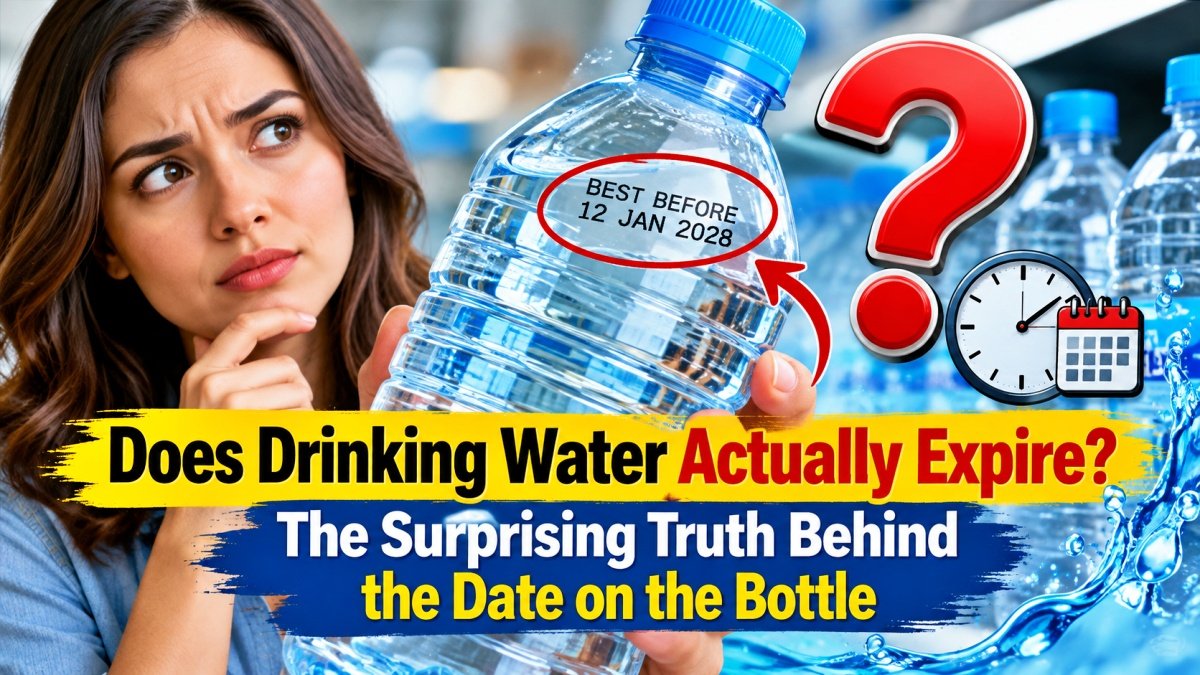
We have all been there: you are cleaning out the trunk of your car, digging through the back of the pantry, or packing for a camping trip, and you stumble upon a forgotten plastic bottle of water. You check the neck of the bottle, and there it is an expiration date that passed six months ago.
You pause, unscrew the cap, and wonder: Can water actually go bad? After all, water has been flowing across the Earth for billions of years. Why would it suddenly expire in a plastic bottle?
The short answer is no, water itself does not expire. However, the container holding it certainly does. Let’s dive into the fascinating science behind the expiry date on drinking water, the hidden dangers of older bottles, and how to safely store your H2O.
Why Do Water Bottles Have Expiration Dates?
If water is a natural resource that does not spoil like milk or bread, why do manufacturers stamp a “best by” date on it?
Historically, the practice started because of a specific state law. In 1987, New Jersey passed a law requiring all food products, including bottled water, to display an expiration date of two years or less from the date of manufacture. Because it was too expensive and logistically complicated for water bottling companies to create separate, date-free batches for the rest of the country, they simply started stamping expiration dates on all their bottles.
New Jersey eventually repealed this law, and the U.S. Food and Drug Administration (FDA) currently considers bottled water to have an indefinite shelf life if produced in accordance with safety regulations and stored properly. However, the industry standard stuck. Today, most companies still include a date, usually one to two years from the bottling date, to indicate peak freshness and quality.
The Real Culprit: It’s Not the Water, It’s the Plastic
While the water is technically immortal, the plastic bottle protecting it is not.
The vast majority of single-use water bottles are made from polyethylene terephthalate (PET). Over time, PET plastic is subject to microscopic breakdown. When the structural integrity of the plastic begins to degrade, microscopic chemicals can leach into the water.
While modern single-use water bottles are generally BPA-free, they can still release trace amounts of other chemicals, such as antimony, a chemical used in the plastic manufacturing process. While the levels are typically too low to cause immediate acute toxicity, regular consumption of leached chemicals is not recommended for long-term health.
The Heat Factor
The timeline for this plastic degradation isn’t just about the calendar; it’s heavily dependent on temperature. Heat drastically accelerates the chemical leaching process.
That case of water you left baking in the trunk of your car during a sweltering summer week? The extreme temperatures will cause the plastic to break down much faster, compromising the water inside well before the printed expiration date.
The Taste and Odor Equation
Even if the leached chemicals do not pose a severe, immediate health risk, drinking expired water is rarely a pleasant experience.
Plastic is surprisingly porous. Over time, it can absorb odors and gases from the environment around it. If you store your bottled water in a garage next to gasoline, cleaning supplies, or paint thinners, the water can actually absorb those chemical fumes, leading to a foul taste and potential health hazards.
Furthermore, as the plastic degrades into the liquid, it imparts a distinct, stale, and artificial “plastic” flavor. The water loses the crisp, refreshing profile it had when it was newly bottled.
How to Properly Store Drinking Water
To ensure your bottled water remains safe, crisp, and refreshing, proper storage is crucial. Here are the best practices for maximizing the shelf life of your drinking water:
- Keep it Cool: Store water at room temperature or cooler. Avoid areas prone to extreme heat, like garages, attics, or the inside of a vehicle.
- Keep it Dark: Direct sunlight can also accelerate the breakdown of the plastic container and encourage the growth of algae if the water source wasn’t perfectly sterile. Store bottles in a dark pantry or closet.
- Keep it Away from Chemicals: Never store bottled water near household cleaning products, gasoline, paint, or toxic chemicals.
- Consider Alternative Containers: If you are storing water for long-term emergency preparedness (such as a 72-hour kit), consider using glass, stainless steel, or thick, heavy-duty BPA-free plastic jugs designed specifically for long-term water storage.
The Verdict: Should You Drink It?
If you find a bottle of water that is a few months past its expiration date, and you know it has been stored safely in a cool, dark place inside your home, it is generally safe to drink. The FDA maintains that properly stored water can be consumed safely for years.
However, if the bottle is visibly misshapen, has been sitting in a hot car, or tastes slightly off when you take a sip, your best bet is to dump it out. When in doubt, don’t waste it; pour it into your houseplants or use it to fill your pet’s water bowl. The plants certainly won’t mind a little extra plastic flavor, but your body deserves better.