


































Key Points
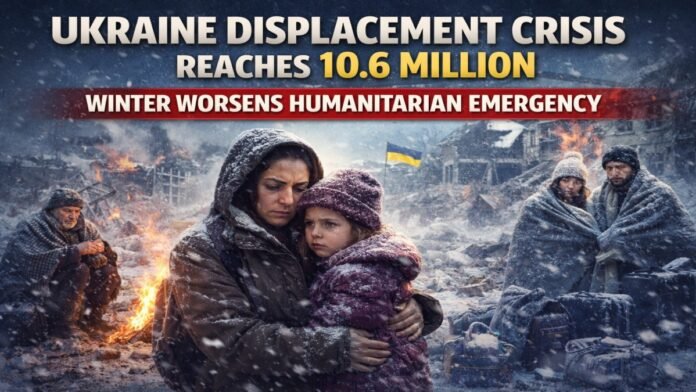
- Total Displacement: 10.6 million Ukrainians displaced, nearly one-third of pre-war population
- Refugee Distribution: Germany hosts 1.2 million, Poland 994,180, Czech Republic 374,310
- Internal Crisis: 3.7 million IDPs struggle in converted schools, stadiums, and metro stations
- Winter Emergency: Infrastructure attacks cause power outages, leaving families without heating in extreme cold
- Policy Shifts: Germany tightened benefits for arrivals after March 2025, Czech Republic offers new five-year permits
The war in Ukraine has generated Europe’s fastest-growing refugee crisis since World War II, with displacement occurring at a pace that eclipses the seven-year duration of WWII-era movements. According to UNHCR data, approximately 6.3 million Ukrainian refugees are currently registered across Europe as of January 2025, with Germany hosting the largest number at 1.2 million, followed by Poland with 994,180 and the Czech Republic with 374,310. The conflict has forced not only external migration but also massive internal displacement, with 3.7 million people uprooted within Ukraine’s borders, seeking safety in less-affected regions.
Internal Displacement and Shelter Crisis
Inside Ukraine, displaced populations face severe housing shortages as cities like Kyiv transform schools, sports stadiums, and abandoned factories into emergency relief camps. These facilities struggle with constant resource shortages due to overwhelming demand, while those unable to secure camp spaces seek refuge in metro stations and underground shelters to escape relentless bombing. The shelter crisis intensified during the first half of 2024 as significant housing damage in eastern, southern, and northern regions forced additional waves of displacement.
Winter Emergency and Infrastructure Collapse
The 2025-2026 winter has emerged as a deadly challenge for displaced populations, with temperatures in Kyiv plummeting to minus 18 degrees Celsius. Russian attacks on energy infrastructure have caused widespread power outages, rendering heating systems inoperable when they are needed most. Desperate families resort to stuffing toys into window cracks or building open fires, exposing young children to life-threatening cold conditions. UN officials report that displacement occurs in waves rather than steadily, with significant movements in August 2025 and new exoduses expected as winter intensifies.
Host Country Policy Transformations
Poland initially served as the primary refuge, granting visa-free entry to millions along its 530-kilometer border and providing free medical care. However, economic pressure has mounted as rents surge in major cities and local resentment toward newcomers grows. Germany has implemented stricter policies, announcing that Ukrainians arriving after March 31, 2025, no longer receive automatic entitlement to the same social benefits as German citizens. The Czech Republic has taken a more welcoming approach, introducing a five-year “special long-term residence” permit for Ukrainians under temporary protection, available to those who have worked in the country for two years and meet financial criteria.
International Protection Framework Changes
The European Union’s Temporary Protection Directives granted Ukrainians immediate permission to live and work across member states, with nearly 80% of refugees expressing hope to return home someday, though only 14% plan to do so in the near future due to security concerns. In the United States, approximately 250,000 people received refuge under the “Uniting for Ukraine” program, but recent administrative changes have suspended these initiatives, creating uncertainty for families seeking stability. As global refugee fatigue grows due to multiple concurrent crises in Syria, Afghanistan, and other regions, European countries show increasing frustration with the prolonged Ukrainian displacement situation.