































Key Points:
- IndiGo’s massive flight disruptions expose risks of India’s airline duopoly
- Ministry issues NOCs to Al Hind Air and FlyExpress, Shankh Air received NOC earlier
- Aviation Minister Ram Mohan Naidu announces new airlines on social media platform X
- India among world’s fastest-growing aviation markets under PM Modi’s policies
- UDAN scheme enabled smaller airlines like Star Air, Bharat One Air, and Fly91
- Experts warn high jet fuel prices and tax structure create world’s highest operating costs
- Almost all aviation stakeholders except airlines themselves make profits
- Over past three decades, several Indian airlines have shut down due to cost pressures
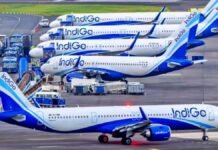
The impact of the airline duopoly in Indian airspace became starkly evident recently when the flight schedule of IndiGo, the country’s largest airline controlling over 60% domestic market share, completely collapsed due to operational issues. Thousands of passengers faced immense difficulties as over 200 flights were delayed and 47 were cancelled across major metros on a single day, leaving travellers stranded at airports for hours. This incident once again proved that when there are limited airline options in the market, passengers bear the direct brunt of the consequences, with no immediate alternatives available for rebooking or compensation.
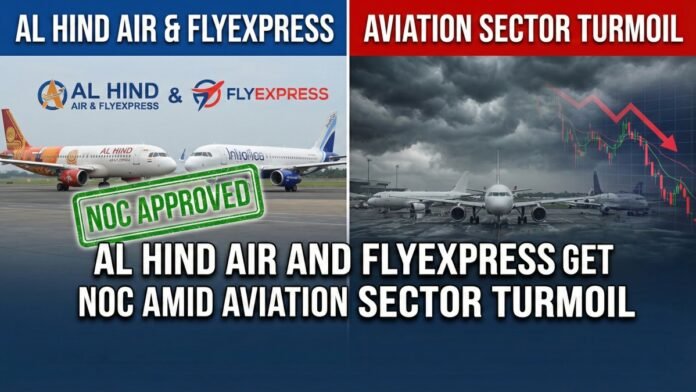
The crisis, which stemmed from crew scheduling problems and aircraft maintenance backlogs, highlighted how India’s aviation sector has become dangerously dependent on just two major players, IndiGo and the Tata Group’s Air India. Following this entire episode, the Ministry of Civil Aviation has intensified its efforts to provide more options to Indian passengers, recognising that market concentration threatens both consumer interests and sector resilience. This week, the ministry issued No Objection Certificates (NOCs) to two proposed airlines, Al Hind Air and FlyExpress, while Shankh Air had also received an NOC earlier in December 2025.
New Airlines Ready to Take Flight
Aviation Minister Ram Mohan Naidu shared this information on the social media platform X on Tuesday, stating that in the past week, he has met with teams from several new airlines that are preparing to take to the skies in India. According to the minister, the ministry has been continuously striving to encourage more and more airlines in the Indian aviation sector, with the goal of increasing competition and reducing passenger vulnerability to single-airline failures. The NOCs represent the first formal step in the airline establishment process, allowing the promoters to begin securing aircraft, hiring staff, and obtaining the Air Operator’s Certificate (AOC) from the Directorate General of Civil Aviation (DGCA).
Ram Mohan Naidu said that thanks to the policies of Prime Minister Narendra Modi’s government, India is today among the world’s fastest-growing aviation markets, with domestic passenger traffic growing at 15% annually. Initiatives like the UDAN (Ude Desh ka Aam Nagrik) scheme have given smaller airlines like Star Air, Bharat One Air, and Fly91 the opportunity to play a crucial role in regional connectivity, connecting underserved airports in tier-2 and tier-3 cities. He added that there is still significant potential for further growth in this sector, with India’s per capita air travel penetration at just 0.12 trips per person annually, compared to 2.5 in the US and 1.2 in China.
Operating an Airline for the Long Term: A Major Challenge
Aviation experts believe that simply approving new airlines is not enough to ensure sustainable competition. The operating costs in the Indian aviation ecosystem are considered among the highest in the world, with jet fuel prices in India being 30-40% higher than international benchmarks due to heavy taxation. The main reasons for this are high jet fuel prices, which include central excise duty and state value-added tax ranging from 20-30%, and a heavy overall tax structure that includes landing charges, navigation fees, and passenger service fees that are significantly higher than global averages.
According to a senior aviation observer, almost all stakeholders in the Indian aviation system, except the airlines themselves, make a profit. Airport operators, fuel companies, ground handlers, and catering services all maintain healthy margins while airlines struggle with net profit margins of just 2-3% in good years. This is why several airlines have shut down over the past three decades, including Kingfisher Airlines, Jet Airways, Air Costa, Air Pegasus, and most recently Go First, which ceased operations in May 2023. He said that starting a new airline is possible, but keeping it operational in the long run is far more difficult, with high cost structures, tax burdens, management limitations, and weak funding being major contributing factors to failures.
The Harsh Reality of Indian Aviation Economics
Industry officials also believe that airline failures are not just an Indian problem, but a global trend, with over 200 airlines worldwide ceasing operations since 2020 due to the pandemic and rising costs. However, an added concern in India is that the environment for airlines here is particularly cost-hostile, with taxes on aviation turbine fuel (ATF) being among the highest globally. For every ₹100 spent on ATF in India, approximately ₹35-40 goes to taxes, compared to just ₹10-15 in most developed markets. Additionally, the depreciation of the rupee against the dollar increases costs for leased aircraft and imported spare parts, creating further financial pressure.
The new airlines receiving NOCs will need to raise substantial capital, with industry estimates suggesting a minimum of ₹500-700 crore is required to launch operations with a fleet of 5-6 aircraft. They must also compete for limited resources, including airport slots, trained pilots, and maintenance facilities, which are already stretched thin by existing carriers. The DGCA’s stringent safety and financial fitness requirements add another layer of complexity, with the certification process typically taking 12-18 months from receiving NOC to inaugural flight.
Government’s Balancing Act
The Ministry of Civil Aviation faces a delicate balancing act between encouraging new entrants and ensuring their viability. While the NOCs signal policy support for competition, officials privately acknowledge that the sector needs structural reforms, particularly rationalising ATF taxes and reducing airport charges, to create a truly sustainable environment. The ministry is reportedly working on a new aviation policy that may include incentives for new airlines, such as reduced landing charges for the first two years and priority access to regional routes under the UDAN scheme.
However, until these reforms materialise, the fate of Al Hind Air, FlyExpress, and Shankh Air will depend largely on their ability to secure strong financial backing, experienced management, and differentiate themselves in a market dominated by IndiGo’s scale and Air India’s legacy network. The IndiGo crisis may have created a temporary window of opportunity, but history suggests that surviving in Indian aviation requires more than just government approval; it demands exceptional financial discipline, operational efficiency, and a bit of luck.