





























Key Points
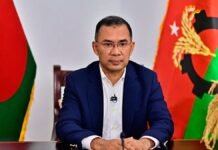
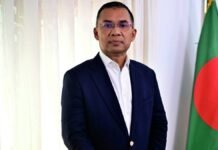
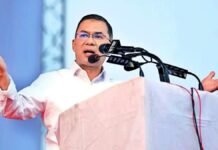
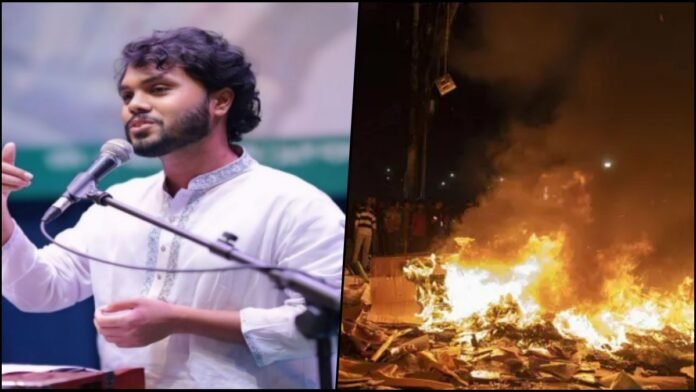
- Sharif Usman Hadi, 32, was a Dhaka University political science student who led the July Uprising against Sheikh Hasina
- He formed the Inqilab Manch (Revolutionary Platform) after Hasina’s removal, emerging as a powerful youth leader
- Hadi was attacked by three gunmen on December 13 while launching his 2026 election campaign for Dhaka-8 constituency
- He succumbed to injuries on December 19 after six days of treatment in Singapore
- His death triggered immediate protests, arson, and vandalism across Dhaka and other major cities
- Supporters demand capital punishment for perpetrators, calling it a political assassination
- Security forces have been deployed nationwide as tensions threaten upcoming general elections
Sharif Usman Hadi emerged from humble beginnings in Jhalakathi district, where his father served as a dedicated madrasa teacher. Born into a modest family, Hadi completed his early education in traditional Islamic institutions before pursuing higher studies at Dhaka University, where he specialised in political science. His unique background, combining religious education with secular political theory, gave him a distinctive voice in Bangladeshi politics.
At just 32, Hadi had already established himself as a prolific writer and charismatic orator. His essays on democratic reform and social justice resonated deeply with Bangladesh’s youth, who were increasingly disillusioned with traditional political parties. Unlike conventional politicians, Hadi maintained a simple lifestyle and directly connected with students through social media and campus gatherings. His ability to mobilise thousands within hours became legendary across university campuses.
The July Uprising and Meteoric Rise to Prominence
Hadi’s name became synonymous with the historic July Uprising that ultimately toppled Sheikh Hasina’s government. While established opposition parties hesitated, Hadi and his fellow students organised spontaneous demonstrations that grew into a nationwide movement. His speeches, delivered in colloquial Bengali mixed with revolutionary rhetoric, captured the imagination of millions who sought systemic change rather than mere regime replacement.
The uprising’s success catapulted Hadi from student activist to national figurehead. International observers noted that his leadership represented a generational shift in Bangladeshi politics, where youth demanded direct participation rather than being treated as foot soldiers for older politicians. His followers saw him as a symbol of hope for a corruption-free, merit-based political system.
Formation of Inqilab Manch and Electoral Ambitions
Following Hasina’s departure, Hadi refused to dissolve his movement into established parties. Instead, he launched the Inqilab Manch (Revolutionary Platform) in August 2024, creating Bangladesh’s first major youth-led political organisation. The platform’s manifesto called for complete constitutional reforms, transparent governance, and dismantling what Hadi termed the “feudal political structure” dominated by a few families.
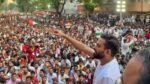
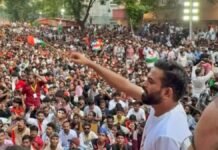
In a bold move that shocked traditional power brokers, Hadi announced his candidacy for the 2026 general elections as an independent from Dhaka-8, a constituency encompassing key university areas and youth populations. His campaign launch on December 13 drew unprecedented crowds, with estimates suggesting over 15,000 supporters gathered in Bijoynagar, a commercial hub in central Dhaka. This massive show of strength apparently threatened established interests.
The Fatal Attack and International Medical Efforts
Eyewitnesses describe the attack as a meticulously planned operation. On December 13 at approximately 11:30 AM, as Hadi began addressing supporters from a makeshift stage, three unidentified assailants positioned on nearby rooftops opened fire with automatic weapons. They fired at least 20 rounds before escaping in the chaos that ensued.
Hadi sustained multiple gunshot wounds to his chest and abdomen. He was rushed to Dhaka Medical College Hospital, where doctors stabilised him for emergency transport. Given the severity of his injuries and concerns about local medical capabilities, the interim government authorised his immediate transfer to Singapore’s Mount Elizabeth Hospital, a facility renowned for treating trauma cases.
For six days, Hadi battled for his life in intensive care. A medical bulletin on December 18 indicated slight improvement, raising hopes among supporters who held vigil outside the hospital and in Dhaka. However, complications arose suddenly, and he passed away at 3:47 AM Singapore time on December 19, according to hospital officials.
Political Rivalries and Enemies in High Places
Hadi’s assassination did not occur in a vacuum. His outspoken criticism targeted not just the former Awami League regime but also the Bangladesh Army’s political influence and the Bangladesh Nationalist Party’s (BNP) traditional power structures. In numerous speeches and writings, Hadi argued that Bangladesh needed “complete democratic rebirth” rather than restoration of old political dynasties.
His opposition to military involvement in civilian affairs particularly angered powerful quarters. Hadi publicly questioned the army chief’s statements about “guiding the democratic process” and demanded that security forces remain strictly apolitical. Similarly, his refusal to align with BNP leadership, despite shared opposition to Hasina, created friction with established opposition figures who viewed him as an upstart threatening their electoral base.
Intelligence sources suggest Hadi had received multiple death threats in recent weeks. His close associates claim he reported being followed and warned them of “powerful forces” wanting to eliminate him before elections. However, authorities provided minimal security, assigning only two police officers despite his high-profile status.
National Crisis, Protests, and Security Response
The official confirmation of Hadi’s death triggered an immediate and violent reaction across Bangladesh. Within hours, thousands of Inqilab Manch supporters and students blocked major intersections in Dhaka, Chittagong, Rajshahi, and Sylhet. Protesters targeted government buildings, political party offices, and vehicles, setting fire to at least a dozen establishments.
In Dhaka’s Shahbagh intersection, historically significant for student movements, clashes erupted between protesters and police. Demonstrators hurled bricks and Molotov cocktails while security forces responded with tear gas and rubber bullets. Similar scenes unfolded in Chittagong’s Agrabad commercial area, where protesters burned effigies of political leaders and demanded justice.
The interim government deployed paramilitary forces, including the Border Guard Bangladesh, to sensitive areas. A nighttime curfew was imposed in Dhaka and five other cities starting December 19. However, social media videos show crowds defying restrictions, suggesting the government faces a serious legitimacy crisis.
Implications for Bangladesh’s Democratic Future
Hadi’s assassination raises fundamental questions about Bangladesh’s path to democracy. Election Commission officials privately express concerns about whether the January 2026 polls can proceed safely. International observers have called for an independent investigation, with the United Nations offering technical assistance.
The killing has also exposed deep divisions within Bangladesh’s opposition landscape. While BNP leaders issued condolence statements, Inqilab Manch activists accuse them of complicity through silence. This fragmentation could benefit remnants of the Awami League or military elements seeking prolonged transitional arrangements.
Regional analysts warn that continued instability in Bangladesh, a country of 170 million people with strategic importance, could have spillover effects in neighbouring India and Myanmar. The youth-driven nature of the protests suggests a generational conflict that traditional power brokers may struggle to contain.