



































Key Points
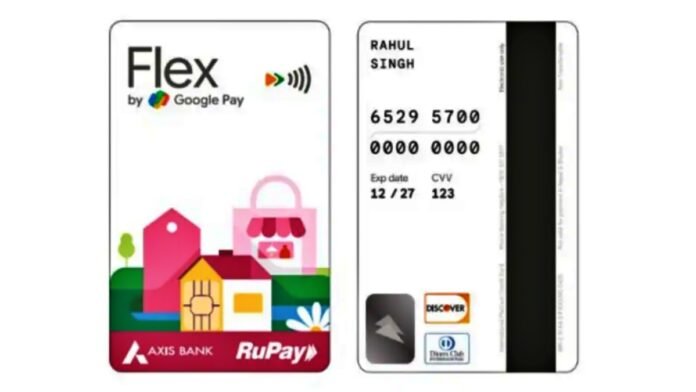
- Google’s first global credit card launches exclusively in India in partnership with Axis Bank
- Operates on NPCI RuPay network with full UPI integration for merchant payments
- Offers instant cashback and rewards on every transaction, redeemable immediately
- 100% digital application process with no physical documentation required
- Competes directly with Paytm, Cred, and super.money’s UPI-linked credit cards
- Instant approval and immediate credit limit access upon successful application
- Strategic move to capture India’s rapidly growing digital payments market
The Flex by Google Pay credit card represents Google’s most ambitious fintech product launch to date, choosing India as the debut market due to its mature digital payments ecosystem and 350 million credit card eligible users. Sharath Bulusu, Senior Director at Google Pay India, announced the launch at a virtual press conference on Thursday, emphasizing that the product was specifically designed for Indian consumers’ preference for instant gratification and seamless digital experiences.
The partnership with Axis Bank leverages the bank’s extensive credit infrastructure while Google’s technology handles the user interface, risk assessment, and reward management. The card operates on the RuPay network, making it eligible for UPI linking under RBI’s recent guidelines, a feature that Visa and Mastercard cards in India currently lack. This gives Google a significant competitive advantage in the world’s largest UPI market, which processed 11 billion transactions in November 2025 alone.
Instant Rewards Mechanism and Cashback Structure
Unlike traditional credit cards that accumulate rewards for monthly redemption, Flex by Google Pay provides instant cashback that appears in the user’s account within seconds of transaction completion. The card offers 2% instant cashback on all UPI transactions, 1.5% on online purchases, and 1% on other spends, with no upper limit on earnings. Reward points can be used immediately for the next purchase or transferred to the user’s bank account without any redemption fees.
Google has integrated its machine learning algorithms to personalize offers, providing up to 5% cashback on categories where users spend most frequently. The company has also partnered with over 500 merchants, including Swiggy, Zomato, Amazon, and Flipkart, for additional merchant-specific discounts. Bulusu stated that the instant reward feature addresses a major pain point where customers forget to redeem accumulated points or face complex redemption processes.
UPI Integration and Digital-First Features
The Flex card’s integration with UPI represents its most innovative feature. Users can link the credit card to their UPI ID and scan any QR code at merchants to make payments directly from their credit limit, eliminating the need for physical cards or POS machines. This functionality works across all UPI apps, including PhonePe, Paytm, and Google Pay itself, making it universally accepted at India’s 50 million merchant QR codes.
The card exists entirely within the Google Pay app, featuring a dynamic virtual card number that changes for each transaction to prevent fraud. Users can set spending limits, freeze the card instantly, and receive real-time notifications for all transactions. The app also provides AI-powered spending insights, categorizing expenses and suggesting ways to optimize cashback earnings.
Application Process and Eligibility Criteria
Google claims the application process takes under 5 minutes, requiring only PAN and Aadhaar verification through DigiLocker integration. The system uses Google’s proprietary risk assessment models, analyzing digital footprints and transaction history to approve credit limits ranging from ₹25,000 to ₹5 lakh. Approval rates are expected to be 40% higher than traditional banks due to alternative data usage.
Applicants need a minimum CIBIL score of 650 and must have active Google Pay usage for at least six months. The entire process, from application to approval and card activation, happens within the app without any physical documentation or bank visits. Upon approval, users receive an instant virtual card and can request a physical RuPay card for international travel and ATM withdrawals.
Competitive Landscape and Market Positioning
The Flex card enters a crowded market where fintech companies have already made significant inroads. Paytm’s co-branded credit cards with HDFC Bank and SBI have issued over 3 million cards since 2021, while Cred’s UPI-linked credit card crossed 1 million users in 2024. Super.money and Jupiter have also launched similar products targeting millennials and Gen Z consumers.
However, Google’s massive user base of 150 million active Google Pay users in India gives it unparalleled distribution advantage. The company’s data analytics capabilities and integration with Android smartphones, which power 95% of India’s smartphones, create a sticky ecosystem that competitors cannot easily replicate. Axis Bank benefits from access to Google’s tech-savvy customer base without investing heavily in digital infrastructure.
Security Features and Fraud Protection
The Flex card incorporates multiple security layers, including tokenization for all transactions, biometric authentication for high-value payments, and AI-powered fraud detection that blocks suspicious transactions in real-time. Google’s Safe Browsing technology scans merchant websites for phishing risks, warning users before they enter card details on fraudulent platforms.
The card also offers zero liability protection for unauthorized transactions and provides instant blocking through voice commands to Google Assistant. Users can set location-based controls, disabling international transactions when not traveling, and create virtual cards for one-time use on unfamiliar websites.
Future Expansion and Global Rollout Plans
While India serves as the launchpad, Google plans to expand the Flex credit card to other emerging markets, including Brazil, Indonesia, and Nigeria, by 2026. The company is also exploring partnerships with Visa and Mastercard for premium variants targeting high-net-worth individuals, though the RuPay-UPI integration will remain exclusive to the Indian market.
Industry analysts view this launch as Google’s strategy to monetize its massive user base in India, where digital payments have become mainstream but credit penetration remains low at just 5% of the population. The success of Flex could pave the way for Google to offer other financial products, including personal loans, insurance, and wealth management services.