






























Key Points
- SIR enumeration deadline extended from December 4 to December 11, 2025
- Draft electoral rolls publication moved from December 9 to December 16, 2025
- Claims and objections filing period now extends from December 16, 2025 to January 15, 2026
- Final notice phase and verification extended until February 7, 2026
- Extension applies to 12 states and UTs, Andaman and Nicobar Islands, Chhattisgarh, Goa, Gujarat, Kerala, Lakshadweep, Madhya Pradesh, Puducherry, Rajasthan, Tamil Nadu, Uttar Pradesh, and West Bengal
- SIR aims to prepare accurate voter rolls ahead of 2026 assembly elections in West Bengal, Tamil Nadu, Kerala, and Puducherry
- Extension provides additional time for field verification and hearing at Block Development Officer and Electoral Registration Officer levels
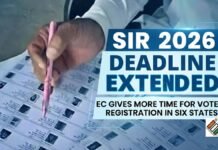
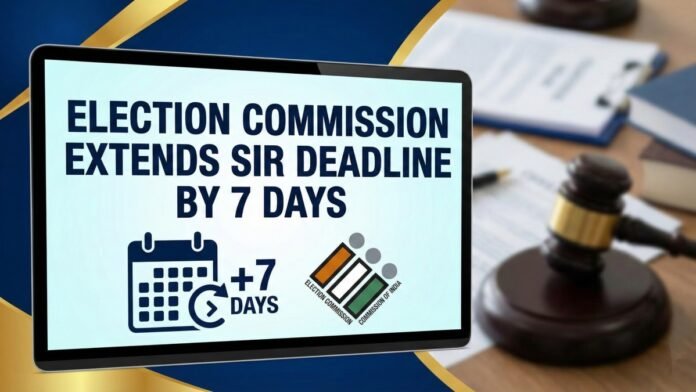
The Election Commission of India has officially extended the Special Intensive Revision (SIR) deadline by one week, rescinding its previous order and issuing a revised schedule that gives voters and election officials more time to complete the critical revision process. Originally scheduled to conclude on December 4, 2025, the enumeration period, during which Booth Level Officers conduct door-to-door verification and collect enumeration forms from households, will now continue until December 11, 2025.
This seven-day extension was deemed necessary by the Election Commission to ensure a more accurate, up-to-date, and streamlined voter list across the 12 affected states and union territories. The previous timeline left only four days between the enumeration deadline and the scheduled publication of draft rolls, creating an extremely tight schedule for processing forms and preparing the preliminary electoral rolls.
Revised SIR Schedule: Complete Timeline with New Dates
The Election Commission has released a comprehensive revised schedule incorporating the extension across all phases of the Special Intensive Revision process:
| Phase | Activity | New Deadline |
|---|---|---|
| Phase 1 | Enumeration Period (Door-to-door verification and form collection) | Reorganisation and rearrangement of polling stations |
| Phase 2 | December 16, 2025, to January 15, 2026 (Tuesday to Thursday) | Until December 11, 2025 (Thursday) |
| Phase 3 | Control table updating and preparation of draft electoral rolls | December 12-15, 2025 (Friday to Monday) |
| Phase 4 | Publication of draft electoral rolls | December 16, 2025 (Tuesday) |
| Phase 5 | Claims and objections filing period (Form 6 and Form 8) | December 16, 2025, to February 7, 2026 (Tuesday to Saturday) |
| Phase 6 | Notice phase, issuance of notice, hearings, verification and decision by Electoral Registration Officers | December 16, 2025 to February 7, 2026 (Tuesday to Saturday) |
| Final Step | Publication of final electoral rolls | February 7, 2026 |
SIR Coverage: 12 States and Union Territories Affected
The Special Intensive Revision Phase-II extension applies to a significant portion of India’s electorate spread across multiple regions:
- Northeast region, West Bengal
- Southern states, Tamil Nadu, Kerala, Puducherry
- Central states, Chhattisgarh, Madhya Pradesh, Rajasthan, Uttar Pradesh
- Western states, Goa, Gujarat
- Island union territories, Andaman and Nicobar Islands, Lakshadweep
Combined, these 12 states and UTs account for roughly half of India’s nearly 1 billion registered voters, making this revision exercise one of the most significant electoral undertakings in the country.
Why the Extension Was Necessary: Workload and Quality Concerns
Multiple factors prompted the Election Commission to grant the seven-day extension, including operational challenges and the need to ensure data accuracy. Reports from states like Kerala, Tamil Nadu, and Rajasthan highlighted excessive workload pressures on Booth Level Officers (BLOs) who conduct door-to-door enumeration, with field complaints about inadequate time for proper verification.
Additionally, deaths of BLOs in Kerala and other states amid complaints of excessive workload raised concerns about the sustainability of the original timeline. The Supreme Court has also been monitoring SIR-related petitions from Tamil Nadu and West Bengal, with hearings scheduled in early December, and the court indicated it could direct the Election Commission to extend deadlines if necessary.
The extension provides Electoral Registration Officers (EROs) and BLOs with additional buffer time to ensure that enumeration forms are collected accurately, voter information is verified properly, and no eligible citizens are inadvertently excluded from the electoral rolls.
What This Means for Voters: More Time to Add, Correct, or Delete Names
The extended timeline significantly benefits voters in the 12 affected states and UTs who wish to add their names to the voter list, delete duplicate entries, or correct existing voter information. Citizens who were unable to submit their enumeration forms by the original December 4 deadline now have until December 11 to engage with Booth Level Officers and ensure their information is accurately captured.
For those whose names are already on the electoral roll, the extension provides more time to verify their entries and prepare for the claims and objections phase. Voters who need to produce supporting documents, such as identity proofs or address verification documents, will have additional time to gather and submit these materials during the extended enumeration period.
Claims and Objections: Extended Timeline for Corrections
The extension also significantly lengthens the claims and objections period, now running from December 16, 2025 to January 15, 2026, providing a full month for voters to file corrections, register objections to improper inclusions, or challenge wrongful exclusions. Previously, this period was scheduled to be much shorter, leaving limited time for voters to take action.
Field verification and hearings by Electoral Registration Officers have been extended through February 7, 2026, allowing adequate time to address disputes and finalise accurate electoral rolls before any elections are held.
Significance for 2026 State Assembly Elections
This Special Intensive Revision is being conducted in preparation for key state assembly elections scheduled in 2026, particularly in West Bengal, Tamil Nadu, Kerala, and Puducherry. An accurate and updated electoral roll is fundamental to free and fair elections, and the extended timeline aims to ensure that every eligible voter is properly registered while ineligible entries, including deceased voters, duplicate registrations, and voters who have relocated, are removed.
The Election Commission’s decision to extend the deadline reflects its commitment to maintaining electoral integrity and ensuring that the revision process yields comprehensive and credible rolls that will serve as the foundation for democratic participation in these states.